Wind-hardening seedlings
Expose young plants gradually to increasing wind over 1–2 weeks so their trunks and leaf bases strengthen before permanent planting in exposed coastal or open sites.

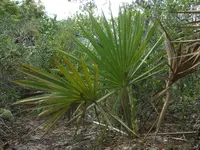
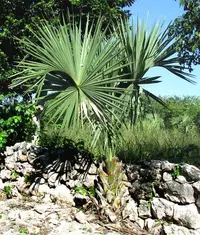
Scrub palmetto (Sabal etonia) is a small, clumping palm native to the dry scrub habitats of Florida. It forms low, dense clusters rather than a tall trunk. Its stiff, fan-shaped leaves grow from a short underground stem, giving it a compact, shrubby look suited to naturalistic or drought-tolerant plantings. The plant is slow-growing and long-lived, which influences how to care for scrub palmetto in gardens or restoration projects. Sabal etonia prefers sunny, well-drained, sandy soils and tolerates heat, drought, and poor soil once established, but resents heavy, waterlogged conditions.

Care Difficulty
Moderate Care

Light Preference
Full Sun

Water Requirements
Low Water

Temperature Preference
Warm Climate

Hardiness Zone
8–10

Soil Texture
Sandy, Loamy, Rocky

Soil pH
Slightly acidic (6.5–7.0), Neutral (7.0)

Soil Drainage
Well-drained

Fertilization
Minimal (feed rarely)
Scan your plant to receive care tips personalized for your specific plant
Available on iOS and Android
This species favors bright, direct sun but adapts to some shade in many landscapes.
This drought-tolerant palm prefers infrequent, deep watering in fast-draining soil.
This hardy palm tolerates high heat but only light, brief cold in most gardens.
Humidity is not a major factor for Sabal etonia, which adapts well to typical indoor and outdoor air levels.
Sabal etonia prefers dry-leaning, sandy soils with rapid drainage and plenty of air around the roots.
This species can be grown in containers, though growth is slower and overall size is more restricted than in-ground plants.
This slow-growing native palm needs only light feeding in most garden soils.
Pruning is minimal for Sabal etonia and focuses on safety and plant health rather than shaping.
This palm is best grown in the ground and resents frequent disturbance of its deep root system.
Propagation of Sabal etonia is usually done from seed and is slow but reliable with stable warmth.
This palm is relatively cold tolerant in its native range and usually needs little special winter care in mild climates.

Plant Health Check
Not sure what's wrong with your plant? Check your plant's health inside the app.
This species is naturally restricted to Florida's sandy scrub and coastal scrub habitats, where it grows on deep, nutrient-poor sands that many other trees and shrubs cannot tolerate.
Mature plants often develop short, mostly underground stems that can branch and form multi-stemmed clumps, which helps them resprout after damage such as fire or cutting.
Sabal etonia is adapted to frequent wildfires in scrub ecosystems; its buds are insulated at or below the soil surface, allowing it to survive and regrow after burns that kill less adapted plants.

This palmetto serves as an important structural component of Florida scrub, providing cover and food (through its flowers and fruits) for a range of endemic wildlife, including threatened species like the Florida scrub-jay and gopher tortoise.
This species grows slowly, often adding only 2–5 cm of trunk or spread per year. Growth is quicker in warm climates with well-drained, sandy soil, regular but moderate watering, and adequate space for roots.
Keep your plants happy and healthy with plant identification, disease detection, and easy care guidance.