clasping coneflower Care (Rudbeckia amplexicaulis)

clasping coneflower

About clasping coneflower

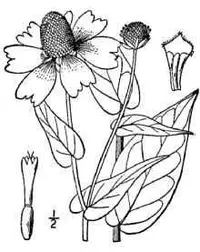
Clasping coneflower, Rudbeckia amplexicaulis, is a warm-season annual wildflower in the sunflower family. It is native to the south-central United States and parts of Mexico. Plants form upright, branching stems with narrow leaves that partly wrap around the stem and bright yellow petals that droop from a tall, dark central cone. It usually grows in open fields, roadsides, and disturbed sites, where it can reseed freely and form dense stands. This species is generally easy to grow, tolerating heat, poor soils, and short dry spells. Those who want to care for clasping coneflower should provide full sun and moderately well-drained soil for the best flowering and strong growth.

Main Plant Requirements

Care Difficulty

Easy Care

Light Preference

Full Sun

Water Requirements

Moderate Water

Temperature Preference

Cold Hardy

Hardiness Zone

4–9

Soil Texture

Sandy, Loamy, Clay

Soil pH

Acidic (5.5–6.5), Slightly acidic (6.5–7.0)

Soil Drainage

Moist but well-drained

Fertilization

Minimal (feed rarely)

Get Personalized Care Plan

Scan your plant to receive care tips personalized for your specific plant

Available on iOS and Android

How to Care for the clasping coneflower

This species prefers bright, open conditions to flower heavily and stay compact.

  • Provide 6–8 hours of direct sun daily; morning to early afternoon sun is ideal for strong stems and abundant blooms.
  • Tolerates light partial shade (3–4 hours sun), but clasping coneflower may grow taller and produce fewer flowers in shadier spots.
  • In hot southern climates, give protection from intense late-afternoon sun to reduce leaf scorch and premature wilting during summer heat waves.

This plant prefers consistent moisture in its establishment phase but becomes more drought-tolerant once mature.

  • Allow the top 3–5 cm of soil to dry before deep watering, aiming for moist but not soggy soil around the root zone.
  • During hot, dry periods, increase watering frequency if foliage droops by midday and does not recover by evening, a sign of drought stress in Rudbeckia amplexicaulis.
  • Avoid waterlogged clay; improve drainage with organic matter and watch for yellowing, soft stems or foul-smelling soil as signs of overwatering.

This warm-season perennial performs best in moderate heat and tolerates a range of garden conditions.

  • Optimal growth occurs around 70–85°F (21–29°C), when stems elongate steadily and flowering is most reliable.
  • Plants tolerate brief drops to about 25°F (−4°C), but repeated hard frosts damage foliage and can kill young seedlings.
  • In midsummer, healthy clumps handle 90–95°F (32–35°C) if soil moisture is maintained; mulch 5–8 cm deep to buffer roots from extreme heat.

Humidity is rarely limiting for this species and typical outdoor levels are adequate.

  • Performs well at 30–60% humidity, matching most outdoor summer conditions in temperate regions.
  • Tolerates dry air without issue, so no special misting or grouping strategies are needed for clasping coneflower.
  • If foliage browns from the tips inward, first check soil moisture and heat stress rather than humidity levels.

This species prefers freely draining, moderately fertile mineral soil that does not stay waterlogged.

  • Use a mix of 50–60% loam or sandy garden soil with 30–40% compost and 10–20% coarse sand for structure and nutrients.
  • Aim for slightly acidic to neutral pH around 6.0–7.0, which supports nutrient availability for Rudbeckia amplexicaulis.
  • Improve drainage and aeration in heavy soil by incorporating coarse sand or fine grit, avoiding dense clay pockets that hold water.
  • Avoid compacted, boggy, or peat-heavy mixes that remain saturated, as these favor root rot and weak, leggy growth.

This species can be grown in containers if the pot supports its fast, fibrous root system and tall stems.

  • Choose a pot at least 25–30 cm deep to allow strong taproot development and reduce tipping in wind.
  • Select a heavier material such as terracotta or ceramic to stabilize tall flower stalks and moderate moisture swings.
  • Elevate the container on pot feet so water clears drainage holes quickly, preventing soggy lower layers that suffocate roots.

Wild-type Rudbeckia amplexicaulis needs minimal feeding in average garden soil, but light fertilization can support flowering in poor soils or containers.

  • Apply a balanced slow-release fertilizer (around 10-10-10) at half label rate once in early spring for in-ground plants.
  • For containers, use a diluted balanced liquid fertilizer at 1/4–1/2 strength every 4–6 weeks during the growing season.
  • Incorporate a thin layer of compost around the root zone in spring instead of heavy synthetic feeding in rich soils.
  • Stop feeding in late summer to early fall so plants can harden off before winter dormancy.

Rudbeckia amplexicaulis responds well to light, timely pruning that maintains flowering and a tidy form.

  • Deadhead spent blooms with clean hand pruners through summer to extend the flowering period.
  • Remove dead, diseased, or storm-damaged stems at the base whenever noticed to limit disease spread.
  • In late fall or very early spring, cut back old stalks to just above ground level to encourage fresh growth.
  • Thin crowded stems lightly in dense patches to improve air movement and reduce foliar disease.

This species is usually grown in beds or meadows, so care focuses on transplanting young plants rather than frequent repotting.

  • Transplant seedlings or young plants in early spring or early fall when temperatures are mild and soil is workable.
  • Move plants if growth is stunted, flowering declines, or clumps are shading each other excessively.
  • Lift with a spade, keeping a generous soil ball around the roots, and replant at the same depth in well-drained soil.
  • Water thoroughly after transplanting and keep soil evenly moist for 1–2 weeks to reduce root stress and help reestablishment.

Rudbeckia amplexicaulis is most often propagated by seed, which fits its short-lived, self-seeding growth habit.

  • Sow seeds outdoors in fall or very early spring so natural cold exposure aids germination.
  • For controlled sowing, chill seeds in the refrigerator for 4–6 weeks, then surface-sow in trays under bright light.
  • Keep the seed mix just moist, not waterlogged, at 65–75°F until germination occurs.
  • Allow some flower heads to dry on the plant, then collect and store seeds in a cool, dry place for next season.

Established plants are generally cold hardy in much of the US and need only basic winter care in garden settings.

  • In colder regions, leave some dried stems standing to catch snow and shield the crown lightly.
  • Apply a 2–5 cm layer of loose mulch around, but not on top of, crowns after ground freezes.
  • Container-grown plants benefit from moving into an unheated garage or sheltered porch to avoid repeated freeze–thaw cycles.

Care Tips

Staggered Succession Sowing

Sow small batches of seed every 2–3 weeks in late spring and early summer to maintain a continuous display and replace plants that decline after peak bloom.

Pinch Early Seedlings

When seedlings reach 8–10 cm tall, lightly pinch out the growing tip once to encourage bushier, more wind-stable plants with a denser flowering habit.

Self‑Seeding Management

Allow only selected, healthy plants to set seed and deadhead the rest, so you control where new plants appear and avoid overcrowded, weak stands.

Targeted Wind Protection

In open, windy sites, plant in front of low, airy grasses or place temporary mesh windbreaks so tall stems flex rather than snap during summer storms.

Drought‑Resilience Training

After seedlings are established, gradually extend the interval between deep waterings to encourage deeper rooting and improve resilience when growing clasping coneflower in hot, dry conditions.

Common Pests and Diseases

Powdery mildew

This disease causes white, powdery patches on upper leaf surfaces, often in late summer during warm days and cool, humid nights. Symptoms include distorted growth and premature leaf yellowing and drop.

Solution

Improve air circulation by thinning crowded stems and avoiding overhead watering, especially in the evening. Remove and discard heavily infected leaves, then apply a sulfur or potassium bicarbonate fungicide labeled for ornamentals at the first sign of disease, repeating as directed during humid periods.

Septoria leaf spot

This disease produces numerous small, dark-brown to purplish spots with lighter centers on lower leaves, which can coalesce and cause foliage to yellow and dry out from the bottom up. Symptoms include early defoliation in warm, wet weather or in dense plantings.

Solution

Remove and destroy affected lower leaves and any fallen debris to reduce inoculum. Water at soil level, increase spacing for better airflow, and, in severe recurring cases, use a chlorothalonil or copper-based fungicide according to label directions as part of broader Rudbeckia amplexicaulis care instructions.

Aphids

These insects cluster on stems, buds, and undersides of leaves, sucking sap and causing curling, yellowing, and distorted new growth. This pest also excretes sticky honeydew that can attract sooty mold on foliage.

Solution

Dislodge colonies with a strong stream of water from a hose and pinch off heavily infested shoot tips. Encourage or introduce natural predators such as lady beetles and, if needed, apply insecticidal soap or neem oil, ensuring thorough coverage of leaf undersides and repeating at 5–7 day intervals until populations drop.

Leaf miners

These insects create winding, pale tunnels within the leaf blades as larvae feed between the upper and lower leaf surfaces. Symptoms include irregular white or translucent trails that can reduce photosynthesis and weaken stressed plants.

Solution

Hand-remove and discard leaves showing fresh mines to interrupt the larval stage. Encourage beneficial parasitic wasps, avoid broad-spectrum insecticides that harm them, and, when damage is ongoing, use a systemic insecticide labeled for ornamental leaf miners according to instructions.

Spider mites

These pests are tiny and often unnoticed until leaves show fine stippling, dulling, and occasional bronzing, especially during hot, dry weather. This pest may also produce fine webbing on leaf undersides and between stems when populations are high.

Solution

Increase humidity around plants and regularly hose down foliage, paying attention to leaf undersides to physically remove mites. For persistent infestations, apply horticultural oil or insecticidal soap in several treatments 3–5 days apart, and reduce drought stress by maintaining steady soil moisture without waterlogging the roots.

Interesting Facts

Clasping leaf design

This species has uniquely clasping upper leaves whose bases wrap partly around the stem, a feature that helps distinguish it from other black-eyed susan relatives in the field.

Summer–fall bloomer

It flowers prolifically from early summer into fall in much of its native range, providing a long nectar and pollen window for native bees, hoverflies, and butterflies.

Disturbed soil specialist

In the wild it often colonizes roadsides, field margins, and other disturbed, sandy or gravelly soils, acting as an early-successional species that stabilizes open ground and supports pollinators.

Botan icon

Did you know?

In parts of the south-central United States, especially Texas and Oklahoma, this annual is so abundant and showy along highways that it is used in large-scale wildflower seed mixes, making it a prominent species in regional roadside restoration plantings.

FAQs about clasping coneflower

This species is typically an annual or short-lived perennial, depending on climate. It often behaves as an annual in cooler regions but can self-seed freely, creating the appearance of a long-lived, returning population.

Grow Healthy Plants with Botan Care

Keep your plants happy and healthy with plant identification, disease detection, and easy care guidance.

Botan plant care app — identify plants on mobile

Explore More Plants