Mark Dormant Spots
Use small, labeled stakes to mark bulb locations before foliage dies back so you avoid disturbing them when cultivating or planting nearby during summer dormancy.

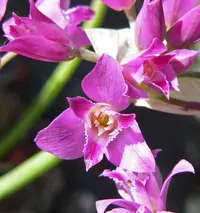
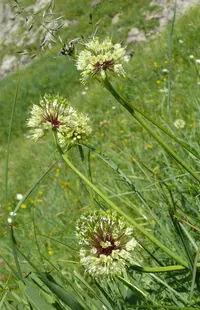
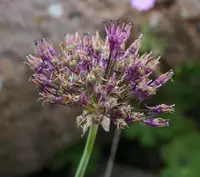
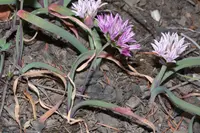
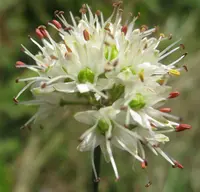
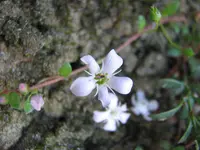
Crinkled onion (Allium crispum) is a small bulb-forming perennial from the onion genus, valued for its curled, twisted leaves and clusters of rosy-purple star-shaped flowers. It has a compact, clumping habit that suits rock gardens, dry borders, and containers.
This species is native to California, where it grows in open, often rocky or grassy habitats with dry summers and wetter winters. It is generally easy to grow if given good drainage, moderate light, and low to moderate moisture.
Tolerant of seasonal dryness and relatively low-maintenance, it suits gardeners who prefer bulbs that return yearly with minimal attention. Understanding how to care for crinkled onion mainly involves matching its natural dry-summer, wet-winter pattern.

Care Difficulty
Moderate Care

Light Preference
Full Sun

Water Requirements
Moderate Water

Temperature Preference
Cool Climate

Hardiness Zone
7–10

Soil Texture
Sandy, Loamy, Rocky

Soil pH
Slightly acidic (6.5–7.0), Neutral (7.0)

Soil Drainage
Well-drained

Fertilization
Minimal (feed rarely)
Scan your plant to receive care tips personalized for your specific plant
Available on iOS and Android
Allium crispum thrives in bright, open conditions that mimic its native Mediterranean climate.
This bulb prefers soil that dries slightly between waterings and is very sensitive to prolonged wet conditions.
This species is adapted to mild, dry-summer climates with cool, wet winters and warm springs.
Humidity is rarely a limiting factor for Allium crispum when grown outdoors or in bright indoor spots.
Allium crispum prefers lean, sandy, sharply drained soil that mimics its native dry habitats.
This small bulb species is well suited to container growing in sunny, dry-exposed locations.
Allium crispum is a small bulb that needs only light feeding to support flowering in poor or sandy soils.
Allium crispum needs minimal pruning, mainly to keep the clump tidy and support healthy bulbs.
This species is usually grown in the ground, with transplanting focused on dividing and spacing crowded clumps.
Allium crispum is commonly propagated by bulb division and, less often, from seed for larger plantings.
Allium crispum is moderately hardy and usually needs only light winter care in mild regions.

Plant Health Check
Not sure what's wrong with your plant? Check your plant's health inside the app.
This species is native to the central coast of California, where it grows mainly on grassy slopes, coastal scrub, and open woodlands, often on well-drained, rocky or clay soils.
Its purple flowers have strongly crinkled or wavy tepals (petal-like segments), giving each umbel a frilly appearance that differs from the smoother flowers of many other wild onions.
Allium crispum is a geophyte, meaning it survives underground as a bulb, sending up leaves and flowers in late winter to spring and then going dormant through the dry summer.

This species is considered part of California’s serpentine flora in some populations, as it can occur on nutrient-poor, heavy metal-rich serpentine soils that exclude many other plant species.
Lack of flowers usually comes from bulbs not getting a cool, dry rest, overcrowded clumps, or low stored energy. Allow full dormancy, avoid excess summer watering, and divide congested bulbs every few years to restore flowering.
Keep your plants happy and healthy with plant identification, disease detection, and easy care guidance.