Rest-period management
Mark the start of dormancy when leaves yellow and stop all watering for 6–8 weeks so bulbs dry slightly and reset for the next growth cycle.

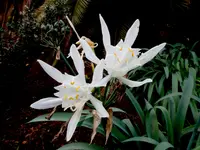
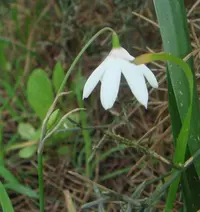
Pancratium foetidum is a bulb-forming perennial in the amaryllis family, grown mainly for its unusual, narrow-petaled white flowers and strap-like leaves. It forms low clumps from underground bulbs and typically sends up flower stalks above the foliage during its bloom period.
This species is native to arid and semi-arid regions, where it copes with heat and seasonal drought. Its natural adaptation to dry habitats makes it relatively undemanding if excess moisture around the bulb is avoided.
Gardeners who want to know how to care for Pancratium foetidum should note that it prefers bright light, well-drained sandy or gritty soil, and careful watering that allows the soil to dry between waterings.

Care Difficulty
Moderate Care

Light Preference
Partial Shade

Water Requirements
Moderate Water

Temperature Preference
Warm Climate

Hardiness Zone
Unknown

Soil Texture
Sandy, Loamy, Organic-rich

Soil pH
Slightly acidic (6.5–7.0)

Soil Drainage
Well-drained

Fertilization
Minimal (feed rarely)
Scan your plant to receive care tips personalized for your specific plant
Available on iOS and Android
This bulb prefers bright, warm conditions with some protection from intense midday sun.
This bulb performs best with thorough but infrequent watering that allows the soil to dry slightly between soakings.
This species favors warm, frost-free conditions with stable seasonal temperatures.
This bulb tolerates typical indoor humidity but benefits from slightly moist air in heated homes.
This species prefers loose, free-draining soil that mimics sandy, coastal or dry scrub habitats.
This bulb is suitable for container growing when the pot and substrate support its deep, drought-tolerant root system.
This bulb grows in lean soils and usually needs only modest feeding in cultivation.
Pruning needs for Pancratium foetidum are minimal and focus on hygiene rather than shaping.
This bulbous plant dislikes frequent disturbance, so repotting or transplanting should be infrequent and gentle.
Pancratium foetidum is most reliably propagated by bulb offsets rather than from seed.
Cold sensitivity means this species often needs targeted winter care, especially in climates with frost.

Plant Health Check
Not sure what's wrong with your plant? Check your plant's health inside the app.
The flowers emit a distinctly fetid or carrion-like odor, especially at night, which is unusual within the genus and is thought to attract specific pollinators such as flies or beetles that are drawn to decaying smells.
This species survives harsh dry periods as an underground bulb that enters dormancy, then rapidly produces leaves and flowers when soil moisture and temperature conditions become favorable again.
It is naturally associated with sandy, often coastal or near-coastal habitats where the loose, fast-draining substrate prevents bulb rot and allows the roots to access brief pulses of moisture after rainfall.
This bulb usually has one main flowering flush each year, often in the warmer months, provided it has had a dry rest period. With stable conditions and good bulb health, occasional lighter repeat flowering is possible.
Keep your plants happy and healthy with plant identification, disease detection, and easy care guidance.