brush cherry Care (Syzygium paniculatum)

Also known as: magenta lilly pilly, magenta cherry, Australian water pear
brush cherry

About brush cherry

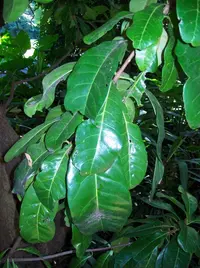
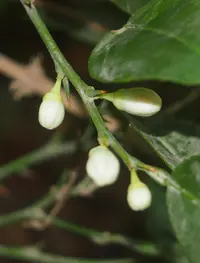
Brush cherry, Syzygium paniculatum, is an evergreen shrub or small tree grown for its dense foliage, small white flowers, and colorful berries. It is often used for hedges, topiary, and bonsai because it responds well to regular pruning and shaping.

This species comes from coastal areas of eastern Australia, so it is adapted to mild, humid climates. In suitable conditions it forms a compact, glossy canopy with fine-textured leaves.

Brush cherry is moderately easy to grow when its needs are met, but it can struggle with drought, poor drainage, or very low humidity. It generally prefers bright light, steady moisture, and well-drained soil, so these points are central when learning how to care for brush cherry.

Main Plant Requirements

Care Difficulty

Moderate Care

Light Preference

Full Sun

Water Requirements

Regular Water

Temperature Preference

Warm Climate

Hardiness Zone

9–11

Soil Texture

Sandy, Loamy, Organic-rich

Soil pH

Acidic (5.5–6.5), Slightly acidic (6.5–7.0)

Soil Drainage

Moist but well-drained

Fertilization

Light (every 4–6 weeks)

Get Personalized Care Plan

Scan your plant to receive care tips personalized for your specific plant

Available on iOS and Android

How to Care for the brush cherry

Syzygium paniculatum prefers bright conditions with some protection from intense midday sun.

  • Provide 4–6 hours of direct morning sun with light afternoon shade, or bright filtered light all day in hotter regions.
  • Plant in a spot that receives partial shade (especially 11 a.m.–3 p.m.) to reduce leaf scorch, particularly in young or newly planted brush cherry.
  • Watch for pale, leggy growth as a sign of insufficient light and for crispy brown leaf edges as a sign of excessive sun exposure.

This species prefers evenly moist but not waterlogged soil, supported by good drainage.

  • Water when the top 3–5 cm of soil feels dry, allowing deeper soil to stay slightly moist rather than fully drying out.
  • During active growth in spring and summer, expect to water more often, reducing frequency in fall and winter as evaporation and growth slow.
  • Watch for yellowing, soft leaves or sour-smelling soil as signs of overwatering, and dull, curling, or browning leaf tips as signs of underwatering in Syzygium paniculatum.

This species grows best in mild, frost-free climates with moderate temperature swings.

  • Aim for 65–80°F (18–27°C) for steady growth, with slightly cooler nights improving overall vigor and resilience.
  • Protect plants when temperatures drop near 30–32°F (-1–0°C), as light frost can damage new growth and repeated freezes may kill young specimens.
  • In hot spells above 90°F (32°C), increase shade and soil moisture while maintaining drainage to limit heat stress, leaf scorch, and premature leaf drop.

This species prefers moderately moist air and reacts if kept too dry for long periods.

  • Aim for 50–60% humidity to keep foliage dense and reduce leaf-edge browning.
  • It tolerates short spells of drier indoor air, but prolonged levels below 40% often cause crisp tips and dull leaves.
  • Increase humidity with a nearby humidifier or grouped plants; avoid misting brush cherry heavily if air circulation is poor, to limit fungal issues.

Syzygium paniculatum grows best in slightly acidic, free-draining, moisture-retentive soil.

  • Use a loamy mix with 40–50% organic matter such as compost or fine pine bark, plus 20–30% perlite or coarse sand for structure and drainage.
  • Target pH 5.5–6.5; amend alkaline soil with peat or composted bark to reduce nutrient lockout and leaf yellowing.
  • In heavy native clay, create a raised bed or large container and blend in coarse sand and perlite to improve aeration and prevent waterlogging.
  • Avoid compacted, soggy, or very sandy nutrient-poor substrates, which either suffocate roots or dry out too rapidly between waterings.

This species is well suited to container growing when provided with sufficient root space and stable drainage.

  • Choose a pot slightly wider than the canopy spread to provide lateral root room and reduce the risk of the rootball circling tightly.
  • Use a tall, weighty container or add stones at the base (above drainage holes) to stabilize the plant’s naturally upright, sometimes top-heavy form.
  • Select thicker-walled clay or ceramic pots in hot climates, as they buffer root temperature and moderate moisture loss compared with thin plastic.

Syzygium paniculatum responds well to moderate feeding in active growth but does not need heavy fertilization.

  • Use a balanced liquid fertilizer (around 10-10-10) at 1/2 strength every 4–6 weeks in spring and summer.
  • Alternatively, apply a slow-release granular fertilizer once in spring, following label rates for woody shrubs.
  • Supplement with a thin layer of compost over the root zone each spring for steady nutrient supply.
  • Stop feeding in fall and winter to avoid forcing soft, cold-sensitive growth on brush cherry.

Pruning helps maintain Syzygium paniculatum as a dense, healthy shrub or small tree.

  • Carry out main pruning in late winter to early spring before vigorous new growth starts.
  • Remove dead, diseased, crossing, or inward-growing branches to open the canopy and improve airflow.
  • Shorten long shoots to shape hedges or topiary, encouraging dense branching and leafy coverage.
  • Use clean, sharp bypass pruners or hedge shears, disinfecting blades when cutting diseased wood.

Container-grown or newly planted Syzygium paniculatum benefits from timely repotting or transplanting to support steady growth.

  • Look for roots circling the pot, pushing through drainage holes, or reduced vigor as signs it needs more space.
  • Plan repotting or landscape transplanting for late winter to early spring, before strong new growth begins.
  • Repot every 2–3 years into a container 2–5 cm wider, using a well-drained, slightly acidic potting mix.
  • Water thoroughly before and after moving, keep roots shaded, and trim only lightly to limit transplant shock.

Syzygium paniculatum is most commonly propagated from semi-hardwood cuttings under warm, humid conditions.

  • Take 8–12 cm semi-hardwood cuttings in late spring to summer from healthy, non-flowering shoots.
  • Remove lower leaves, lightly wound the base, and dip in rooting hormone to stimulate root formation.
  • Insert cuttings into a free-draining mix of perlite and peat or coco coir, kept evenly moist but not waterlogged.
  • Maintain high humidity and bright, indirect light at 70–80°F until roots form, then harden off gradually.

Syzygium paniculatum is only moderately frost tolerant and needs some winter attention in colder areas.

  • In USDA zones colder than 9, grow in containers and move plants indoors before nights drop below 30°F.
  • For in-ground plants, apply 5–8 cm of organic mulch over the root zone, keeping it away from the trunk.
  • Use frost cloth or breathable covers during hard freezes to reduce damage to young stems and foliage.

Care Tips

Formal hedge training

Begin shaping young plants early by lightly clipping new growth 2–3 times per year, encouraging dense branching and a compact hedge form rather than performing heavy, infrequent cuts.

Trunk and framework selection

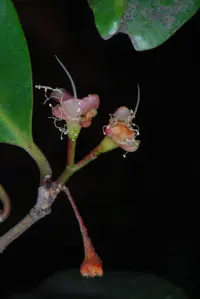
For specimen trees, select 1–3 strong vertical stems and systematically remove competing leaders and inward-facing branches over several seasons to build a stable, well-spaced canopy structure.

Salt and wind management

In coastal sites, reduce salt and wind stress by installing windbreak mesh or planting on the leeward side of buildings, and use drip irrigation rather than overhead watering to limit salt deposits on foliage.

Fruit drop hygiene

During peak fruiting, place a breathable ground cloth or mesh under plants and remove fallen fruits weekly to reduce fungal problems and discourage fruit fly and rodent activity.

Container root refreshing

For potted plants, lift the root ball every 2–3 years, slice away 1–2 cm of congested outer roots, and repot with fresh mix at the same depth to maintain vigor when growing brush cherry long term in containers.

Common Pests and Diseases

psyllids

This pest forms raised blister-like galls on young leaves and shoots, often causing distortion and patchy yellowing or reddening. Heavy infestations reduce plant vigor and spoil the plant’s appearance.

Solution

Prune and discard heavily distorted shoots, then hose down foliage regularly to dislodge nymphs. For persistent problems, use a ready-to-use insecticidal soap or horticultural oil, applied thoroughly to new growth every 7–10 days until new foliage develops clean and ungalled.

leaf spot

This disease causes small brown, purple, or tan spots on leaves that may merge into larger lesions, sometimes surrounded by yellow halos. Severe cases can lead to premature leaf drop and thinning of the canopy.

Solution

Remove and discard affected leaves from the plant and the soil surface to reduce reinfection. Improve air circulation, avoid wetting foliage when watering, and, if spotting continues to spread, apply a labeled copper or broad-spectrum fungicide following package directions for ornamental shrubs.

scale insects

These insects appear as small, fixed bumps along stems and leaf undersides, often accompanied by sticky honeydew and black sooty mold. Symptoms include reduced growth and a general decline in vigor.

Solution

Wipe stems and leaves with a cloth dampened in mild soapy water to remove scales, then rinse with clean water. For heavier infestations, apply horticultural oil to thoroughly coat stems and leaf undersides, repeating every 2–3 weeks until new growth appears clean, as part of broader brush cherry indoor care.

myrtle rust

This disease produces yellow to orange powdery pustules on young leaves, shoots, and sometimes flowers, which can lead to leaf deformation, dieback, and twig death. Symptoms include yellow spotting on upper leaf surfaces and bright rust-colored spores underneath.

Solution

Promptly remove and bag infected shoots and leaves without shaking them, then dispose of them in household trash. Avoid overhead watering, increase spacing and airflow, and in areas where the disease is established, consider using a myrtaceae-labeled systemic fungicide according to local guidelines and product instructions.

Interesting Facts

Endemic coastal shrub

This species is naturally restricted to a narrow stretch of coastal New South Wales in Australia, where it grows on sandy soils, coastal dunes, and headlands exposed to ocean winds and salt spray.

Purple edible berries

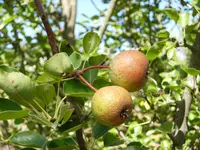
It produces glossy, dark purple to almost black berries that are technically edible and have a mild flavor, although they are mainly valued as an ornamental feature rather than a fruit crop.

Iconic hedge species

In Australia it has a long history of use as a formal hedge and topiary plant in public landscapes, which has led to widespread planting far beyond its limited native range.

Botan icon

Did you know?

In its native habitat this species provides nectar and fruit for a range of birds, including lorikeets and pigeons, making it an important food source in some fragmented coastal ecosystems where naturally occurring fruiting shrubs are scarce.

FAQs about brush cherry

Growth is moderate rather than rapid. In suitable outdoor conditions it usually adds about 20–40 cm per year. Container plants grow more slowly, especially if rootbound or underfertilized, but steady pruning can maintain a compact, dense form.

Grow Healthy Plants with Botan Care

Keep your plants happy and healthy with plant identification, disease detection, and easy care guidance.

Botan plant care app — identify plants on mobile

Explore More Plants