Establish strong framework
In the first 3–5 years, select 3–5 well-spaced main branches and remove crowded or weak shoots to create an open, vase-like structure that supports heavy flowering clusters and nut set later on.

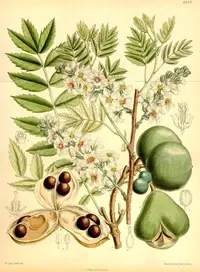
Yellowhorn, Xanthoceras sorbifolium, is a small deciduous tree or large shrub valued for its spring clusters of white flowers with yellow and red centers. It typically forms a rounded crown with divided, ash-like leaves that give it a light, airy look in leaf.
This species is native to northern China, where it grows in continental climates with cold winters and warm summers. Once established, it is relatively tolerant of drought and urban conditions, which can make it easier to grow in many home gardens.
It prefers full sun, moderately moist but well-drained soil, and benefits from protection from extreme wind. Understanding these preferences helps gardeners care for Yellowhorn more confidently and avoid common stress problems.

Care Difficulty
Moderate Care

Light Preference
Full Sun

Water Requirements
Moderate Water

Temperature Preference
Cold Hardy

Hardiness Zone
4–7

Soil Texture
Sandy, Loamy, Clay

Soil pH
Slightly acidic (6.5–7.0), Slightly alkaline (7.0–7.5)

Soil Drainage
Well-drained

Fertilization
Minimal (feed rarely)
Scan your plant to receive care tips personalized for your specific plant
Available on iOS and Android
This sun-loving small tree thrives in bright conditions and produces best flowering with strong light exposure.
This hardy species prefers evenly moist but not saturated soil, especially during establishment.
This cold-hardy tree handles a wide climate range but responds best to moderate temperatures during active growth.
Humidity is not a major factor for Xanthoceras sorbifolium, which performs well in typical outdoor air conditions.
This species prefers moderately fertile, well-structured mineral soil that drains freely and does not stay waterlogged.
This species can be grown in containers, mainly during its juvenile stage or where garden space is limited.
This hardy small tree benefits from modest feeding to support flowering and seed production.
Pruning Xanthoceras sorbifolium is mainly about maintaining structure and removing problem wood.
This species is usually grown in the ground, so focus on careful transplanting of young trees.
New plants are most often raised from seed, with vegetative methods less common for this species.
Mature trees are quite cold hardy and usually need little winter care once established in suitable climates.

Plant Health Check
Not sure what's wrong with your plant? Check your plant's health inside the app.
This species is so distinctive that botanists place it in its own monotypic genus, Xanthoceras, within the soapberry family Sapindaceae, with no other species currently recognized in the genus.
Its large seeds and young flowers are widely reported as edible and are traditionally used in northern China as food, with the seeds often compared in flavor and use to chestnuts.
Despite its delicate, tropical-looking flowers, this shrub or small tree is notably cold hardy and can tolerate winter temperatures far below freezing, which is unusual for a member of the soapberry family.

The species was first described scientifically in the 19th century from plants cultivated in Europe that originated in northern China, and it attracted early horticultural interest because it combines showy, nectar-rich flowers with an ability to withstand harsh continental climates, making it one of the few ornamental Sapindaceae well suited to cold temperate gardens.
Lack of flowers often comes from insufficient maturity, excess shade, or heavy pruning of young shoots. Late frosts may also damage flower buds. Consistent conditions over several seasons usually restore normal blooming as the tree ages.
Keep your plants happy and healthy with plant identification, disease detection, and easy care guidance.