Calbovista Care (Calbovista subsculpta)

Also known as: sculptured puffball, sculptured giant puffball, warted giant puffball
Calbovista

About Calbovista

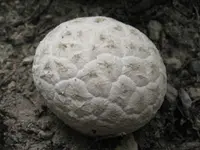
Calbovista subsculpta is a large puffball-like fungus, not a leafy houseplant. It forms nearly round, pale to brownish fruiting bodies with a rough, patterned surface. As it matures, the outer layer breaks into plates and the interior turns powdery with spores. It typically appears in high-elevation conifer forests of western North America, often in open patches of soil or among moss and litter. In cultivation it is difficult to manage, as it forms complex relationships with soil and surrounding vegetation. Gardeners interested in how to care for Calbovista should know it prefers undisturbed, cool, well-drained forest-like conditions and is usually best appreciated in its natural habitat rather than actively grown.

Main Plant Requirements

Care Difficulty

Moderate Care

Light Preference

Partial Shade

Water Requirements

Regular Water

Temperature Preference

Cool Climate

Hardiness Zone

5–9

Soil Texture

Loamy, Silty, Organic-rich

Soil pH

Acidic (5.5–6.5), Slightly acidic (6.5–7.0)

Soil Drainage

Moist but well-drained

Fertilization

Minimal (feed rarely)

Get Personalized Care Plan

Scan your plant to receive care tips personalized for your specific plant

Available on iOS and Android

How to Care for the Calbovista

This woodland fungus prefers cool, dappled forest light rather than open, exposed sites.

  • Provide bright, filtered light with 2–4 hours of gentle morning sun and shade or high, broken canopy light the rest of the day.
  • Tolerates partial to full shade, but heavy, dense shade can reduce fruiting of Calbovista; choose spots with shifting light under trees or shrubs.
  • Avoid strong midday and afternoon sun, which can overheat and dry the substrate; in summer, rely on canopy shade, and in early spring, slightly more light is acceptable before trees fully leaf out.

Moist, well-drained forest-like substrate supports healthy development of Calbovista subsculpta.

  • Aim for evenly moist conditions, allowing the surface 2–5 cm of soil or duff to feel just barely dry before the next thorough soak from rain or irrigation.
  • Use loose, organic-rich, well-draining soil so water moves through within a few seconds; avoid compacted, soggy ground that stays wet for more than 24 hours.
  • Watch for yellowing, collapsing tissue or persistent standing water as signs of excess moisture, and for hard, cracked, dusty ground as an indicator of extended dryness.

This species favors cool to mild temperatures typical of montane or coniferous forests.

  • Optimal growth and fruiting usually occur around 50–68°F (10–20°C), with consistent moisture and protection from drying winds.
  • Tolerates cool conditions close to 32°F (0°C), but repeated hard freezes below 28°F (-2°C) can damage developing fruiting bodies and slow fungal activity.
  • Handles short warm spells up to about 77–82°F (25–28°C) if shade and moisture are stable, but prolonged heat above this range tends to dry the substrate and limit fruiting.

Humidity plays a minor role for this terrestrial fungus, which mainly depends on overall site moisture rather than indoor air humidity.

This fungus develops best in undisturbed, moist forest soils with a loose, organic-rich profile.

  • Favor a deep, loamy soil rich in decaying leaf litter and woody debris, which supports the mycelium network of Calbovista subsculpta.
  • Ensure moderate drainage where water infiltrates easily but does not form standing puddles, such as on gentle slopes or well-structured forest floors.
  • Aim for slightly acidic to neutral conditions around pH 5.5–7.0, commonly found under conifers and mixed woodland.
  • Avoid compacted, heavily tilled, waterlogged, or very sandy, drought-prone soils that disrupt fungal partners and fruiting body formation.

This species is not suitable for container growing because it depends on complex soil fungi relationships in natural forest ground.

This native fungal species grows in nutrient-balanced forest soils and normally does not need supplemental fertilizer in cultivation.

As a mushroom-forming fungus rather than a leafy plant, Calbovista subsculpta does not require true pruning.

  • Remove only spent or decaying fruiting bodies using clean hands or a sanitized knife to limit disease spread.
  • Avoid disturbing the underlying mycelium network in the soil, as this is the living part that supports future growth.
  • Keep surrounding vegetation lightly trimmed instead, so fruiting bodies have space and airflow when they emerge.

This species is rarely grown in containers; care focuses on choosing and preparing a suitable outdoor site instead of routine repotting.

  • Transplant only when establishing a new bed, using a well-drained, organic-rich soil that mimics open montane forest conditions.
  • Aim for cool, moist seasons such as early spring or fall to reduce stress on inoculated substrate or mycelium.
  • Minimize disturbance by moving soil blocks or inoculated material intact rather than shaking roots or breaking clumps.
  • Water gently after transplanting to settle soil contact, then maintain even moisture without waterlogging to support establishment.

Propagation of this ectomycorrhizal fungus is specialized and not practical for typical home growers.

This montane fungus is cold hardy and usually needs no special winter care in suitable outdoor climates.

  • Allow natural snow cover to act as insulation over the soil where the mycelium lives.
  • Avoid deep soil disturbance, heavy compaction, or removal of all leaf litter, which can expose and stress the mycelium.
  • Container experiments, if attempted, should be overwintered in a cold but not waterlogged spot to prevent freeze–thaw damage.

Care Tips

Spore print monitoring

Collect a spore print from several mature puffballs each season on white paper to learn the normal spore color and density for your site, which helps you spot abnormal, possibly diseased fruiting bodies in future years.

Gentle fruit removal

Cut mature puffballs cleanly at the base with a knife rather than pulling them up, which helps avoid disturbing the underground mycelium network that supports future crops.

Leave some to mature

Always leave a proportion of healthy, intact fruiting bodies to fully mature and break down on site so they can release spores and maintain the local population when growing Calbovista.

Foot traffic management

Mark out the productive area and use the same narrow access path each time to minimize soil compaction and damage to the mycelium where fruiting bodies regularly appear.

Habitat record keeping

Keep a simple log of where and when fruiting occurs, along with associated trees, slope, and weather, to better understand the specific conditions that favor reliable Calbovista subsculpta fruiting in your location.

Common Pests and Diseases

Slug feeding

This pest commonly grazes on the outer surface of young Calbovista subsculpta fruiting bodies in moist habitats. Symptoms include shallow pits, rasped patches, and slime trails on or near the puffball.

Solution

Hand-pick slugs during evening or early morning, use simple barriers such as copper tape or rough gravel rings around developing fruiting bodies, and reduce dense ground litter that shelters slugs while still keeping enough organic debris to support fungal growth.

Fungus gnat larvae

These insects sometimes occur in very organic, constantly damp substrates where Calbovista subsculpta develops, and their larvae feed on fine mycelium threads. Symptoms include slow or aborted development of fruiting bodies and the presence of small, dark adult gnats hovering near the substrate.

Solution

Allow the upper layer of the substrate to dry slightly between heavy waterings, improve drainage if cultivation is attempted, and use fine mesh or sticky traps to reduce adults so the life cycle is interrupted without disturbing the mycelium excessively.

Parasitic mold infection

This disease involves secondary fungi colonizing damaged or aging puffball tissue. Symptoms include irregular spots of colored mold, rapid softening, and a loss of the typical firm, sculpted outer surface.

Solution

Harvest only firm, clean fruiting bodies, promptly remove and discard any that show moldy or discolored areas, and avoid wounding the surface during handling to limit entry points for contaminant fungi while growing Calbovista subsculpta.

Bacterial soft rot

This disease develops in injured or overly wet Calbovista subsculpta fruits, especially when they remain in contact with saturated soil or pooling water. Symptoms include a watery, foul-smelling breakdown of internal tissue starting from wounds or contact points.

Solution

Keep developing puffballs off standing water and heavy mud, avoid excessive overhead watering that splashes soil onto wounds, and remove and dispose of any soft or foul-smelling specimens to prevent spread to neighboring fruiting bodies.

Interesting Facts

Rocky Mountain specialist

This puffball is native to western North America and is especially associated with high-elevation conifer forests of the Cascade Range and Rocky Mountains, often fruiting in open, disturbed ground or along roadsides and trails after snowmelt.

Unique surface pattern

Mature fruitbodies develop a thick, warty outer skin that breaks into distinctive polygonal plates, giving the surface a sculpted or cracked appearance that helps distinguish it from other large puffballs like Calvatia species.

Powdery spore interior

As it matures, the interior tissue turns into a mass of olive-brown, powdery spores that are released when the outer wall breaks down, allowing wind and physical disturbance to disperse the spores over considerable distances.

Botan icon

Did you know?

Molecular studies have shown that this species is distinct enough from other giant puffballs to warrant its own monotypic genus, Calbovista, meaning the entire genus is represented by this single known species.

FAQs about Calbovista

This fungus is considered edible when young and firm, but quality is modest and identification errors with toxic look-alikes are a serious risk. Only experienced foragers should harvest it, and local guidelines should be checked first.

Grow Healthy Plants with Botan Care

Keep your plants happy and healthy with plant identification, disease detection, and easy care guidance.

Botan plant care app — identify plants on mobile

Explore More Plants