Wood Bolete Care (Buchwaldoboletus lignicola)

Wood Bolete

About Wood Bolete

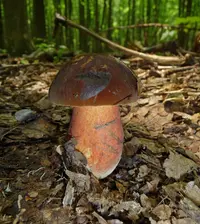
Wood bolete, Buchwaldoboletus lignicola, is a wood-decaying fungus rather than a traditional leafy plant. It typically forms thick, yellow‑brown caps with stout stems, often emerging from decaying conifer wood or buried timber.

In nature it is rare and usually found in temperate forests of Europe and parts of North America, closely associated with old wood or sawdust-rich soils. It is considered demanding to cultivate because it depends on specific woody substrates and moisture conditions.

Those wanting to learn how to care for Wood Bolete should know it prefers shady, humid environments and consistently moist, well-drained, wood-rich material rather than standard garden soil.

Main Plant Requirements

Care Difficulty

Hard Care

Light Preference

Shade

Water Requirements

Keep Soil Moist

Temperature Preference

Cool Climate

Hardiness Zone

Unknown

Soil Texture

Loamy, Organic-rich

Soil pH

Acidic (5.5–6.5)

Soil Drainage

Moist but well-drained

Fertilization

Minimal (feed rarely)

Get Personalized Care Plan

Scan your plant to receive care tips personalized for your specific plant

Available on iOS and Android

How to Care for the Wood Bolete

This wood-decaying bolete prefers forest-like light with limited direct sun exposure.

  • Provide dappled or filtered light under trees, with 1–3 hours of gentle morning sun and shade for the rest of the day.
  • Ensure at least bright open shade; dense, deep shade slows fruiting, while strong midday or afternoon sun can dry out the substrate and damage developing caps.
  • In summer, protect from intense sun by using leaf litter or woody debris as cover; in cooler seasons, slightly more open light is acceptable if the substrate stays moist.

This species needs consistently moist but not waterlogged wood or woody soil to develop healthy fruiting bodies.

  • Maintain evenly moist conditions in the woody substrate; allow only the top 1–2 cm of surrounding soil or mulch to begin drying before rewetting.
  • Use well-drained but moisture-retentive material such as rotting logs, wood chips, and leaf litter so excess water can drain away instead of pooling.
  • Reduce watering in cool, dormant periods and increase during warm, windy weather; pale, shriveling caps indicate dryness, while sour smell or slimy mycelium suggests overwatering.

This fungus prefers cool to mild conditions similar to shaded woodland floors.

  • Aim for an active growth range of about 55–70°F (13–21°C), which supports steady mycelium activity and fruiting of Buchwaldoboletus lignicola.
  • Tolerate brief drops to around 40°F (4°C), but protect from hard frost below 32°F (0°C), which can damage fruiting bodies and slow recovery of the mycelium.
  • In hot weather above 77–82°F (25–28°C), increase shading and moisture, since high heat combined with drying winds quickly desiccates the substrate and aborts young mushrooms.

This wood-decaying fungus prefers consistently moist, humid conditions around its substrate rather than dry, airy environments.

  • Aim for ambient humidity near the log or wood block of 70–90% to support reliable fruiting.
  • Dry air can slow or stop mushroom development; caps may crack and margins may dry and curl inward.
  • Increase humidity by tenting the container with perforated plastic, misting the surrounding air, or using a humidifier near the culture.

This species grows on decaying conifer wood, so it needs a woody, well-aerated substrate rather than conventional garden soil.

  • Use a mix based on rotted conifer wood chips, sawdust, and coarse bark, optionally with 10–20% well-aged compost for nutrients.
  • Maintain very free drainage so water passes through quickly while the woody particles hold moisture in their structure.
  • Keep pH slightly acidic, roughly 5.0–6.5, by relying mainly on conifer wood and avoiding liming materials.
  • Improve aeration by using chunky particles (1–3 cm) and avoiding fine peat or dense loam that can compact and exclude oxygen.

This fungus can be grown in containers if provided with a stable woody substrate rather than standard potting soil.

  • Choose a deep, rigid tub or bucket that securely holds a solid log or densely packed wood chips without tipping.
  • Drill multiple side and bottom holes so excess water drains quickly while also allowing gas exchange around the colonized wood.
  • Raise the container slightly on blocks or a stand to prevent water pooling under it and to keep the lower substrate well aerated.

This wood-decaying fungus needs minimal nutrition management in cultivation, since it primarily feeds from decomposing wood rather than enriched soil.

Pruning is not a standard practice for Buchwaldoboletus lignicola, as the visible mushroom is a temporary fruiting body, not a long-lived woody or leafy structure.

When cultivated, this species is managed by renewing its woody substrate rather than by classic repotting.

  • Replace colonized wood or sawdust blocks when fruiting declines, usually after 1–2 seasons of good production.
  • Plan any transfer of colonized substrate during mild conditions in spring or early fall to limit stress and contamination risk.
  • Move substrate gently, keeping it intact to avoid breaking up the mycelium network that supports growth and fruiting.
  • After moving, maintain even moisture and stable temperature so the mycelium can re-establish contact with fresh wood.

Propagation focuses on expanding the mycelium, the main body of the fungus, into fresh woody material rather than producing new plants in the usual sense.

Outdoor cultures are usually left to follow natural seasonal rhythms and need no elaborate winter regime.

  • In cold climates, expect fruiting to pause once temperatures fall consistently near freezing.
  • If grown in containers or blocks, avoid waterlogged conditions that can freeze solid and damage the mycelium.
  • In very exposed sites, a light mulch or leaf layer over the substrate can moderate rapid freeze–thaw cycles.

Care Tips

Use fresh hardwood

Prepare fresh, undecayed conifer-free hardwood blocks or logs as the substrate base, since this species strongly prefers lignin-rich wood and colonizes more reliably than on old, punky material.

Introduce mycelium deeply

When inoculating, drill holes 3–5 cm deep into the wood, pack spawn firmly, and seal with melted cheese wax or soy wax to reduce contamination and moisture loss.

Maintain shaded wood

Place inoculated wood where it receives indirect light and cover the upper surface with a breathable tarp or thick mulch layer to keep the wood cool and slow drying without creating airtight conditions.

Control competing fungi

Before inoculation, heat-treat logs by submerging in 60–70°F water for 12–24 hours, then draining thoroughly, which helps reduce existing fungal competitors without sterilizing the wood.

Monitor moisture by weight

Lift or briefly weigh test logs or blocks after soaking to learn their fully hydrated feel, then re-soak only when they become noticeably lighter, which provides a simple proxy for water content when growing Wood Bolete.

Common Pests and Diseases

Fungus gnat larvae

This pest targets damp, fungus-rich substrates and its larvae feed on developing mycelium and young fruiting bodies. Symptoms include slow or distorted fruiting, small pits or tunneling in caps, and visible tiny white larvae in the substrate.

Solution

Reduce excess surface moisture, improve ventilation, and use fine mesh or tight-lidded containers to physically block adult gnats from accessing the culture. Allow the surface to dry slightly between mistings, remove heavily damaged fruiting bodies, and if needed, use yellow sticky traps outside the container to reduce adult populations without contaminating the substrate.

Springtails

These insects thrive in constantly moist wood-based substrates and can graze on mycelial surfaces and very young primordia. Symptoms include scattered small white or gray jumping insects on substrate surfaces and occasional scarring or aborted pins.

Solution

Lower surface moisture slightly and increase airflow while keeping overall humidity within the target range for growing Wood Bolete. Rinse or wipe culture container walls to remove clusters, discard heavily infested substrate blocks, and maintain clean surrounding areas to reduce reinfestation from other damp materials.

Mite infestation

This pest includes several small mite species that feed on fungal mycelium and spores. Symptoms include patchy, thinned, or browned mycelium, slow colonization of woody substrate, and fine moving specks on fruiting bodies or container walls.

Solution

Quarantine affected cultures, discard heavily infested substrates, and thoroughly clean all containers, tools, and work surfaces with hot water and detergent. For minor issues, lower humidity slightly, improve air exchange, and use fresh, pasteurized or sterilized substrate for new batches to break the mite life cycle.

Green mold contamination

This disease, commonly caused by Trichoderma species, aggressively colonizes lignocellulosic substrates used for Buchwaldoboletus lignicola. Symptoms include fast-spreading white mycelium that turns bright to dark green, odor changes, and suppressed or completely inhibited fruiting.

Solution

Remove and discard contaminated substrates promptly to prevent spore spread, and clean the growing area thoroughly. For future batches, use properly pasteurized or sterilized substrate, inoculate in as clean a space as possible, and avoid over-wetting or reusing contaminated containers or tools.

Bacterial blotch

This disease develops on caps and stipes in very wet, stagnant air conditions and is caused by opportunistic bacteria. Symptoms include slimy, water-soaked, yellowish to brown spots on fruiting bodies, often with an unpleasant odor and rapid tissue breakdown.

Solution

Immediately harvest and discard affected mushrooms and any obviously slimy tissue. Reduce free water on caps by using finer misting, increase fresh air exchange, lower humidity slightly, and sanitize tools and container surfaces to limit bacterial spread in future flushes.

Interesting Facts

Rare wood-inhabiting bolete

This species is unusual among boletes because it fruits directly from decaying conifer wood, especially pine stumps and buried timber, rather than from soil like most of its relatives.

Deep blue bruising reaction

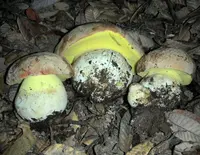
The bright yellow flesh and pores rapidly stain dark blue when handled or cut, a chemical oxidation reaction that is characteristic and helps separate it from similar yellow-boled species.

Association with conifer plantations

In Europe and parts of Asia it is most often reported in managed conifer plantations and on treated wood in forestry sites, which suggests a strong ecological link to human-modified conifer habitats.

Botan icon

Did you know?

This species is listed as threatened or endangered in several European countries because of its rarity and dependence on old or undisturbed conifer wood, making it a focus of conservation interest among mycologists.

FAQs about Wood Bolete

This species is generally considered inedible or at least of very poor culinary value. Some related boletes can cause gastrointestinal upset. Identification is difficult, so foragers are advised not to eat it unless confirmed by an experienced mycologist.

Grow Healthy Plants with Botan Care

Keep your plants happy and healthy with plant identification, disease detection, and easy care guidance.


Botan plant care app — identify plants on mobile

Explore More Plants