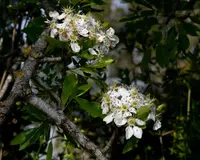
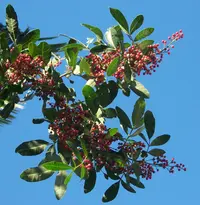
shingle oak Care (Quercus imbricaria)

Also known as: Laurel Oak
shingle oak

About shingle oak

Shingle oak, Quercus imbricaria, is a medium to large deciduous tree native to central and eastern North America. It typically forms a dense, rounded crown with a straight trunk. Unlike many oaks, it has narrow, unlobed leaves that stay green late into fall and then turn brown, often persisting through winter. The bark and overlapping leaves give rise to the name shingle oak. This species grows in uplands and bottomlands, often on moist, well-drained soils. It is generally sturdy and adaptable but needs space, sun, and time, so planning ahead is important when learning how to care for shingle oak.

Main Plant Requirements

Care Difficulty

Easy Care

Light Preference

Full Sun

Water Requirements

Moderate Water

Temperature Preference

Cold Hardy

Hardiness Zone

5–9

Soil Texture

Sandy, Loamy, Clay

Soil pH

Acidic (5.5–6.5), Slightly acidic (6.5–7.0)

Soil Drainage

Moist but well-drained

Fertilization

Minimal (feed rarely)

Get Personalized Care Plan

Scan your plant to receive care tips personalized for your specific plant

Available on iOS and Android

How to Care for the shingle oak

This oak thrives in open landscapes with abundant direct light once established.

  • Provide 6–8 hours of direct sun daily; full sun promotes dense branching and strong trunk development.
  • Young shingle oak tolerates light partial shade, especially with morning sun and light afternoon shade, but dense shade leads to thin growth and sparse foliage.
  • In hot summers, gradual exposure prevents leaf scorch on newly planted trees; avoid siting where nearby structures cast deep winter shade that limits energy storage.

This species prefers steadily moist but not saturated soil, especially while young.

  • During the first 2–3 years, water when the top 5–8 cm of soil feel dry, applying a slow, deep soak to wet the root zone 20–30 cm down.
  • Mature Quercus imbricaria develops good drought tolerance; in established trees, watch for limp, dull leaves as a cue to irrigate rather than following a fixed schedule.
  • Use well-drained soil and avoid standing water, which can cause leaf yellowing and twig dieback; reduce supplemental watering significantly in cool, rainy seasons.

This hardy oak is adapted to temperate climates with cold winters and warm summers.

  • Active growth is strongest around 65–85°F (18–29°C), with good performance in typical spring and summer conditions across much of the US.
  • The tree tolerates winter lows near -20°F (-29°C) once established; repeated freeze–thaw on young roots is more damaging than stable deep cold.
  • Heat tolerance is high up to about 95°F (35°C) if soil moisture is adequate; mulch 5–8 cm deep helps buffer root temperature and reduce stress in heat waves.

This species tolerates a wide humidity range and rarely needs special humidity management outdoors.

Quercus imbricaria prefers deep, moderately moist, well-aerated mineral soils that do not stay saturated.

  • Use a loamy or sandy-loam soil with some organic matter, allowing both moisture retention and air spaces around roots.
  • Aim for slightly acidic to neutral pH, roughly 5.5–7.0, avoiding strongly alkaline or saline conditions that impair nutrient uptake.
  • In heavy or compacted sites, incorporate compost plus coarse sand or fine pine bark to improve structure and drainage before planting.
  • Avoid locations where water stands after rain, since prolonged saturation encourages root rot and weakens long-term anchorage.

This tree is only marginally suited to containers and usually performs best in the ground.

  • Choose a deep, heavy container that resists tipping as the trunk thickens and canopy mass increases.
  • Use a coarse, mineral-based mix that drains quickly yet has enough weight to stabilize the root ball in wind.
  • Position the pot where it will not overheat on all sides, such as against a wall, to limit root stress in summer.

This native oak usually grows well without heavy feeding, but modest fertilization supports young or stressed trees.

  • Use a balanced slow-release granular fertilizer (for example 10-10-10) or well-rotted compost in early spring for shingle oak.
  • Apply once in spring and, if needed, once in midsummer during active growth for container or recently transplanted trees.
  • Reduce or skip feeding in fall and winter, when growth slows or stops.
  • Use fertilizers at half the label rate for landscape trees to avoid excessive, weak growth.

Pruning for Quercus imbricaria focuses on safety, structure, and removal of problem wood rather than frequent shaping.

  • Schedule main pruning in late winter to very early spring, before new growth begins.
  • Remove dead, diseased, crossing, or storm-damaged branches using clean, sharp bypass pruners or a pruning saw.
  • Thin crowded interior branches moderately to improve airflow and maintain a strong central leader.
  • Avoid heavy topping; maintain natural form, which supports strong branch attachment and long-term stability.

This species is usually grown in the ground, so care focuses on transplanting young trees rather than frequent repotting.

  • Transplant in late fall after leaf drop or in early spring before bud break for lowest stress on Quercus imbricaria.
  • Look for signs such as roots circling the container, very slow growth, or the root ball drying out quickly as cues to move it up one pot size or into the ground.
  • Handle the root ball gently, loosening only the outer circling roots, and keep as much soil intact as possible.
  • Water deeply after planting, apply a 5–8 cm mulch ring, and keep soil evenly moist (not waterlogged) for the first 1–2 growing seasons.

Propagation of this oak is done mainly from seed and is moderately slow but straightforward with the right conditions.

  • Collect ripe acorns in fall, discarding any with holes or that float in water tests, which indicates insect damage.
  • Sow acorns outdoors in fall or cold-stratify indoors at 34–41°F for 8–12 weeks to break dormancy.
  • Plant acorns 2–3 cm deep in deep containers or nursery beds with well-drained soil to allow a long taproot.
  • Keep the medium consistently moist, protect seedlings from rodents and heavy shade, and transplant gently while young to avoid taproot injury.

Mature shingle oak is cold hardy in much of its range and usually needs minimal winter care in the landscape.

  • Apply a 5–8 cm mulch layer around the root zone in late fall, keeping mulch a few cm away from the trunk.
  • Young or newly planted trees benefit from burlap wraps or tree guards to reduce sunscald and rodent damage.
  • For container-grown specimens, move pots into an unheated garage or sheltered spot where temperatures stay above about 15°F.

Care Tips

Early structure training

In the first 3–5 years, select a single strong central leader and remove competing upright stems in late winter to build a stable trunk that resists future storm damage.

Wind and snow resilience

On exposed sites, shorten or thin long, heavy lateral branches while the tree is young so they taper smoothly from trunk to tip, which reduces breakage under wind and wet snow loads.

Root flare protection

Keep mulch pulled back 5–8 cm from the trunk and expose the root flare at the soil surface so the base stays dry and less prone to decay and girdling roots.

Soil compaction management

Protect the root zone out to at least the drip line from vehicle traffic and repeated footpaths, and if compaction occurs, use a garden fork or air spade service to loosen soil without cutting major roots.

Oak pest monitoring

Inspect leaves, twigs, and bark 2–3 times per year for galls, scale insects, and borer exit holes, and consult local extension guidance before using any treatment, since many common oak issues look alarming but do little harm when growing shingle oak in normal garden conditions.

Common Pests and Diseases

Oak lace bug

This pest feeds on the underside of leaves, causing stippling, yellowing, and a bleached or bronzed look on shingle oak foliage. Symptoms include tiny dark spots of excrement and shed skins on the leaf undersides.

Solution

Monitor the undersides of leaves from late spring through summer and prune out heavily infested lower branches that are easy to reach. For significant damage, use a strong water spray to dislodge insects and, if needed, apply a horticultural oil or insecticidal soap thoroughly to leaf undersides, repeating according to label directions.

Oak leaf blister

This disease causes raised, thickened, blister-like patches on leaves that may turn yellow to brown but usually remain attached. Symptoms include distorted foliage that can make the tree look scorched or rough-textured, especially after cool, wet springs.

Solution

Rake and destroy fallen leaves in autumn to reduce overwintering spores and improve air circulation around the canopy by selective pruning. In high-value landscape trees with a history of severe infections, a preventive fungicide spray applied just as buds swell in early spring can reduce new infections; once blisters appear, treatment is mainly supportive and cosmetic.

Oak anthracnose

This disease develops in cool, wet weather and causes irregular brown blotches along leaf veins, distorted young leaves, and occasional twig dieback on shingle oak. Symptoms include early leaf drop, especially on lower branches, while the upper canopy may remain relatively unaffected.

Solution

Remove and discard infected leaves and small twigs during and after the growing season to lower disease pressure. Promote fast drying of foliage by thinning dense branches, avoid overhead irrigation, and only in severe, repeated cases consider a professionally applied fungicide timed to budbreak as part of broader Quercus imbricaria care instructions.

Oak scale insects

These insects attach to twigs and sometimes leaves, appearing as small bumps that excrete honeydew, which can lead to black sooty mold on shingle oak. Symptoms include twig dieback, reduced vigor, and sticky residues on leaves or surfaces below the tree.

Solution

Prune and dispose of heavily infested twigs, then inspect remaining branches closely. For light infestations, scrub small branches gently with a soft brush to remove scales; for established populations, apply a dormant-season horticultural oil to smother overwintering stages and, where needed, use an in-season systemic treatment targeted specifically to scale insects.

Oak wilt

This disease is a serious vascular wilt that blocks water movement in the tree, leading to rapid leaf wilting, bronzing, and premature leaf drop, often starting on one side of the canopy. Symptoms include brown discoloration in the outer sapwood and sudden decline during the growing season.

Solution

Avoid pruning or wounding shingle oaks during the growing season to reduce infection risk, and immediately remove and properly dispose of or debark infected trees to prevent spread via root grafts or beetles. Consult a certified arborist for diagnosis and, where appropriate, consider trenching to sever root connections between nearby oaks and using trunk-injected fungicides as a preventive measure on high-value neighboring trees.

Interesting Facts

Distinctive shingle-like leaves

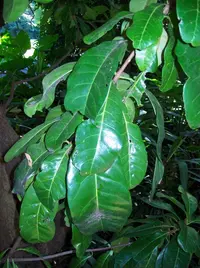
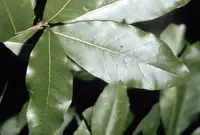
Shingle oak has narrow, unlobed leaves that look more like those of a laurel than a typical oak, and they often persist on the branches through winter, especially on younger trees.

Adapted to heavy soils

This species naturally occurs on moist, heavy clay soils in the central and eastern US, tolerating conditions that cause root stress in many other oaks.

Late, reliable acorn crop

Its small, nearly stalkless acorns mature in a single season and are produced more consistently year to year than some large-seeded oaks, providing regular food for wildlife such as squirrels and wild turkey.

Botan icon

Did you know?

Shingle oak was historically valued as a durable roofing material in parts of its native range, with its straight-grained wood split into thin shakes or shingles that gave the tree its common name.

FAQs about shingle oak

This species grows at a moderate rate, usually adding 30–60 cm per year once established. Growth is slower in the first few years while roots develop, then increases under full sun, deep soil, and consistent moisture.

Grow Healthy Plants with Botan Care

Keep your plants happy and healthy with plant identification, disease detection, and easy care guidance.

Botan plant care app — identify plants on mobile

Explore More Plants