Train Strong Leaders
In the first 3–5 years, select 1 central leader and 3–5 well-spaced scaffold branches, removing steeply upright competitors to build a durable framework that resists storm damage later.

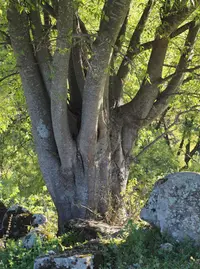
The nettle tree, Celtis australis, is a medium to large deciduous tree valued for its broad, rounded crown and smooth gray bark. It is often used as a shade or street tree in warm temperate regions.
This species is native to southern Europe and western Asia, where it grows on rocky slopes and well-drained lowland soils. Its small, dark fruits are appreciated by birds and wildlife.
Celtis australis is generally considered a tough, adaptable tree, tolerating urban conditions, moderate drought, and different soil types. These traits make it relatively straightforward to care for Nettle Tree when given sun and reasonably drained soil.

Care Difficulty
Easy Care

Light Preference
Full Sun

Water Requirements
Moderate Water

Temperature Preference
Cold Hardy

Hardiness Zone
6–9

Soil Texture
Sandy, Loamy, Clay

Soil pH
Slightly acidic (6.5–7.0), Slightly alkaline (7.0–7.5)

Soil Drainage
Well-drained

Fertilization
Minimal (feed rarely)
Scan your plant to receive care tips personalized for your specific plant
Available on iOS and Android
Celtis australis is a sun-loving deciduous tree that grows best with strong, direct light outdoors.
Celtis australis prefers deep, infrequent watering that encourages a strong, drought-tolerant root system.
This Mediterranean tree handles a wide temperature range but performs best in moderate, temperate climates.
Humidity is rarely a limiting factor for Celtis australis and it thrives in typical outdoor ambient humidity of 30–60%.
Celtis australis prefers well-structured, moderately fertile mineral soils with reliable drainage.
This species can be grown in containers only on a temporary basis due to its eventual large size and strong root system.
Celtis australis is a tough landscape tree that benefits from modest, thoughtful feeding rather than heavy fertilization.
Celtis australis responds well to light, structured pruning that maintains a strong framework and safe clearance.
This species is usually grown in the ground, so focus on correct transplanting rather than frequent repotting.
Celtis australis is most commonly propagated from seed by nurseries, as vegetative methods are less reliable for home growers.
Mature Celtis australis trees are cold hardy in much of the US and typically require minimal winter care once established.

Plant Health Check
Not sure what's wrong with your plant? Check your plant's health inside the app.
Celtis australis has been cultivated around the Mediterranean for centuries not only as a shade tree but also for its small, sweet drupes, which were traditionally eaten fresh, dried, or used as a minor famine food.
The wood of this species is dense, flexible, and very shock‑resistant, so it has been used historically for tool handles, walking sticks, and even agricultural implements that needed to withstand heavy mechanical stress.
This tree tolerates high summer temperatures, air pollution, and compacted soils better than many broadleaf species, which is why it is widely planted along streets and in plazas in Southern Europe and other warm-temperate cities.

In traditional European wheel‑making, the extremely flexible yet strong branches of Celtis australis were prized for crafting one‑piece wheel rims, a use that took advantage of the wood’s rare combination of elasticity and resilience.
Yes, this species grows reliably from fresh, fully ripe seeds. Stratification, a cold treatment at 35–40°F for 2–3 months, greatly improves germination. Seedlings grow best in deep containers to accommodate the developing taproot.
Keep your plants happy and healthy with plant identification, disease detection, and easy care guidance.