Use inert substrates
Attach thalli loosely to inert, non‑treated materials such as cork bark, air plant holders, or clean hardwood twigs to mimic natural bark attachment without introducing toxic resins or preservatives.

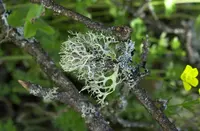
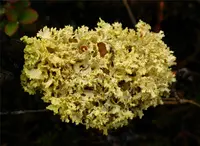
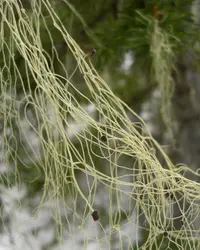
Oakmoss lichen, Evernia prunastri, is a fruticose lichen, not a true plant. It is a partnership between a fungus and a photosynthetic alga. It typically forms soft, branched, shrub-like tufts with a pale green to gray-green color and a slightly rough, cushiony texture. The lobes are flat and forked, often hanging in small clusters.
In nature it grows on the bark of conifers and some deciduous trees, especially in cool, humid forests across Europe and parts of North America. It is sensitive to air pollution and needs clean, moist air, which makes it challenging to keep alive away from its natural habitat and hard to care for Oakmoss lichen in typical indoor conditions.

Care Difficulty
Hard Care

Light Preference
Partial Shade

Water Requirements
Low Water

Temperature Preference
Cold Hardy

Hardiness Zone
3–8

Soil Texture
Rocky, Peaty, Organic-rich

Soil pH
Strongly acidic (4.5–5.5), Acidic (5.5–6.5)

Soil Drainage
Well-drained

Fertilization
Minimal (feed rarely)
Scan your plant to receive care tips personalized for your specific plant
Available on iOS and Android
Evernia prunastri thrives in cool, moist habitats with soft, indirect light rather than strong direct sun.
This lichen absorbs moisture from rain, mist, and humid air, so watering focuses on mimicking natural wet–dry cycles.
This species is adapted to cool, temperate climates and tolerates a fairly wide temperature range when moisture is adequate.
This lichen requires consistently high ambient humidity to stay hydrated and photosynthetically active.
Evernia prunastri is an epiphytic lichen that does not need soil and instead anchors to bark or other inert, well-aerated surfaces.
This species can be kept in containers only as a display or culture mount, not as a rooted potted plant.
Evernia prunastri gains nutrients mainly from rain and air, so additional fertilization is usually unnecessary for healthy growth.
Evernia prunastri requires almost no pruning, since it is a lichen attached to bark rather than a typical garden plant.
This lichen is usually left on host trees or branches and is not treated like a potted plant for Evernia prunastri care instructions.
Propagation of Evernia prunastri is slow and specialized, and is rarely attempted by home growers.
This lichen is naturally cold hardy and usually requires no specific winter care in outdoor conditions.

Plant Health Check
Not sure what's wrong with your plant? Check your plant's health inside the app.
This lichen grows mainly as an epiphyte on oak and other broadleaf tree bark in clean, humid woodlands, and its natural range covers much of Europe and parts of western and central Asia.
Oakmoss extracts from this species have been used for decades in high-end perfumery, especially in chypre and fougère fragrances, because of their long-lasting, earthy, woody scent profile.
Evernia prunastri is sensitive to sulfur dioxide and some heavy metals, so its presence and health are widely used by ecologists as an indicator of low air pollution and relatively clean environments.

Oakmoss from Evernia prunastri, often harvested in southern and central Europe, is one of the few lichen materials specifically regulated in the fragrance industry due to allergenic compounds such as atranol and chloroatranol, which led to strict usage limits in modern perfumes.
Growth is very slow. Thalli typically extend only a few millimeters per year, depending on air quality, humidity, light, and host bark. Patience is essential when trying to grow Evernia prunastri on new branches or bark pieces.
Keep your plants happy and healthy with plant identification, disease detection, and easy care guidance.