dotted lichen Care (Bacidia rubella)

Also known as: Frosty-rimmed Dot Lichen
dotted lichen

About dotted lichen

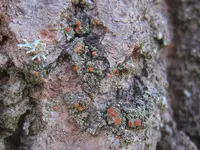
Dotted lichen, Bacidia rubella, is a crustose lichen, not a true plant, formed by a partnership between a fungus and photosynthetic algae. It grows as thin, flat patches closely attached to bark or rock, dotted with tiny reddish fruiting bodies that hold its spores.

This species is most often found on nutrient-poor bark in cool, humid woodlands across parts of Europe and North America. It tends to favor clean air and stable, undisturbed surfaces, which makes it sensitive to pollution and drying winds.

Because it depends on very specific moisture and air conditions, it is not easy to cultivate indoors or in gardens. Those who wish to care for dotted lichen need to focus on stable humidity, gentle light, and chemical-free surfaces.


Main Plant Requirements

Care Difficulty

Hard Care

Light Preference

Partial Shade

Water Requirements

Low Water

Temperature Preference

Cool Climate

Hardiness Zone

Unknown

Soil Texture

Rocky, Sandy, Loamy

Soil pH

Strongly acidic (4.5–5.5), Acidic (5.5–6.5)

Soil Drainage

Well-drained

Fertilization

Minimal (feed rarely)

Get Personalized Care Plan

Scan your plant to receive care tips personalized for your specific plant

Available on iOS and Android

How to Care for the dotted lichen

This crustose lichen prefers cool, soft light typical of shaded bark or rock surfaces.

  • Provide 2–4 hours of weak, indirect light such as dappled woodland shade; avoid harsh, direct midday sun that can desiccate thalli.
  • Dotted lichen tolerates deep shade but grows best with filtered morning light and bright shade for the rest of the day.
  • In hot summers, protect from reflected heat and afternoon sun; in winter, ensure exposure is not blocked by dense evergreen cover so it still receives low-angle light.

This lichen absorbs moisture from rain, fog, and humidity rather than deep soil water.

  • Allow the substrate surface to dry between wettings; for cultivated patches, re-wet only when the top 1–2 mm of bark or rock feels fully dry.
  • In cool seasons, brief misting during dry spells is sufficient; in warm, windy periods, increase light misting but avoid runoff or pooling water.
  • Signs of stress include brittle, pale crust from drought and soft, dark, slimy patches from overwatering or constantly saturated surfaces, which Bacidia rubella does not tolerate.

This species is adapted to cool to mild climates with moderate seasonal variation.

  • Optimal growth occurs around 45–70°F (7–21°C), common in shaded woodland or coastal exposures with steady humidity.
  • It tolerates brief drops near 15°F (-9°C) when dry, but repeated hard freezes with surface ice can damage tissue and reduce long-term viability.
  • Sustained heat above 85°F (29°C), especially with low humidity and intense sun, leads to desiccation; favor sites with cool air drainage or northern exposure in hot summers.

Bacidia rubella develops best in consistently moist, high-humidity conditions that mimic cool, damp outdoor habitats.

  • Aim for 70–90% humidity, such as on shaded, persistently damp bark, stone, or similar rough surfaces.
  • Dry air causes fading color, brittle crusts, and shrinking patches that no longer expand over the substrate.
  • Increase local humidity with frequent fine misting, placement near consistently damp surfaces, or by creating a ventilated, humid microclimate enclosure.

This lichen does not use soil in the usual plant sense but instead anchors to stable, slightly acidic, moisture-retentive yet aerated surfaces.

  • Bacidia rubella typically colonizes bark, rock, or old wood; surfaces should be firm, slightly rough, and able to hold thin films of moisture without remaining waterlogged.
  • Aim for a mildly acidic environment around pH 5–6.5; avoid alkaline dusts, cement, or lime-based materials that shift conditions toward high pH.
  • If creating an artificial substrate, combine crushed inert rock or sand with a small amount of acid peat or leaf litter, pressed onto a stable backing such as unglazed ceramic or stone.
  • Avoid compact, muddy, or continuously submerged conditions, which block air flow around the lichen thallus and encourage algae and molds that outcompete it.

This species is suitable only for very specialized container culture that mimics a moist, airy bark or rock surface rather than traditional potted growth.

  • Use a shallow, wide container that firmly holds a bark slab or rough stone, keeping the lichen surface elevated above any standing water layer.
  • Choose unglazed clay or porous stone tiles, which help regulate surface moisture by slowly releasing excess water from heavy misting.
  • Stabilize the substrate with gravel or clips so the colonized surface does not shift, since disturbance disrupts attachment and slows colonization.

Bacidia rubella, a crustose lichen, gains nutrients mostly from rainwater and dust, so added fertilizer is usually unnecessary for healthy growth.

Bacidia rubella needs no shaping, but light cleaning can maintain host bark health and lichen visibility.

  • Limit work to late winter or early spring when growth is slow and conditions are cool and dry.
  • Gently remove only obviously dead, flaking, or algae-smothered patches using a soft brush, not blades.
  • Avoid cutting or wounding the host tree or rock surface, which can destabilize the lichen community.
  • Keep interventions minimal; pruning the host plant heavily can reduce light and humidity conditions that support the lichen.

This lichen is not suited to conventional repotting; instead, focus on careful relocation of small colonized bark or stone pieces when necessary.

  • Transplant only when a host branch is being removed or a stone must be moved; avoid cosmetic moves.
  • Choose cool, humid seasons such as early spring or fall to limit desiccation stress.
  • Gently secure the lichen-covered substrate onto a similar new surface with ties or breathable tape, avoiding adhesives on the thallus.
  • Keep the new site shaded to bright indirect light and evenly humid for several weeks so the lichen can reattach gradually.

Propagation of Bacidia rubella is specialized and usually left to natural dispersal rather than routine home methods.

Dotted lichen is highly cold hardy and usually needs no specific winter care in temperate climates.

Care Tips

Select suitable substrate

When establishing colonies, press small fragments onto untreated, stable stone, bark, or unglazed clay that already supports some natural biofilm, as completely sterile or glossy surfaces make anchoring and long-term survival unlikely.

Mimic natural exposure

Mount thalli on slightly inclined or vertical surfaces that shed water quickly, since prolonged water pooling on flat, horizontal spots often leads to rot or algal overgrowth that smothers the lichen.

Limit physical disturbance

Place host pieces where they will not be brushed, handled, or splashed frequently, because even light repeated contact can detach the thin crust and slow recolonization of the substrate.

Control competing growth

Periodically remove mosses, algae films, and fast-growing lichens from around Bacidia patches with a soft brush or wooden skewer so the thin thallus is not shaded out or overrun.

Provide gradual transitions

When relocating material, shift it outdoors or to a new exposure over several weeks, keeping the same orientation to sun and rain to reduce stress and support stable, slow success in growing dotted lichen.

Common Pests and Diseases

Air pollution damage

Symptoms include loss of normal coloring, reduced growth, and local disappearance of thalli in areas with high sulfur dioxide, nitrogen oxides, or heavy metal deposition. This problem reflects the high sensitivity of the lichen to poor air quality rather than a biological infection.

Solution

Management focuses on relocating any collected material to cleaner air conditions, away from traffic corridors and industrial sources, and avoiding mounting it on polluted substrates such as treated wood or metal surfaces. Over time, improved air quality and reduced exposure to contaminants are the only effective measures to support survival when growing dotted lichen under controlled conditions outdoors or in terrariums with good air exchange.

Desiccation stress

This condition appears as thalli becoming brittle, paler, and inactive for long periods when exposed to prolonged dryness or strong sun with wind. Symptoms include slow or halted growth and a dusty, fragile surface that breaks easily.

Solution

To manage desiccation, place the lichen in a cool, shaded to lightly dappled position and protect it from direct midday sun and drying wind. Mist lightly with clean, non-chlorinated water during dry spells, allowing the surface to dry between events, and avoid continuous wetting, which can favor algae over the lichen fungus.

Algal overgrowth

This problem shows as a green, slimy or film-like layer covering parts of the lichen surface, often in very humid, nutrient-enriched spots. Symptoms include loss of the lichen’s normal color and texture where free-living algae dominate the surface.

Solution

Reduce nutrient input by avoiding fertilizer drift, soil splashing, or runoff from fertilized areas onto the lichen and improve gentle air movement to lower surface wetness duration. If practical, carefully rinse with clean water to remove loose algal films from rock or bark around the lichen, without scrubbing the thalli, and adjust placement to slightly less stagnant, still humid conditions.

Competitive moss encroachment

This issue is seen when mosses gradually overgrow and shade the thin lichen thalli on bark or rock, leading to reduced light and eventual dieback. Symptoms include patches of Bacidia rubella shrinking at the edges where moss cushions enlarge and trap debris.

Solution

To manage this, gently remove or thin surrounding mosses by hand or with soft tools, taking care not to detach the lichen surface. Maintain moderate, not excessive, moisture around the substrate so that moss growth slows, and keep the site free of accumulating leaf litter and soil that favor moss establishment.

Substrate bark decay

This condition occurs when the underlying tree bark or dead branch supporting the lichen decomposes, cracks, or sloughs off, causing whole patches to detach or decline. Symptoms include lifting, peeling, or flaking of lichen-covered bark plates and sudden local loss of thalli.

Solution

If the lichen is on removable dead wood, transfer stable, intact pieces to a new support before the bark fails completely, keeping orientation and exposure similar. For living trees, there is no direct treatment; instead, monitor and, if desired, move small colonized bark fragments onto another suitable, long-lasting substrate such as untreated hardwood or stone to preserve some of the population while following basic Bacidia rubella care principles.

Interesting Facts

Colorful apothecia

This lichen is recognized by its small, bright red to pink apothecia (disk-like fruiting bodies) that sit on a pale, often poorly developed crustose thallus on bark and wood.

Nitrogen-sensitive indicator

Bacidia rubella is sensitive to nitrogen air pollution and eutrophication, so its presence and abundance can be used as an indicator of relatively low nitrogen deposition in woodland habitats.

Preference for humid woodlands

The species occurs mainly on smooth bark of deciduous trees and on worked timber in humid, shaded woodlands, especially in oceanic and suboceanic climates across Europe and parts of North America.

FAQs about dotted lichen

Growth is very slow. This species typically extends only a few millimeters per year, depending on moisture, air quality, and stable surfaces. Any noticeable expansion over a short time usually reflects colony spread rather than individual thallus growth.

Grow Healthy Plants with Botan Care

Keep your plants happy and healthy with plant identification, disease detection, and easy care guidance.

Botan plant care app — identify plants on mobile

Explore More Plants