Host tree mapping
Survey the area and note the locations of mature oak or beech trees, since fruiting bodies form most reliably near established hosts where the mycorrhizal association is strongest.

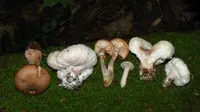
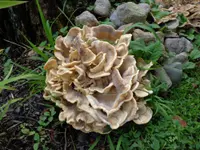
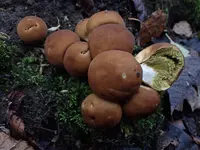
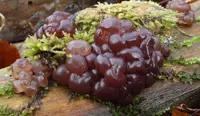
Aborted entoloma (Entoloma abortivum) is not a plant but a woodland fungus, often called the aborted entoloma or shrimp mushroom. It forms chunky, pale, irregular masses on the forest floor, usually near stumps or living trees.
This species occurs mainly in mixed hardwood forests across eastern North America, often growing in groups in leaf litter. It is thought to interact closely with Armillaria fungi, which influences where and when it appears.
Because it depends on specific fungal and woodland conditions, it is considered difficult to cultivate intentionally, and detailed guidance on how to care for Aborted entoloma is limited. In nature it prefers moist, shaded, undisturbed forest soil rich in organic matter.

Care Difficulty
Moderate Care

Light Preference
Partial Shade

Water Requirements
Regular Water

Temperature Preference
Cool Climate

Hardiness Zone
Unknown

Soil Texture
Loamy, Silty, Organic-rich

Soil pH
Acidic (5.5–6.5), Slightly acidic (6.5–7.0)

Soil Drainage
Moist but well-drained

Fertilization
Minimal (feed rarely)
Scan your plant to receive care tips personalized for your specific plant
Available on iOS and Android
This woodland fungus prefers dappled forest light rather than direct sun exposure.
Moist, aerated soil is essential for reliable fruiting of Entoloma abortivum in naturalistic beds.
This species fruits best in cool to mild conditions typical of temperate forests.
This fungus relies on moist, humid woodland conditions rather than controlled indoor humidity.
This species fruits in soil rich in organic woodland debris rather than in standard potting substrates.
This woodland fungus is not well suited to container growing and is best established directly in soil with its natural hosts.
This fungus forms natural nutrient partnerships in soil and typically does not require added fertilizer.
Pruning is not applicable to Entoloma abortivum because it is a wild fungus rather than a leafy or woody plant.
This species is a mycorrhizal and saprotrophic forest fungus, so traditional repotting or transplanting is not practical.
Propagation of this woodland fungus is specialized and usually left to natural spore dispersal and mycelial spread.
This temperate woodland fungus is naturally cold hardy and needs no special winter care in outdoor habitats.

Plant Health Check
Not sure what's wrong with your plant? Check your plant's health inside the app.
This species is unusual among agaric fungi because it parasitizes Armillaria species, including Armillaria mellea, rather than living primarily on dead organic matter. The malformed whitish structures often seen near honey mushrooms are the result of this parasitic interaction.
The thick, irregular, whitish masses commonly associated with this fungus are considered abortive forms produced during its interaction with Armillaria, not typical cap-and-stem mushrooms. Microscopic studies show that tissue from this fungus actively invades and disrupts Armillaria fruiting bodies.
This mushroom is most frequently reported from eastern and central North America in mixed hardwood forests. It tends to appear in clusters on the ground in autumn where Armillaria is present, reflecting its dependence on the host fungus.

Molecular and microscopic research has shifted earlier interpretations of the relationship between this species and Armillaria, showing that it is the entoloma, not the Armillaria, that acts as the mycoparasite, overturning the long-held belief that Armillaria was attacking and deforming the entoloma fruiting bodies.
This fungus is generally regarded as edible when correctly identified, particularly the aborted, whitish club-shaped forms. Accurate identification is critical, as some Entoloma species are poisonous. Only consume specimens confirmed by an experienced mycologist or local expert.
Keep your plants happy and healthy with plant identification, disease detection, and easy care guidance.