Host tree selection
Establish this fungus only on well-decayed beech logs or stumps that still hold moisture but are no longer structurally sound, as fresher, hard wood will greatly slow colonization and fruiting.

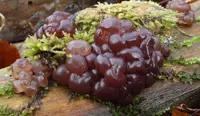
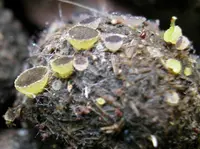
Ascotremella faginea is a small, jelly-like fungus rather than a traditional leafy plant. It forms irregular, brain-like masses with a translucent, gelatinous texture, often in pale to reddish brown tones.
This species typically grows on decaying beech wood in cool, moist forests, especially in temperate regions. It plays a role in breaking down dead wood and recycling nutrients in woodland ecosystems.
In cultivation it is rarely grown on purpose, since it depends on well-decayed hardwood and stable moisture. For anyone studying how to care for Ascotremella faginea, it is important to understand that it follows natural wood-decay cycles rather than typical houseplant growing patterns.

Care Difficulty
Moderate Care

Light Preference
Partial Shade

Water Requirements
Moderate Water

Temperature Preference
Warm Climate

Hardiness Zone
Unknown

Soil Texture
Loamy

Soil pH
Slightly acidic (6.5–7.0)

Soil Drainage
Well-drained

Fertilization
Minimal (feed rarely)
Scan your plant to receive care tips personalized for your specific plant
Available on iOS and Android
This wood-inhabiting jelly fungus prefers low, filtered woodland light rather than direct sun exposure.
Moist but not stagnant conditions on decaying beech wood support stable development of this jelly fungus.
This fungus is adapted to cool to mild woodland conditions and declines in prolonged heat or hard frost.
This wood-inhabiting jelly fungus is not suited to household humidity control and does not require managed air moisture.
This fungus grows naturally on decaying beech wood rather than in mineral soil, so conventional soil preparation is not appropriate.
This species is not realistically suited to standard container growing and is best observed on naturally colonized wood outdoors.
This wood-inhabiting jelly fungus usually needs no fertilization when growing on its natural beech hosts.
Pruning is not applicable, as this is a wild saprophytic fungus rather than a managed garden shrub or tree.
Transplanting is rarely attempted because this fungus depends on specific dead beech wood and microhabitat conditions.
Intentional propagation is uncommon and technically challenging, as this species relies on complex wood-decay ecology.
No special winter care is required because this temperate jelly fungus tolerates normal outdoor cold where beech forests occur.

Plant Health Check
Not sure what's wrong with your plant? Check your plant's health inside the app.
This jelly fungus is strongly associated with beech trees (Fagus spp.), where it develops on well-decayed beech wood rather than on a wide variety of hardwoods like many other saprobes.
The fruitbodies form irregular, convoluted lobes with a gelatinous, brain-like appearance that can become quite soft and watery in wet weather and contract when conditions are dry.
In Europe and parts of North America it most often fruits in the cool, damp months from late autumn into winter, making it easier to spot when surrounding vegetation has died back.

Molecular and microscopic studies have shown that this species belongs to the family Helotiaceae within the Ascomycota, and its unusual, gelatinous fruitbodies helped clarify that some jelly-like fungi are ascomycetes rather than basidiomycetes, which are more typically associated with jelly fungi.
This jelly-like fungus is regarded as inedible. It is not known to be dangerously toxic, but it has poor texture and no culinary value. It should not be collected for food or confused with edible jelly fungi.
Keep your plants happy and healthy with plant identification, disease detection, and easy care guidance.