Use host logs
Establish the fungus on partially buried, well-rotted hardwood logs or large chunks of wood from conifers known to host similar species, as this mimics the natural substrate and improves chances of fruiting.

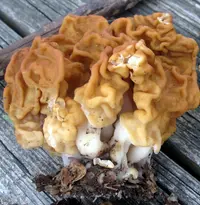
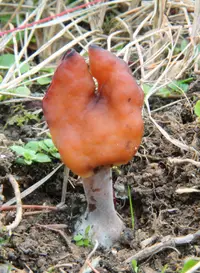
Gyromitra gigas, also known as Gyromitra korfii, is a large spring-fruiting fungus, not a traditional green plant. It forms bulky, brain-like caps on stout, pale stems. It naturally occurs in temperate forests, often near conifers or mixed woods, emerging from soil or forest litter as snow melts. Growth is seasonal and unpredictable, which makes cultivation difficult for most home growers. Those wishing to care for Gyromitra gigas should know it depends on complex relationships with trees and soil microbes, so it does not adapt well to containers or typical indoor conditions. It generally prefers cool, moist, well-drained forest soils with dappled light.

Care Difficulty
Hard Care

Light Preference
Partial Shade

Water Requirements
Keep Soil Moist

Temperature Preference
Cool Climate

Hardiness Zone
Unknown

Soil Texture
Loamy, Silty, Organic-rich

Soil pH
Acidic (5.5–6.5)

Soil Drainage
Moist but well-drained

Fertilization
Minimal (feed rarely)
Scan your plant to receive care tips personalized for your specific plant
Available on iOS and Android
This spring-fruiting fungus prefers cool forest light rather than open, direct sun.
This species needs consistently moist but not waterlogged soil in its natural forest habitat.
This fungus thrives in cool to mild conditions typical of early spring forests.
This fungus fruits best in consistently moist, cool air rather than in dry conditions.
Gyromitra korfii relies on moist, organic-rich ground rather than conventional potting soil.
This species is not realistically suited to container growing, as it depends on complex soil and habitat conditions that containers rarely provide.
Gyromitra korfii is a wild, mycorrhizal fungus that obtains nutrients through its fungal–tree partnership and should not be fertilized directly.
Gyromitra korfii does not require pruning because the visible fruiting body is temporary and naturally decomposes.
This fungus is not suited to typical repotting; care focuses on keeping its woodland habitat stable rather than moving it.
Gyromitra korfii is challenging to propagate intentionally because it depends on complex relationships with host trees and soil fungi.
This species is naturally cold hardy in its native range and does not need targeted winter care in the ground.

Plant Health Check
Not sure what's wrong with your plant? Check your plant's health inside the app.
This species often fruits very early in spring, sometimes when snow patches are still present, and is easily mistaken for true morels (Morchella spp.) because of its pale, wrinkled cap and similar habitat.
Reports from East Asia indicate that it has been eaten traditionally after careful preparation, but toxic compounds related to gyromitrin have been detected, and its edibility is now considered doubtful and unsafe in modern mycology references.
It is most often found in montane and subalpine coniferous forests, especially near melting snowbanks, where it grows on soil rich in decaying plant material and sometimes along trails, roadsides, or disturbed forest edges.

Molecular studies have shown that specimens historically labeled under several similar “false morel” names from Asia and North America actually represent a distinct lineage, leading to refinement of its taxonomic status and a clearer separation from related species such as Gyromitra gigas and Gyromitra esculenta.
This fungus is considered poisonous and should not be eaten, even after drying or repeated boiling. It contains unstable toxins that can damage the liver and nervous system. For safety, avoid consumption and treat it as inedible.
Keep your plants happy and healthy with plant identification, disease detection, and easy care guidance.