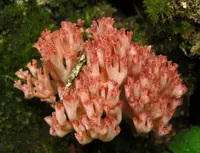
Ridged tooth Care (Hydnellum scrobiculatum)

Ridged tooth

About Ridged tooth

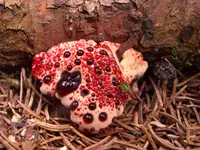
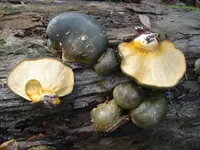
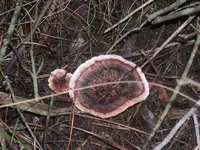
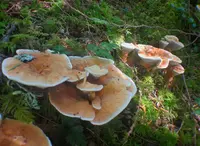
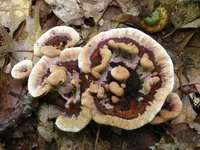
Ridged tooth, Hydnellum scrobiculatum, is a tooth fungus, not a traditional leafy plant. It forms irregular, often fused caps with spiny undersides instead of gills. Colors range from brown to grayish tones, sometimes with mottled or pitted surfaces.

This species grows on the ground in coniferous and mixed forests, usually in cooler, temperate regions of the Northern Hemisphere. It is mycorrhizal, forming a symbiotic relationship with tree roots, which makes it difficult to cultivate at home.

Those who want to care for Ridged tooth should know it depends on undisturbed forest soil, adequate leaf litter, and stable moisture. It is best appreciated in its natural habitat rather than as a garden or indoor specimen.

Main Plant Requirements

Care Difficulty

Hard Care

Light Preference

Shade

Water Requirements

Keep Soil Moist

Temperature Preference

Cool Climate

Hardiness Zone

4–8

Soil Texture

Loamy, Sandy, Organic-rich

Soil pH

Strongly acidic (4.5–5.5)

Soil Drainage

Moist but well-drained

Fertilization

Minimal (feed rarely)

Get Personalized Care Plan

Scan your plant to receive care tips personalized for your specific plant

Available on iOS and Android

How to Care for the Ridged tooth

This mycorrhizal fungus prefers cool, shaded forest conditions rather than direct open sun.

  • Provide dappled or filtered light under trees, with 1–3 hours of weak morning sun at most and full protection from strong afternoon sun.
  • Aim for a site that stays in bright shade or open woodland shade all day; dense, deep shade can reduce fruiting of Ridged tooth.
  • In summer, leaf canopy cover that blocks 60–90% of direct light helps prevent drying, while in late autumn slightly more light is acceptable as temperatures drop.

This forest-dwelling fungus depends on consistently moist, well-drained soil rather than frequent surface watering.

  • Maintain evenly moist soil around the host tree, allowing the top 2–3 cm to approach dryness but not fully dry out between natural rains.
  • Ensure soil drains freely; standing water, sour smell, or soft, collapsing fruiting bodies indicate overwatering or poor drainage.
  • During prolonged dry periods, apply a gentle soak to the surrounding forest floor area, then wait until the surface looks dull and slightly dry before repeating.

This species performs best in cool to mildly warm forest climates with stable, moderate temperatures.

  • Optimal growth occurs around 50–68°F (10–20°C), typical of shaded woodland floors in spring and autumn.
  • It tolerates brief drops near 32°F (0°C), but extended hard freeze without insulating leaf litter can damage developing structures.
  • Sustained heat above 77–82°F (25–28°C), especially with low humidity, can dry the substrate; deep shade and organic mulch help buffer temperature swings.

This species is a woodland fungus that relies on stable forest-like humidity rather than controlled indoor moisture levels.

This fungus depends on natural forest soil rather than artificial potting mixes.

  • Hydnellum scrobiculatum typically grows in acidic, humus-rich conifer forest soils with a loose, crumbly structure.
  • It associates with tree roots, so the substrate must be undisturbed, well-aerated, and rich in decomposing needles and leaf litter.
  • Water needs to drain freely through the profile; avoid compacted, waterlogged, or heavily clay-based ground.
  • Do not amend with large amounts of lime, manure, or high-salt fertilizers, which can disrupt its mycorrhizal relationship with host trees.

This mycorrhizal woodland fungus is not suitable for container growing, as it relies on complex root associations and stable forest soil conditions.

This mycorrhizal fungus relies mainly on nutrients from its tree partners, so Ridged tooth needs no routine fertilizing in the ground.

Hydnellum scrobiculatum does not require true pruning, but spent fruiting bodies can be tidied if needed.

  • Remove only old, damaged, or moldy fruiting bodies by gently cutting at the base with a clean knife or scissors.
  • Carry out any cleanup after spores have released, typically late in the fruiting period, to avoid disrupting reproduction.
  • Avoid disturbing the surrounding soil and tree roots, since the underground mycelium is the vital, living part.

This ectomycorrhizal fungus is rarely grown in containers; management focuses on transplanting inoculated trees rather than moving the fungus itself.

  • Transplant young host trees in fall or early spring when dormant, as root disturbance is less stressful.
  • Choose a site with similar soil type, drainage, and light conditions to where the Hydnellum scrobiculatum association formed.
  • Minimize root damage by keeping the native soil ball intact, moist, and shaded during handling and transport.
  • Transplant infrequently, only when long-term site conditions are clearly more suitable, to maintain a stable fungus–root partnership.

Propagation of this fungus is specialized and not typically done by home growers, since it depends on complex mycorrhizal association with suitable trees.

Hydnellum scrobiculatum is cold hardy in temperate climates and usually needs no special winter care in the ground.

Care Tips

Retain Forest Litter

Leave a thick layer of natural leaf litter and small twigs around the host trees to maintain the cool, acidic, fungi-friendly microhabitat this species requires for stable fruiting.

Protect Mycelium Zone

Mark and avoid walking or digging in the area where fruiting bodies appear, since compacted or disturbed soil can damage the underground mycelium and stop future growth.

Minimal Handling Practice

Use a clean knife to cut fruiting bodies at the base instead of pulling them out, and leave a portion undisturbed each season to allow continued spore production and population stability.

Encourage Host Health

Support the health of associated conifers by avoiding heavy fertilization, road salt, and root disturbance, because a strong host tree sustains this mycorrhizal fungus over many years.

Monitor Site Moisture

Install a simple rain gauge or soil moisture indicator near the colony and record seasonal patterns so that any supplemental moisture or shading adjustments can be timed precisely for caring for Ridged tooth.

Common Pests and Diseases

Mycophagous springtails

These insects feed on fungal tissue and can graze the fruiting body surface, leaving pitted, rough areas and distorted spines or teeth. This pest is most active in moist, organic-rich sites where Hydnellum scrobiculatum typically grows.

Solution

Reduce excess surface moisture around the fruiting bodies by improving drainage and avoiding heavy watering in cultivation beds, and gently remove leaf litter that shelters them. Where damage is persistent, use sticky traps and targeted applications of a low-toxicity insecticidal soap on surrounding litter, avoiding direct contact with the fungus itself.

Slugs and snails

These pests rasp away tissue, leaving irregular bite marks and missing sections of the cap and tooth layer. Symptoms include slime trails on or near the fruiting bodies in damp, shaded conditions.

Solution

Hand-pick slugs and snails at dusk or early morning and use barriers such as copper tape or sharp grit around cultivated areas. In outdoor culture beds, apply iron phosphate pellets around but not on the fruiting bodies to reduce populations while limiting impact on non-target organisms.

Fungal parasitism

This disease occurs when other fungi colonize the fruiting bodies, causing discolored patches, soft or cottony overgrowth, and premature decay. Symptoms include loss of structural firmness and patchy, off-color areas that spread over time.

Solution

Carefully remove and discard heavily overgrown or collapsing fruiting bodies to reduce inoculum, and avoid overcrowding by spacing emerging fungi in cultivation setups. Improve air movement and reduce prolonged surface wetness around the host to make conditions less favorable for parasitic fungi, which supports more stable Hydnellum scrobiculatum care instructions.

Interesting Facts

Unusual pitted cap

The fruiting body has a brown to grayish cap covered with distinct, irregular pits or depressions that often collect forest debris, which helps camouflage it on the forest floor.

Specialist mycorrhizal partner

This tooth fungus forms ectomycorrhizae mainly with conifers such as pines and spruces in acidic, nutrient-poor soils, exchanging mineral nutrients and water for sugars from its host trees.

Spines instead of gills

Instead of gills or pores, the underside of the cap bears dense, downward-pointing spines (teeth) on which the basidiospores are produced, a diagnostic feature of the genus Hydnellum.

Botan icon

Did you know?

Hydnellum scrobiculatum is often used as an indicator species for long-established, undisturbed conifer forests in parts of Europe, so its presence can signal high conservation value and relatively intact fungal communities.

FAQs about Ridged tooth

This fungus is considered inedible due to its tough, corky texture and very bitter taste. It is not collected for food and should be left in the forest as part of the natural ecosystem.

Grow Healthy Plants with Botan Care

Keep your plants happy and healthy with plant identification, disease detection, and easy care guidance.

Botan plant care app — identify plants on mobile

Explore More Plants