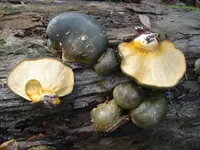
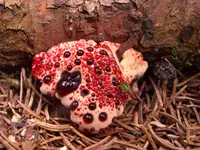
Orange Rough-cap Tooth Care (Hydnellum aurantiacum)

Orange Rough-cap Tooth

About Orange Rough-cap Tooth

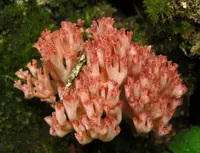
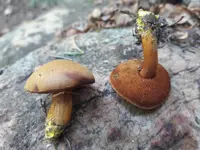
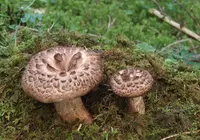
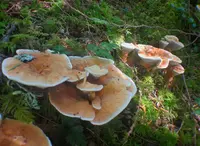
Orange rough-cap tooth, Hydnellum aurantiacum, is a tooth fungus rather than a typical leafy plant. It forms sturdy, often orange to brown caps with spines on the underside instead of gills. The fruiting bodies grow low to the ground and appear in clusters or scattered groups. This species usually occurs in coniferous forests, often in association with pine or spruce. It forms mycorrhiza, a symbiotic relationship with tree roots, which makes it difficult to cultivate at home. Gardeners who want to care for Orange Rough-cap Tooth should understand that it is best appreciated as a woodland fungus in natural or semi-natural forest settings.

Main Plant Requirements

Care Difficulty

Hard Care

Light Preference

Partial Shade

Water Requirements

Regular Water

Temperature Preference

Cool Climate

Hardiness Zone

5–9

Soil Texture

Loamy, Peaty, Organic-rich

Soil pH

Strongly acidic (4.5–5.5), Acidic (5.5–6.5)

Soil Drainage

Moist but well-drained

Fertilization

Minimal (feed rarely)

Get Personalized Care Plan

Scan your plant to receive care tips personalized for your specific plant

Available on iOS and Android

How to Care for the Orange Rough-cap Tooth

This mycorrhizal fungus prefers cool woodland light rather than open, exposed sun.

  • Provide dappled or filtered light under conifers or mixed woodland, aiming for 2–4 hours of weak direct morning sun with shade the rest of the day.
  • Avoid strong midday and afternoon sun; exposed sites can lead to drying of the fruiting bodies and reduced mycelium vigor in the upper soil layer.
  • Ensure stable partial shade year-round; removal of overstory trees or heavy thinning can abruptly increase light and hamper Orange Rough-cap Tooth fruiting.

This forest-dwelling fungus depends on consistently moist, not saturated, soil conditions.

  • Aim for evenly moist soil in the upper 5–10 cm, mimicking a damp, humus-rich forest floor with a thick layer of leaf litter or conifer needles.
  • Watch for signs of excess water such as sour odor, standing water, or slimy litter; these indicate poor aeration and risk to Hydnellum aurantiacum mycelium.
  • During dry, warm periods, maintain moisture with mulch or gentle irrigation, allowing surface litter to feel just slightly damp rather than wet between waterings.

This species is adapted to cool to mild woodland climates with distinct seasonal shifts.

  • Optimal fruiting typically occurs around 50–68°F (10–20°C), common in late summer to autumn in temperate forests with stable moisture.
  • The mycelium in soil can tolerate winter cold below 32°F (0°C), but repeated freeze–thaw with bare, exposed soil may damage shallow hyphae near the surface.
  • Sustained heat above 80°F (27°C) combined with dry conditions reduces fruiting; deep mulch and tree canopy help buffer temperature swings through summer.

This fungus prefers consistently moist air but does not require highly controlled humidity.

  • Aim for 60–80% humidity, similar to a shaded forest floor, avoiding prolonged very dry conditions below 40%.
  • Dry air may slow growth and cause caps to become brittle and cracked at the edges.
  • If conditions are dry, increase local humidity with nearby mulch, moist leaf litter, or a damp burlap screen rather than misting directly on fruiting bodies.

This species grows best in loose, acidic, organic-rich forest soil with steady moisture.

  • Use a coarse mix of coniferous duff, pine needles, fine bark, and sharp sand to mimic its natural mycorrhizal habitat.
  • Maintain strong drainage so water moves through quickly while the surface remains slightly moist, never waterlogged or compacted.
  • Target acidic conditions around pH 4.5–5.5, avoiding lime or wood ash that raise pH and suppress Hydnellum aurantiacum.
  • Improve aeration by incorporating chunky bark or perlite-sized grit, and avoid heavy clay or peat-only substrates that stay dense and airless.

This species is generally unsuitable for long-term container growing because it depends on mycorrhizal association with tree roots in open ground.

This mycorrhizal fungus is adapted to nutrient-poor forest soils and usually does best without added fertilizer.

Hydnellum aurantiacum does not require conventional pruning, but spent fruiting bodies can be tidied for appearance or monitoring.

  • If desired, cut away old, decaying caps after spore release to keep the area tidy.
  • Use clean, sharp scissors or a knife to slice fruiting bodies at the base without disturbing surrounding soil.
  • Avoid disturbing the underlying mycelium network, which is the main living body of the fungus.

Transplanting this woodland fungus is rarely successful because it depends on a living tree partner and a stable soil community.

  • Attempt moves only when absolutely necessary, such as before habitat disturbance.
  • Time any transplanting for cool, moist weather in fall to reduce stress on the mycelium.
  • Lift a very large, intact soil block containing both host tree roots and fungal tissue.
  • Keep the soil block shaded and evenly moist throughout the process to limit desiccation and shock.

Hydnellum aurantiacum is difficult to propagate in gardens because it forms specialized mycorrhizal partnerships with trees.

This species is cold hardy in its native temperate forests and usually needs no special winter care once established outdoors.

Care Tips

Use Host Trees

Establish the fungus near compatible conifers (such as pine or spruce) whose fine feeder roots occupy the top 5–10 cm of soil, since this species typically forms mycorrhizal partnerships rather than thriving in isolated, root-free beds.

Mimic Forest Litter

Maintain a continuous layer of conifer needles and small twigs around the colony, topping up 1–2 times per year, to keep the soil surface shaded, acidic, and aerated in a way that supports stable fruiting.

Limit Foot Traffic

Mark off the fruiting zone and avoid walking or placing heavy objects over it to prevent soil compaction that can crush the underground mycelium and sharply reduce future mushroom production.

Gentle Harvest Practice

Cut fruiting bodies at the base with a clean knife instead of pulling them out, and leave small or damaged specimens in place, so the underlying mycelial network remains intact and able to fruit again.

Monitor Moisture Microclimate

Use a simple soil probe or finger check in several spots around the patch after rain or irrigation to confirm that the top 5–8 cm stays cool and only lightly moist, then adjust mulch depth or watering pattern to fine-tune the microclimate for growing Orange Rough-cap Tooth.

Common Pests and Diseases

Habitat disturbance

Symptoms include disappearance or severe decline of fruiting bodies in sites that were previously productive. This issue is linked to soil disruption, logging, compaction, or removal of associated trees that the fungus depends on.

Solution

Protect existing host trees (typically conifers) and avoid soil disturbance, grading, or heavy foot traffic where the fungus fruits. Maintain a stable, shaded, undisturbed forest-like area with intact leaf litter and woody debris to allow the mycorrhizal partnership to persist.

Soil compaction

This problem reduces air spaces in the soil, which limits oxygen and water movement around the fungal mycelium, leading to weak or absent fruiting bodies. Symptoms include hard, heavily trodden ground and a long-term drop in visible mushrooms.

Solution

Keep people, vehicles, and equipment off known fruiting spots, and if possible add a loose top layer of leaf litter or wood chips without digging. Encourage ground cover vegetation to stabilize soil while minimizing mowing or raking in the area.

Drought stress

Symptoms include small, misshapen, or aborted fruiting bodies during dry periods, or complete failure to fruit in seasons that are unusually dry. This stress affects both the host tree and the fungus, disrupting their mycorrhizal exchange of water and nutrients.

Solution

In cultivated or managed settings, lightly irrigate the broader tree root zone during extended dry spells, keeping the soil evenly moist but not waterlogged. Maintain a thick natural mulch of needles, leaves, and small wood to reduce evaporation and buffer moisture fluctuations.

Waterlogging

This condition occurs when soil stays saturated for long periods, limiting oxygen for the fungus and tree roots and often stopping fruiting. Symptoms include standing water, sour or anaerobic soil smell, and loss of mushrooms in previously active patches.

Solution

Improve drainage around the host trees by redirecting runoff, avoiding irrigation directly over low spots, and not creating compacted basins. Aim for evenly moist, free-draining soil and avoid adding liners, plastic, or other barriers that trap water in the rooting zone.

Interesting Facts

Distinctive tooth-like hymenium

This species produces its spores on downward-pointing spines instead of gills or pores, a defining feature of tooth fungi that gives the cap underside a distinctly bristly surface.

Orange to blue color shift

Fresh caps often show bright orange to rusty tones that can fade or shift toward dingy brownish or bluish hues as the fruiting body ages and dries, making identification easier when multiple stages are present.

Mycorrhizal forest partner

The fungus forms ectomycorrhizal associations with conifers such as spruce and fir, exchanging mineral nutrients and water from the soil for sugars produced by its host tree.

Botan icon

Did you know?

Some collections of this species produce a vivid orange latex that can stain surrounding soil and debris, and this pigment has been historically noted by field mycologists as a useful visual clue when trying to grow Hydnellum aurantiacum in culture for research.

FAQs about Orange Rough-cap Tooth

This fungus is best grown outdoors, mimicking cool, moist, acidic forest conditions. It forms mycorrhizal partnerships with conifer roots, so it does not adapt well to pots, houseplant conditions, or typical garden beds.

Grow Healthy Plants with Botan Care

Keep your plants happy and healthy with plant identification, disease detection, and easy care guidance.

Botan plant care app — identify plants on mobile

Explore More Plants