Use hardwood logs
Inoculate fresh-cut, bark-intact hardwood logs (such as oak or eucalyptus) within 2–4 weeks of felling to give the fungus a competitive advantage over wild contaminants.

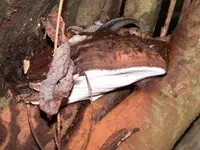
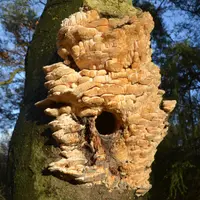
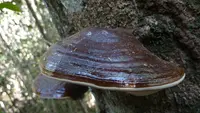
Ganoderma brownii is a large, woody bracket fungus rather than a typical leafy plant. It usually grows as shelf-like tiers on tree trunks or large stumps. The fruiting bodies are thick, hard, and brown to reddish, often with concentric zones and a lighter margin when actively growing. This fungus is native to parts of North America and is most often found on hardwoods in parks, gardens, and woodlands. It is not cultivated like common houseplants, so how to care for Ganoderma brownii mainly concerns preserving host trees and appropriate environmental conditions. It favors moist, shaded sites with decaying wood and stable humidity.

Care Difficulty
Moderate Care

Light Preference
Partial Shade

Water Requirements
Keep Soil Moist

Temperature Preference
Warm Climate

Hardiness Zone
Unknown

Soil Texture
Loamy, Organic-rich

Soil pH
Slightly acidic (6.5–7.0)

Soil Drainage
Moist but well-drained

Fertilization
Minimal (feed rarely)
Scan your plant to receive care tips personalized for your specific plant
Available on iOS and Android
This wood-decay fungus prefers stable, shaded light conditions that mimic its natural woodland habitat.
Moist, not saturated, conditions around the host wood support stable fruiting and mycelial growth.
This species thrives in mild, temperate conditions with cool to warm seasons and avoids temperature extremes.
This fungus tolerates a wide humidity range but performs best in consistently moist air.
Ganoderma brownii develops best on dead or decaying woody material rather than conventional garden soil.
This species can be maintained in containers when grown on suitable woody substrate rather than typical potting soil.
This wood-decay fungus usually grows on nutrient-rich hosts and needs no supplemental feeding in natural or landscape settings.
Pruning is not applicable, as Ganoderma brownii is a bracket fungus that forms fruiting bodies on wood rather than a plant with stems or branches.
Ganoderma brownii is not maintained as a conventional potted plant; management focuses on host trees rather than repotting or transplanting the fungus itself.
Deliberate propagation is rarely appropriate because this is a wood-decay fungus associated with structural damage in trees.
No specific winter care is required, as this fungus tolerates normal outdoor temperature fluctuations and persists within host wood.

Plant Health Check
Not sure what's wrong with your plant? Check your plant's health inside the app.
This species causes a brown rot on living and dead trees, breaking down cellulose and hemicellulose in wood while leaving much of the lignin, which results in a dry, crumbly, cube-like wood texture.
Ganoderma brownii is most frequently reported on oaks and other broadleaf trees in urban landscapes, where it colonizes roots and the lower trunk, often entering through wounds or stressed tissue.
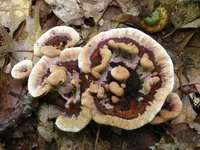
Its fruiting bodies are typically large, bracket-like structures with a thick, woody texture and brown, concentrically zoned upper surfaces that can persist for multiple seasons on the same host.
Growth is slow to moderate. Once established in decaying or stressed wood, brackets typically expand over several months, with new tiers forming seasonally. Growth rate depends on moisture, temperature, and how advanced the underlying wood decay is.
Keep your plants happy and healthy with plant identification, disease detection, and easy care guidance.