Use host trees
Establish patches near compatible host trees such as oak or chestnut and avoid disturbing feeder roots, since this mycorrhizal fungus relies on a stable tree partner for long-term fruiting.

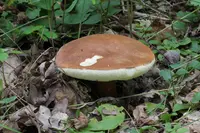
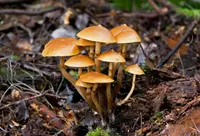
Chestnut bolete (Gyroporus castaneus) is a mycorrhizal mushroom-forming fungus, not a typical houseplant. It grows from soil, forming a partnership with tree roots. The fruiting body shows a smooth chestnut-brown cap and a short, often hollow stem with pale pores instead of gills.
This species is usually found in light, sandy soils in woodlands, often with oaks or chestnuts in temperate regions, including parts of Europe and North America. It is considered difficult to cultivate at home because it depends on living host trees and specific soil fungi communities, so most people do not actively care for Chestnut Bolete.
In nature, it prefers well-drained, slightly acidic soils with moderate moisture and dappled forest light, appearing seasonally when conditions are suitable.

Care Difficulty
Hard Care

Light Preference
Partial Shade

Water Requirements
Keep Soil Moist

Temperature Preference
Cool Climate

Hardiness Zone
Unknown

Soil Texture
Sandy, Loamy, Organic-rich

Soil pH
Acidic (5.5–6.5)

Soil Drainage
Moist but well-drained

Fertilization
Minimal (feed rarely)
Scan your plant to receive care tips personalized for your specific plant
Available on iOS and Android
This ectomycorrhizal fungus thrives in bright woodland conditions with dappled light rather than open, exposed sun.
This woodland fungus depends on consistently moist, well‑drained soil rather than direct watering to its fruiting bodies.
This species prefers mild to warm conditions typical of temperate woodlands and is sensitive to hard frost and extreme heat.
This ectomycorrhizal fungus needs consistently moist air around developing fruiting bodies but tolerates moderate variation.
This species fruits best in loose, airy, well-drained yet consistently moist substrate around host tree roots.
This species is generally unsuitable for long‑term container cultivation because it relies on stable ectomycorrhizal relationships with host tree roots in the ground.
This mycorrhizal fungus relies mainly on its tree partners for nutrients, so Chestnut Bolete needs no direct fertilization.
Gyroporus castaneus does not require pruning, since it is a wild ectomycorrhizal fungus, not a conventional garden plant.
This species is not suited to standard repotting, as it depends on living tree roots and stable woodland soil.
Reproducing Gyroporus castaneus under garden conditions is difficult and not usually attempted by home growers.
Established mycelium in natural woodland is generally cold hardy and needs no special winter care.

Plant Health Check
Not sure what's wrong with your plant? Check your plant's health inside the app.
Mature fruiting bodies often develop a brittle, hollow stem that can split into chambers, a structural trait that helps distinguish this species from many other small boletes with solid stems.
The flesh stays white and does not turn blue or other colors when cut or bruised, which is a key diagnostic feature compared with many related boletes that show rapid color changes on exposure to air.
This species forms ectomycorrhizal associations with oak species in well‑drained, often sandy soils, and is found most often in warm, open oak woodlands and forest edges rather than dense, closed‑canopy forests.
This species is generally regarded as edible and mild-tasting when properly identified and cooked. However, look-alike boletes can be toxic. Always confirm identification with a reliable local expert or field guide before consuming any wild mushroom.
Keep your plants happy and healthy with plant identification, disease detection, and easy care guidance.