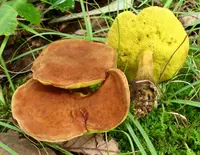
viscid bolete Care (Aureoboletus flaviporus)

viscid bolete

About viscid bolete

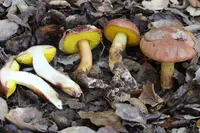
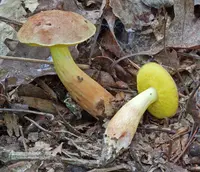
Aureoboletus flaviporus, commonly called the viscid bolete, is a fleshy wild mushroom rather than a typical cultivated plant. It forms a sticky, yellow to golden cap with pores instead of gills and a stout stem.

This species is usually found in forests, growing on the ground in association with trees, often in warm, humid regions. It relies on a symbiotic relationship with tree roots, which makes it difficult to grow reliably at home.

In nature it favors moist, well-drained soils and shaded to dappled woodland light. Because of its dependence on tree partners and specific habitat, it is not a practical choice for those who want to learn how to care for viscid bolete in a garden or indoor setting.


Main Plant Requirements

Care Difficulty

Hard Care

Light Preference

Partial Shade

Water Requirements

Keep Soil Moist

Temperature Preference

Warm Climate

Hardiness Zone

Unknown

Soil Texture

Loamy, Silty, Organic-rich

Soil pH

Acidic (5.5–6.5), Slightly acidic (6.5–7.0)

Soil Drainage

Moist but well-drained

Fertilization

Minimal (feed rarely)

Get Personalized Care Plan

Scan your plant to receive care tips personalized for your specific plant

Available on iOS and Android

How to Care for the viscid bolete

This mycorrhizal mushroom prefers woodland light conditions rather than open, full sun exposure.

  • Provide bright dappled shade under deciduous trees, with indirect light for most of the day and at most 1–3 hours of gentle morning sun.
  • Avoid strong midday and afternoon sun; prolonged exposure can overheat the soil surface, drying the upper 3–5 cm and stressing the viscid bolete mycelium.
  • In summer, rely on canopy shade or shade cloth; in spring and fall, slightly increased light is acceptable as long as the forest floor does not fully dry out.

This ectomycorrhizal fungus depends on evenly moist, well‑drained forest soil rather than frequent surface soaking.

  • Aim to keep the top 2–5 cm of soil slightly moist but never waterlogged, allowing it to lose surface gloss before the next thorough soak.
  • Use porous, humus‑rich soil with good drainage so excess water moves away quickly, reducing the risk of anaerobic conditions and root partner decline in Aureoboletus flaviporus.
  • Increase watering support during hot, dry spells when leaf litter feels crisp, and reduce any supplemental moisture in cool, wet seasons to avoid standing water.

This woodland bolete prefers mild to warm conditions typical of temperate forests.

  • Support active growth in a range of about 60–77°F (16–25°C), which favors both the fungus and its tree partners in most temperate climates.
  • Protect the habitat from hard frost; fruiting bodies are damaged near 30–32°F (−1–0°C), though underground mycelium can survive brief light freezes under insulating litter.
  • Limit exposure to prolonged heat above 86°F (30°C); provide shade, organic mulch, and consistent soil moisture to buffer temperature swings during hot, dry periods.

This mycorrhizal mushroom does not require managed humidity for outdoor cultivation in native woodland conditions.

Aureoboletus flaviporus depends on suitable forest soil rather than a conventional potting substrate.

  • Fruiting bodies appear in living association with tree roots in moist, loose, humus‑rich woodland soil rather than compacted mineral soil.
  • The fungus favors well‑drained yet consistently moist ground where rainwater disperses freely and does not pond for more than a few hours.
  • Mildly acidic conditions, roughly pH 5.0–6.5, typical of conifer or mixed woodland leaf litter, support healthier mycelial development.
  • To encourage colonization, avoid deep tilling, heavy mulching with bark that repels water, or adding large amounts of alkaline material such as lime.

This ectomycorrhizal mushroom is not realistically suitable for standard container growing.

Aureoboletus flaviporus is a mycorrhizal fungus that usually needs no direct fertilization when partnered with healthy host trees.

Aureoboletus flaviporus does not require pruning, but limited cleanup supports hygiene around host trees.

  • Best timing is late fall or after fruiting bodies collapse and dry out naturally.
  • Remove old, moldy, or insect-ridden mushrooms by hand or with a clean knife to reduce disease spread.
  • Avoid cutting or disturbing nearby tree roots or leaf litter, which support the fungal mycelium network.

This species is rarely grown in containers; care focuses on transplanting or establishing compatible host trees in the ground.

  • Transplant only young host trees showing good vigor, as the fungus lives in symbiosis with their roots.
  • Best timing is early spring or early fall, when air is cool and soil is still workable and moist.
  • Keep the native soil around the root ball to preserve the mycorrhizal association and reduce stress.
  • Water thoroughly after transplanting and maintain even soil moisture until new root growth stabilizes.

Propagation of Aureoboletus flaviporus is specialized and usually left to natural processes in suitable woodland habitats.

This fungus is generally cold hardy and needs little targeted winter care once established with appropriate host trees such as oaks or pines.

  • Allow a natural layer of leaf litter to remain as insulation over the root zone and mycelium.
  • Avoid deep soil disturbance or heavy compaction near host trees during winter thaws.
  • Container-grown host trees, if used, should be overwintered in a frost-free but cool, bright location.

Care Tips

Host tree choice

Select healthy, well-established hardwood hosts such as oaks or chestnuts, since this ectomycorrhizal fungus depends on forming a symbiotic root partnership and will fruit more reliably near vigorous trees than stressed or recently planted ones.

Minimal soil disturbance

Avoid cultivating, raking, or compacting the soil in the known fruiting area, because disrupting fine feeder roots and fungal mycelium can reduce or stop mushroom production for several seasons.

Leaf litter management

Maintain a thin, patchy layer of deciduous leaf litter over the root zone rather than a thick or synthetic mulch, as this supports nutrient cycling and moderates moisture without smothering developing fruiting bodies.

Targeted moisture zones

When irrigating nearby trees, water the dripline area slowly and deeply rather than soaking the trunk base, because the ectomycorrhizal roots that support fruiting are most active in that outer root zone.

Low-competition groundcover

Under host trees, favor sparse, shallow-rooted groundcovers or moss and avoid dense turf grass, since strong root competition and frequent mowing can limit the space and resources needed for growing viscid bolete successfully.

Common Pests and Diseases

Mycophagous slugs

These pests feed on developing fruiting bodies, rasping away the soft cap surface and pore layer, especially in damp forest conditions.

Solution

Hand-pick slugs in the evening, use physical barriers like copper tape around small monitored patches, and reduce highly cluttered ground debris that offers shelter while still retaining enough leaf litter for fungal habitat. Beer traps or iron phosphate slug baits can be used around fruiting areas, following label directions to limit non-target impacts.

Fungus gnat larvae

This pest tunnels through young mushroom tissue and surrounding organic matter, leaving distorted, water-soaked, or hollow stems and caps.

Solution

Encourage good surface aeration of the substrate, avoid chronically waterlogged conditions, and remove heavily infested fruiting bodies. For monitored cultivation beds, apply yellow sticky traps for adults and, where appropriate, use a biological control such as Bacillus thuringiensis var. israelensis (BTI) in moist substrates according to label instructions.

Mite infestations

These insects graze on hymenial surfaces and cap tissue, often leaving pitted, roughened areas and fine frass on or near the pores.

Solution

Brush or rinse affected fruiting bodies gently with clean water in small-scale monitored sites and avoid over-mulching, which can favor high mite densities. Where cultivation is attempted, improve air movement at ground level and limit dense accumulations of decaying plant matter to reduce habitat for pest mite populations.

Bacterial soft rot

This disease causes water-soaked, slimy patches on caps and stems, often with a foul odor and rapid collapse of the fruiting body in warm, wet conditions.

Solution

Remove and discard rotting mushrooms promptly to reduce bacterial spread, and avoid direct overhead watering or unnecessary wetting of caps in managed plots. Maintaining moderate air flow at ground level and preventing standing water around fruiting zones lowers the risk of soft rot development.

Competing saprotrophic fungi

This disease pressure arises when fast-growing decomposer fungi overrun the substrate, reducing the vigor and frequency of Aureoboletus flaviporus fruiting bodies.

Solution

When attempting to grow Aureoboletus flaviporus in managed woodland beds, avoid heavily manured or overly rich substrates that favor aggressive saprotrophs and rely instead on clean, well-aged leaf litter and compatible tree hosts. Remove thick clusters of obviously competing fungi from the immediate area and maintain a stable, lightly shaded, moderately moist habitat rather than frequent disturbance or heavy supplementation.

Interesting Facts

Sticky yellow cap

This species is known for its bright yellow to yellow‑orange cap that becomes distinctly viscid, or sticky, when moist due to a gelatinous outer layer on the cap cuticle.

Blue-staining pores

The yellow pores on the underside of the cap often show blue to blue‑green staining when bruised, a chemical reaction of fungal pigments with oxygen that helps distinguish it from similar boletes.

Mycorrhizal forest partner

It forms ectomycorrhizal associations with trees, exchanging mineral nutrients and water from the soil for sugars produced by the host, and is typically found in warm, mixed or coniferous forests in eastern North America and parts of East Asia.

Botan icon

Did you know?

The species was historically described under several different genera before molecular studies clarified its placement in Aureoboletus, illustrating how DNA-based methods have reshaped the taxonomy of brightly colored, sticky-capped boletes.

FAQs about viscid bolete

This species is regarded as edible but is not a prime culinary mushroom. Texture is soft and often slimy, and flavor is mild. Only consume specimens that are confidently identified, properly cooked, and collected from unpolluted areas.

Grow Healthy Plants with Botan Care

Keep your plants happy and healthy with plant identification, disease detection, and easy care guidance.

Botan plant care app — identify plants on mobile

Explore More Plants