Macrolepiota fuliginosa Care

Macrolepiota fuliginosa

About Macrolepiota fuliginosa

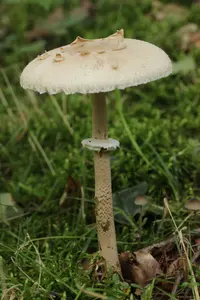
Macrolepiota fuliginosa is a large, umbrella-like mushroom species, not a leafy houseplant. It typically forms tall, slender stems topped with broad, brownish, scaly caps. In nature it occurs in woodlands, forest edges, and grassy clearings, mostly in temperate regions of Europe and parts of Asia.

This species grows from soil rich in organic matter and often appears in late summer to autumn. It is sensitive to habitat quality, so it is not commonly cultivated. Most home growers do not care for Macrolepiota fuliginosa directly, but instead support it indirectly by maintaining healthy, undisturbed, humus-rich ground.

As a fungus, it depends on suitable moisture, moderate temperatures, and shaded to semi-shaded conditions rather than typical houseplant-style care needs.

Main Plant Requirements

Care Difficulty

Moderate Care

Light Preference

Partial Shade

Water Requirements

Keep Soil Moist

Temperature Preference

Cool Climate

Hardiness Zone

Unknown

Soil Texture

Loamy, Silty, Organic-rich

Soil pH

Slightly acidic (6.5–7.0)

Soil Drainage

Moist but well-drained

Fertilization

Minimal (feed rarely)

Get Personalized Care Plan

Scan your plant to receive care tips personalized for your specific plant

Available on iOS and Android

How to Care for the Macrolepiota fuliginosa

This woodland mushroom prefers dappled conditions that mimic light filtering through trees.

  • Provide bright, filtered light or light shade, such as under deciduous trees with 2–4 hours of gentle morning sun and protection from harsh midday and afternoon sun.
  • Allow partial shade to deep shade in summer; fruiting bodies often appear where only broken light reaches the ground for much of the day.
  • Avoid full, exposed sun, which dries the substrate and suppresses Macrolepiota fuliginosa development, especially during warm, low-humidity periods.

Moist but free-draining soil is essential for sustaining the underlying fungal mycelium.

  • Maintain evenly moist ground, letting the top 2–3 cm of soil begin to dry slightly between natural rains or supplemental watering, especially during prolonged dry spells.
  • Use well-drained, humus-rich soil so excess water percolates away; standing water or compacted, waterlogged ground increases risk of rot and loss of fruiting.
  • Watch for shrinking, brittle caps and dry, cracking soil as signs of underwatering, and for soggy, sour-smelling patches as a sign of chronic overwatering or poor drainage.

Stable, mild temperatures support healthy mycelium growth and reliable fruiting.

  • Aim for 55–70°F (13–21°C) as an optimal range for vegetative growth and fruiting in humus-rich woodland or meadow soils.
  • Tolerates brief drops to about 40°F (4°C), but repeated frosts can damage fruiting bodies and slow recovery of the mycelium in the upper soil layers.
  • Limit exposure above 80°F (27°C), since hot, dry conditions can halt fruiting, dry the substrate, and reduce long-term Macrolepiota fuliginosa presence at the site.

This woodland mushroom performs well outdoors in typical ambient humidity and does not need targeted humidity control.

This species fruits best in loose, organic-rich soil that mimics a moist forest floor.

  • Use a deep layer of well-aerated loam mixed with leaf litter, composted wood chips, and partially decomposed plant debris to support the decomposer mycelium.
  • Ensure drainage is free but not rapid; the substrate should stay evenly moist without standing water or extended drying.
  • Aim for slightly acidic to neutral conditions around pH 5.5–7.0, avoiding limed or highly alkaline ground that can reduce mycelial vigor.
  • Avoid compacted clay, heavily disturbed, or chemically treated soils, and incorporate coarse organic matter to increase pore space and oxygen availability.

This ectomycorrhizal woodland mushroom is not suitable for typical container growing at home.

This woodland mushroom is typically not fertilized in gardens or containers, as it relies on natural soil nutrients and organic matter.

Macrolepiota fuliginosa does not require structured pruning, since each mushroom fruiting body is short-lived and seasonal.

In cultivation, focus on transplanting inoculated substrate or spawn rather than repotting individual mushrooms.

  • Transplant outdoor beds or logs in spring or early fall, when temperatures are mild and soil is evenly moist.
  • Shift colonized substrate only when it fully knits together and growth slows, indicating it has consumed most nutrients.
  • Move material gently, keeping the mycelium intact and shaded to limit drying and heat stress.
  • Water lightly after transplanting to settle contact between mycelium and its new soil or mulch layer.

Propagation of this fungus is specialized and usually done by experienced growers using spawn rather than by home gardeners.

This outdoor woodland species is generally cold hardy in temperate climates and does not need targeted winter care from gardeners.

Care Tips

Use clean substrate

Prepare a pasteurized straw or straw‑manure mix for cultivation, as this mushroom performs best on a clean, low‑contaminant substrate rather than unprocessed garden soil.

Manage contamination

Inspect the substrate frequently and remove any obviously moldy or off‑colored patches promptly, then isolate or discard heavily contaminated trays to prevent spread to healthy mycelium.

Control fruiting humidity

During fruiting, keep humidity high around the developing caps by misting the air, not the mushrooms directly, and ensure there is gentle air exchange to avoid bacterial blotch on the caps.

Provide structural support

Use short, thin stakes or a loose mesh around the bed in windy or high‑traffic areas, as the tall, slender stems can snap easily when the caps reach full size.

Harvest at right stage

Cut mushrooms at the base when caps are almost flat but before the gills darken fully, because timely harvest improves both spore management and overall hygiene when growing Macrolepiota fuliginosa.

Common Pests and Diseases

Fungus gnat larvae

This pest targets moist mushroom substrates, where larvae feed on developing mycelium and young fruiting bodies. Symptoms include slow or patchy colonization and small feeding scars on stems and caps.

Solution

Reduce excess surface moisture, improve drainage, and use fine mesh or filters on ventilation openings to limit adult access. Sticky traps placed near the growing area help reduce adult numbers, and a biological control such as Bacillus thuringiensis var. israelensis (BTI) in waterings can suppress larvae without harming the crop when caring for Macrolepiota fuliginosa.

Sciarid fly infestation

These insects are strongly attracted to rich, organic mushroom substrates and lay eggs in the casing or compost. Symptoms include tunnels in stems and caps, deformed fruiting bodies, and visible small dark flies around the growing area.

Solution

Screen intake vents and seal gaps to keep adults out, and remove heavily infested trays or blocks. Use yellow sticky cards to monitor populations and apply biological controls such as predatory mites or nematodes targeted at fly larvae in the substrate.

Green mold (Trichoderma)

This disease appears as dense white mycelium that quickly turns bright green, overtaking mushroom mycelium in the substrate or casing layer. Symptoms include stalled mushroom growth, sour or earthy odor, and rapidly spreading green patches.

Solution

Immediately remove and discard strongly infected blocks or trays to prevent spore spread, and clean all surfaces, tools, and containers with a suitable disinfectant. Review substrate pasteurization or sterilization, reduce excessive humidity and stagnant air, and avoid introducing unfiltered outdoor air directly to the growing area.

Bacterial blotch

This disease causes greasy yellow to brown spots on caps, often starting at areas that remain wet for extended periods. Symptoms include soft, water-soaked lesions and sometimes a sour smell on affected fruiting bodies.

Solution

Lower surface moisture by reducing direct misting on caps, provide stronger but gentle airflow, and keep relative humidity within the recommended range. Promptly remove and discard blotched mushrooms and disinfect shelving, tools, and any wet surfaces that could harbor bacteria.

Cobweb mold

This disease presents as fast-spreading, very fine grayish-white mycelium that looks like spiderweb over casing soil and mushrooms. Symptoms include rapid coverage of clusters, softening of tissues, and sometimes a fine gray spore dust when disturbed.

Solution

Increase fresh air exchange and slightly reduce humidity to slow spread, then carefully remove affected mushrooms and nearby casing with minimal disturbance. Spot-treat remaining patches with a mild food-safe fungicidal spray or adjust surface pH using a light application of baking soda solution, and clean surrounding structures to limit reinfection.

Interesting Facts

Sooty cap surface

This species is recognized by its dark sooty to grey-brown cap, covered in fine fibrils or small scales that contrast with the paler background, giving a more uniformly dusky look than many other parasol mushrooms.

Distinctive ring structure

The stem ring is thick, movable, and often shows a double edge, with a darker, sometimes velvety upper surface that helps separate it from similar Macrolepiota and Chlorophyllum species.

Preference for forest edges

It is typically found in nutrient-rich soils along forest edges, clearings, and paths in temperate Europe and parts of western Asia, rather than in lawns and open grasslands where the closely related Macrolepiota procera is more common.

FAQs about Macrolepiota fuliginosa

Identification of this mushroom is difficult, and confusion with toxic look-alikes is common. It should only be eaten if identified with absolute certainty by an expert mycologist. When in doubt, treat it as inedible.

Grow Healthy Plants with Botan Care

Keep your plants happy and healthy with plant identification, disease detection, and easy care guidance.

Botan plant care app — identify plants on mobile

Explore More Plants