Substrate pre-conditioning
Mix well-rotted hardwood chips with some of the native forest soil from an existing Gyromitra patch and let it sit moist for 2–3 months before use to introduce the right fungi and microbes for better establishment.

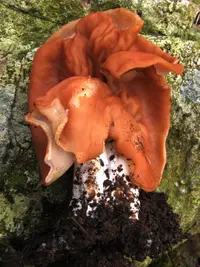
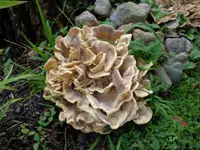
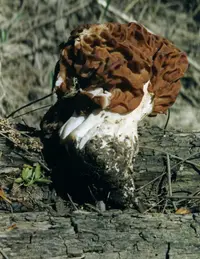
Gyromitra fastigiata, also known as Gyromitra brunnea, is a spring-fruiting fungi species rather than a typical garden plant. It forms irregular, brain-like caps in brown tones on short, stout stems, usually emerging in woodlands and near decaying hardwood in temperate regions.
This species is of interest mainly to mushroom specialists and is not recommended for casual harvesting or cultivation. It is difficult to reliably identify, and its needs are closely tied to natural forest soils and seasonal moisture. For most home growers, learning how to care for Gyromitra fastigiata is more about understanding and respecting its wild habitat than growing it like a standard ornamental plant.

Care Difficulty
Hard Care

Light Preference
Partial Shade

Water Requirements
Keep Soil Moist

Temperature Preference
Cool Climate

Hardiness Zone
Unknown

Soil Texture
Loamy, Silty, Organic-rich

Soil pH
Acidic (5.5–6.5), Slightly acidic (6.5–7.0)

Soil Drainage
Moist but well-drained

Fertilization
Minimal (feed rarely)
Scan your plant to receive care tips personalized for your specific plant
Available on iOS and Android
Gyromitra brunnea develops best in cool, moist woodland light rather than open, direct sun.
This fungus depends on consistently moist, not saturated, soil and organic litter to fruit well.
This spring-fruiting fungus prefers cool to mild temperatures typical of temperate woodlands.
This species is not suited to cultivation and has no practical humidity requirements for home or garden care.
Gyromitra brunnea is a wild, wood-associated fungus that is not realistically cultivated but depends on specific forest-floor conditions.
This fungus is not suitable for container growing and should not be treated as a container crop.
Gyromitra brunnea is a wild ectomycorrhizal fungus and should not be fertilized in managed settings.
Gyromitra brunnea is not pruned, as it is a wild fungus rather than a garden plant.
Transplanting Gyromitra brunnea is generally not practical because it depends on specific tree roots and soil fungi.
Deliberate propagation of Gyromitra brunnea is complex and not recommended for typical home growers.
Gyromitra brunnea requires no intentional winter care, as it persists naturally through seasonal temperature changes.

Plant Health Check
Not sure what's wrong with your plant? Check your plant's health inside the app.
This species occurs mainly in eastern North America, especially in the Great Lakes and Appalachian regions, where it fruits in early spring in mixed hardwood forests.
It is most often found on or near decaying hardwood, particularly aspen and other broadleaf trees, rather than directly on soil like some related false morels.
The convoluted, brain-like cap typically has several well-defined lobes and is supported by a stout, often hollow stem that helps distinguish it from some similar spring cup fungi.
This fungus is considered poisonous and should never be eaten, even after cooking or drying. It contains gyromitrin-type toxins that can damage the liver and nervous system and may be fatal in high doses.
Keep your plants happy and healthy with plant identification, disease detection, and easy care guidance.