Spore Print Monitoring
Take periodic spore prints from mature caps on white and dark paper to confirm species identity and detect contamination or off-type strains before expanding your culture.

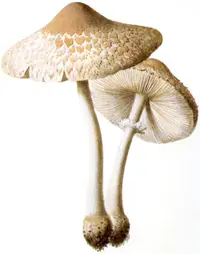
Macrolepiota excoriata, commonly called frayed parasol, is a medium-sized wild mushroom rather than a foliage plant. It forms a pale, scaly cap with a slightly frayed margin and a slender, ringed stem. The cap surface often cracks or peels, giving it a worn or weathered look. It typically appears in nutrient-rich grasslands, meadows, and pastures across parts of Europe, Asia, and North America. As a saprotroph, it lives on decaying organic matter and does not adapt well to typical home pot culture. For those trying to care for Frayed Parasol outdoors, it relies on suitable soil life, consistent moisture, and undisturbed grassland conditions more than on direct human care.

Care Difficulty
Moderate Care

Light Preference
Partial Shade

Water Requirements
Regular Water

Temperature Preference
Cool Climate

Hardiness Zone
Unknown

Soil Texture
Loamy, Silty, Organic-rich

Soil pH
Acidic (5.5–6.5), Slightly acidic (6.5–7.0)

Soil Drainage
Moist but well-drained

Fertilization
Minimal (feed rarely)
Scan your plant to receive care tips personalized for your specific plant
Available on iOS and Android
This meadow mushroom prefers bright, open conditions but is sensitive to harsh, drying sun.
This fungus depends on consistently moist, but not waterlogged, soil to fruit well.
This species fruits best in mild conditions and is sensitive to both hard frost and extreme heat.
This woodland mushroom prefers moderately moist air but adapts well to typical outdoor humidity levels.
This fungus fruits best in loose, humus-rich soil that stays evenly moist yet never waterlogged.
This species is generally unsuited to container growing, since it relies on broad contact with living soil and organic debris.
Macrolepiota excoriata is a nutrient-efficient fungus that usually needs no fertilization when grown in suitable soil or substrate.
Macrolepiota excoriata does not require pruning, since its fruiting bodies are temporary and the main organism lives hidden as mycelium in the soil.
This species is normally grown in open ground or naturalized areas rather than repotted, so focus on careful transplanting of colonized substrate if relocation is needed.
Practical propagation of Macrolepiota excoriata is challenging for home growers and is seldom attempted outside specialized culture.
Frayed Parasol is generally cold hardy in temperate climates and needs little specific winter attention once established in the ground.

Plant Health Check
Not sure what's wrong with your plant? Check your plant's health inside the app.
This species typically fruits in dry, nutrient-poor grasslands, pastures, and road verges rather than in forests, making it an indicator of traditionally managed, unfertilized meadows in many parts of Europe.
Its cap surface cracks and peels into irregular ochre to brown patches on a paler background, giving a characteristically frayed, excoriated look that helps separate it from similar parasol mushrooms.
Fruiting is most frequent on calcareous or base-rich soils, so its presence often reflects underlying geology rich in limestone or other calcium-bearing materials.

In several European countries this species is considered regionally threatened or declining because the dry, low-intensity grasslands it depends on are being lost through agricultural intensification, abandonment, and habitat conversion.
This mushroom is considered edible by some sources but is easily confused with toxic look-alikes. Identification mistakes can be serious. Only consume specimens confirmed by an experienced mycologist, and avoid collecting from polluted or pesticide-treated areas.
Keep your plants happy and healthy with plant identification, disease detection, and easy care guidance.