Texas persimmon Care (Diospyros texana)

Texas persimmon

About Texas persimmon

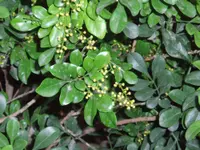
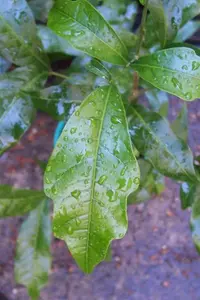
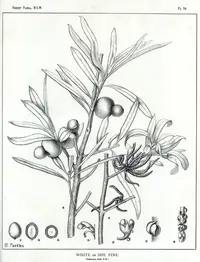
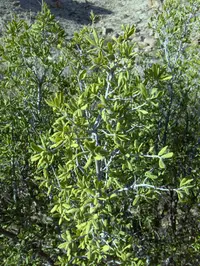
Texas persimmon, Diospyros texana, is a small, slow-growing deciduous to semi-evergreen tree native to dry, rocky areas of Texas and northern Mexico. It often has multiple trunks and smooth, pale bark that contrasts with its dense, dark green foliage.

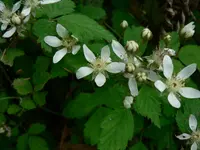
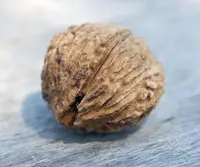
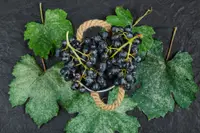
The tree produces small white flowers followed by black, berry-like fruits that are valued by wildlife and sometimes used in traditional foods. Its natural adaptation to heat, drought, and poor, alkaline soils makes it a durable landscape choice in arid and semi-arid regions.

Gardeners who want to learn how to care for Texas persimmon should know it prefers full sun, well-drained soil, and low to moderate moisture once established.

Main Plant Requirements

Care Difficulty

Easy Care

Light Preference

Full Sun

Water Requirements

Low Water

Temperature Preference

Warm Climate

Hardiness Zone

7–9

Soil Texture

Sandy, Loamy, Rocky

Soil pH

Slightly acidic (6.5–7.0), Slightly alkaline (7.0–7.5)

Soil Drainage

Well-drained

Fertilization

Minimal (feed rarely)

Get Personalized Care Plan

Scan your plant to receive care tips personalized for your specific plant

Available on iOS and Android

How to Care for the Texas persimmon

This drought-adapted tree prefers strong light but benefits from some protection at the hottest times of day.

  • Provide 6–8 hours of direct sun daily, ideally with morning sun and light afternoon shade in hotter regions.
  • Young Texas persimmon trees handle light or dappled shade, but dense shade reduces flowering and fruiting and can cause leggy growth.
  • In summer, avoid intense reflected heat from walls or pavement; in cooler seasons, slightly more direct sun improves flowering and fruit set.

This species evolved for dry sites, so watering should be infrequent and guided by soil conditions.

  • In the ground, water deeply only when the top 5–8 cm of soil are dry; aim for slow soaking rather than light, frequent splashes.
  • During the first 1–2 growing seasons, irrigate more often in hot, dry spells, then reduce once Diospyros texana is established and roots deepen.
  • Watch for yellowing leaves and soft new growth as signs of overwatering, and crisp leaf edges or early leaf drop as signs of drought stress.

This tree thrives in warm, semi-arid climates and tolerates both heat and moderate cold once established.

  • Optimal growing temperatures are about 70–95°F (21–35°C), with steady growth in long, warm summers.
  • Mature plants tolerate short drops near 10–15°F (-12 to -9°C), but young trees are safer above 20°F (-6°C), especially in exposed sites.
  • In regions with frequent hard frosts, plant in a spot with winter sun and good air drainage to limit freeze damage to buds and young shoots.

This species is well adapted to dry air and usually does not need humidity adjustment indoors or outdoors.

  • Aim for ambient humidity around 30–50%, typical of heated or air-conditioned homes in arid and semi-arid regions.
  • Leaf edge browning and slight curling on new growth can indicate chronic low humidity combined with underwatering rather than humidity alone.
  • For Texas persimmon kept in especially dry, hot rooms, group plants together and place the pot over a pebble tray to slightly lift local humidity without wetting roots.

Diospyros texana prefers mineral, well-drained soil that mimics its native rocky habitats.

  • Use a sandy or gravelly loam with 20–30% coarse sand or fine gravel to keep pore spaces open for root aeration.
  • Maintain slightly alkaline to neutral pH, roughly 7.0–8.0, which suits its natural limestone-derived soils.
  • Blend native garden soil with decomposed granite and a small portion of compost, keeping organic matter modest to prevent waterlogging.
  • Avoid compacted clay, peat-heavy mixes, or low-lying spots where water stands after rain, as these conditions promote root decline.

This species can be grown in containers, especially in dry regions or where soil is unsuitable.

  • Choose a deep, heavy container so the long taproot has vertical space and the tree remains stable in wind as the canopy develops.
  • Use a gritty mix with added decomposed granite or coarse sand so water drains within minutes rather than pooling at the bottom.
  • Position the container where runoff cannot re-enter the drainage holes, preventing chronic moisture around the lower root zone.

This drought-adapted native tree needs minimal feeding, but light nutrition can support growth in poor soils.

  • Use a balanced slow-release fertilizer (around 8-8-8 or 10-10-10) or a thin layer of compost in early spring.
  • Feed once in spring; a second light application in midsummer is enough for Texas persimmon in most home landscapes.
  • Apply at half the label rate for trees, keeping granules off the trunk and watering in well.
  • Stop feeding 6–8 weeks before expected frost and do not fertilize during winter dormancy.

Diospyros texana benefits from light, targeted pruning to maintain structure and health.

  • Prune in late winter to very early spring, before new growth begins.
  • Remove dead, diseased, or crossing branches first, using clean, sharp bypass pruners or a small pruning saw.
  • Thin dense interior shoots to improve light penetration and airflow, encouraging balanced canopy development.
  • Shorten or remove awkward or rubbing limbs to shape the tree while preserving its natural form.

This species is usually grown in the ground, so focus on careful transplanting rather than frequent repotting.

  • Transplant in late winter or very early spring while the tree is dormant to limit stress.
  • Look for signs like roots circling a nursery pot, poor drainage, or stunted growth before shifting to a larger container or planting out.
  • Move up only 1 container size or plant into a well-drained site, keeping the root flare at soil level.
  • Water thoroughly after planting, then keep soil evenly moist (not saturated) for the first growing season to help roots establish.

Diospyros texana is most often propagated from seed, with growth slower than many ornamental trees.

  • Collect ripe fruits, clean off pulp, and sow fresh seeds in fall or cold stratify for 3–4 months at 34–41°F.
  • Use a well-drained, gritty seed mix, keeping it slightly moist and in bright, indirect light for germination.
  • Semi-hardwood cuttings in late spring to midsummer may root under high humidity and bottom warmth, but success is variable.

This species is cold hardy in much of its native range and usually needs little winter care once established.

  • Mature trees tolerate light freezes, but young plants benefit from extra attention in their first 1–2 winters.
  • Apply a 5–8 cm mulch layer around the root zone, keeping it a few cm away from the trunk.
  • In colder areas or exposed sites, wrap young trunks with breathable tree wrap to limit bark injury and sunscald.

Care Tips

Rootzone mulching

Apply a 5–8 cm layer of coarse, woody mulch out to at least the drip line to keep the root zone cooler, reduce evaporation on hot, rocky sites, and protect surface feeder roots from compaction.

Dry-site establishment

For young trees on exposed, limestone slopes, create a shallow, wide basin around the plant and water slowly so moisture sinks into the fractured rock rather than running off.

Selective branch training

In the first 3–5 years, remove low, crossing, or inward-growing shoots and lightly tip-prune competing leaders to develop a single sturdy trunk and a balanced canopy that resists wind damage.

Calcium-friendly amendments

When planting into very thin, high-pH limestone soils, mix in a small amount of screened compost rather than peat or sulfur so the tree keeps its natural adaptation to alkaline, calcium-rich conditions.

Wildlife fruit management

If harvesting fruit for human use, bag selected fruit clusters with fine mesh as they begin to color or net a small tree, since birds and mammals often strip ripening fruit quickly when growing Texas persimmon.

Common Pests and Diseases

Persimmon psyllid

This pest feeds on new growth, causing curled, distorted leaves and sticky honeydew that may lead to sooty mold on Texas persimmon foliage. Infestations are usually most visible on tender spring flushes and on young trees.

Solution

Prune out and dispose of heavily infested shoot tips, then spray remaining foliage with a firm stream of water to dislodge nymphs. If needed, use a targeted insecticidal soap or horticultural oil applied in the early morning, repeating every 7–10 days until new growth appears normal; avoid spraying during high heat above 85°F.

Scale insects

These insects appear as small, dome-shaped or flattened bumps on twigs and older branches, sometimes leading to leaf yellowing, twig dieback, and honeydew buildup. Symptoms include a decline in vigor on stressed or drought-affected trees.

Solution

Gently scrape off accessible scales on small trees and prune out badly infested branches, disposing of the material off-site. For remaining populations, apply horticultural oil during the dormant season or in early spring to thoroughly coat bark and twigs, and improve overall tree vigor through correct watering and mulching to increase natural resistance; this aligns with general Diospyros texana plant care focused on low but consistent moisture in establishment years.

Leaf spot

This disease causes small brown or tan spots on leaves that may merge into larger irregular patches, leading to premature leaf drop in wet or humid years. Symptoms include thinning foliage, mostly on interior or shaded parts of the canopy.

Solution

Rake and remove fallen leaves to reduce the source of fungal spores, and avoid overhead irrigation that keeps foliage wet for long periods. If leaf drop is severe for several seasons in a row, improve air circulation by selectively thinning dense branches, and consult local extension guidance before using a labeled copper or chlorothalonil fungicide during early leaf-out.

Powdery mildew

This disease appears as a white or gray powdery coating on young leaves and shoots, which may curl, become stunted, or show purplish blotches. It is more common in shaded sites with poor air flow or during periods of warm days and cool nights.

Solution

Increase sun exposure where possible and thin out crowded branches to promote airflow within the canopy. In early stages, affected leaves can be removed from small specimens; for higher-value landscape trees, apply a labeled sulfur or potassium bicarbonate product at the first sign of infection, repeating as directed during conducive weather.

Twig canker

This disease causes sunken, discolored lesions and dieback on small branches, often entering through pruning wounds or damage from drought or freeze. Symptoms include wilting or death of individual twigs while the rest of the tree appears healthy.

Solution

Prune out affected twigs 10–15 cm below visible symptoms, cutting back into healthy wood and disinfecting pruning tools between cuts with 70% isopropyl alcohol. Avoid heavy pruning during wet weather, reduce plant stress through appropriate watering during drought, and maintain a mulch ring around the root zone to protect roots from mechanical damage.

Interesting Facts

Black-fruiting persimmon

Texas persimmon produces small fruits that turn deep black when ripe, a distinctive trait among North American persimmons and an adaptation that likely aids bird dispersal by providing a strong visual contrast.

Bark that peels clean

Mature stems often develop smooth, pale gray to nearly white bark as thin outer layers peel away, creating a characteristic mottled trunk that helps reflect heat in very sunny, arid habitats.

Drought-adapted root system

This species forms a deep and extensive root system suited to rocky limestone soils of central and south Texas and northern Mexico, allowing it to survive prolonged dry periods that would kill many other small trees.

Botan icon

Did you know?

The fruits of Texas persimmon contain a natural dark pigment that has been traditionally used as a dye and ink source by Indigenous peoples in its native range, taking advantage of the intense black coloration of the fully ripe berries.

FAQs about Texas persimmon

Growth is generally slow to moderate. Young trees often add 15–30 cm per year, sometimes up to 45 cm in ideal conditions. Poor soil, shade, transplant shock, and drought stress can slow growth noticeably during the first years.

Grow Healthy Plants with Botan Care

Keep your plants happy and healthy with plant identification, disease detection, and easy care guidance.

Botan plant care app — identify plants on mobile

Explore More Plants