

Rot-Prevention Substrate
Spread a thin, even layer of well-pasteurized hardwood sawdust or fine wood chips over the growing tray to keep caps clean and minimize bacterial rot at the contact points.

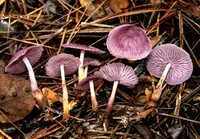
Gymnopus iocephalus is a small saprobic mushroom, not a typical houseplant, found on fallen twigs and leaf litter in woodlands. It forms slender stems topped with lilac to brownish caps that fade with age.
This species occurs mainly in temperate forests of Europe and parts of Asia, where it helps break down dead plant material and recycle nutrients. It usually grows in scattered groups rather than large clusters.
Because it is a woodland fungus with specific habitat needs, it is not commonly grown at home or in gardens. Anyone wishing to learn how to care for Gymnopus iocephalus should understand that it depends on cool, shaded, consistently moist forest conditions and natural decaying organic matter.

Care Difficulty
Moderate Care

Light Preference
Shade

Water Requirements
Keep Soil Moist

Temperature Preference
Cool Climate

Hardiness Zone
Unknown

Soil Texture
Loamy, Silty, Organic-rich

Soil pH
Acidic (5.5–6.5), Slightly acidic (6.5–7.0)

Soil Drainage
Moist but well-drained

Fertilization
Minimal (feed rarely)
Scan your plant to receive care tips personalized for your specific plant
Available on iOS and Android
This woodland fungus prefers low light that mimics a shaded forest floor.
Water management focuses on keeping the substrate evenly moist without becoming waterlogged.
This species favors cool, stable conditions similar to shaded woodland climates.
This wood-decay fungus prefers consistently humid conditions similar to a damp forest floor.
Gymnopus iocephalus fruits best on loose, organic-rich substrate rather than dense mineral soil.
This species can be grown in containers if the substrate remains cool, moist, and well aerated.
This wood-decaying fungus usually grows on nutrient-rich forest debris and does not need intentional fertilization in cultivation.
As a short-lived saprobic fungus, Gymnopus iocephalus does not require structural pruning, only basic hygiene.
This species is not maintained as a conventional potted plant; management focuses on renewing its woody substrate rather than repotting.
Reproduction of this fungus relies on spores and colonized substrate rather than standard horticultural propagation methods.
In temperate climates this woodland fungus tolerates normal winter conditions and usually needs no special care.

Plant Health Check
Not sure what's wrong with your plant? Check your plant's health inside the app.
This saprobic mushroom is recognized in the field by its pale to bright violet cap when fresh, a coloration that often fades toward brownish or grayish tones as it ages or dries.
It typically fruits on leaf litter and woody debris in deciduous forests, especially under beech and oak, where it helps decompose fallen material and recycle nutrients into the soil.
The species has a characteristically thin, flexible stipe (stem) that is often slightly darker toward the base, which helps distinguish it from some similar small purple fungi in mixed woodland environments.
This woodland fungus develops fruiting bodies quickly once moisture and temperature are right, often within days. The underlying mycelium spreads slowly through leaf litter and decaying wood over months to years, forming scattered clusters rather than dense carpets.
Keep your plants happy and healthy with plant identification, disease detection, and easy care guidance.

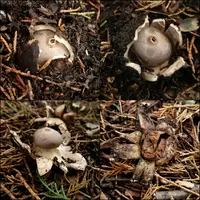
crowned earthstar
Geastrum coronatum
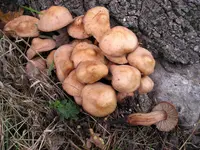
Spindleshank
Gymnopus fusipes
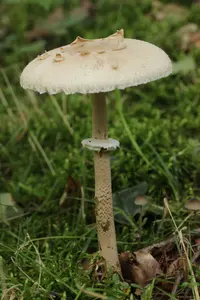
Macrolepiota fuliginosa
Macrolepiota fuliginosa
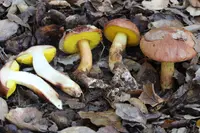
viscid bolete
Aureoboletus flaviporus
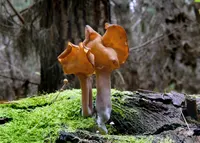
Southern False Morel
Gyromitra tasmanica
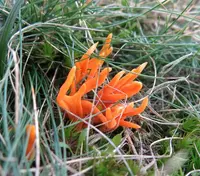
Apricot Club
Clavulinopsis luteoalba
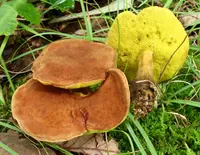
clustered brown bolete
Aureoboletus innixus
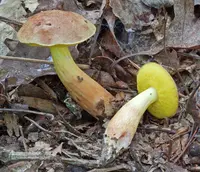
sour gold-pored bolete
Aureoboletus auriporus