Deadhead With Care
Cut spent flower stems back to just above a strong leaf node as soon as petals fade to extend the bloom season and reduce unwanted self-seeding when growing Oxeye Daisy.

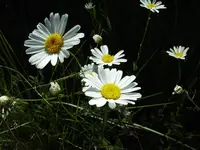
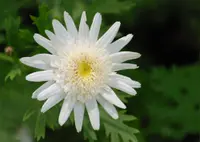
Oxeye daisy, Leucanthemum vulgare, is a hardy perennial wildflower known for its white petals and yellow central disc. It often forms loose clumps or spreads through meadows and roadsides.
This species is native to Europe but has naturalized widely in North America and other temperate regions. It thrives in open, sunny places and tolerates poor, dry, or moderately moist soils.
Plants are generally easy to grow and can self-seed freely, which is useful in wildflower gardens but may require some control in small beds. Basic knowledge of how to care for Oxeye Daisy helps keep it attractive without becoming invasive.

Care Difficulty
Easy Care

Light Preference
Full Sun

Water Requirements
Moderate Water

Temperature Preference
Cold Hardy

Hardiness Zone
3–8

Soil Texture
Sandy, Loamy, Rocky

Soil pH
Slightly acidic (6.5–7.0), Neutral (7.0)

Soil Drainage
Well-drained

Fertilization
Minimal (feed rarely)
Scan your plant to receive care tips personalized for your specific plant
Available on iOS and Android
This species prefers full sun in most garden settings for best flowering and sturdy growth.
This perennial prefers evenly moist but not saturated soil, especially during establishment and peak flowering.
This hardy perennial tolerates a wide temperature range but grows best in moderate conditions.
Humidity is rarely a concern for Leucanthemum vulgare grown outdoors in typical garden conditions.
Leucanthemum vulgare prefers moderately fertile, well-drained mineral soils rather than rich, heavy mixes.
This species can be grown in containers if the pot is set up to prevent chronic wetness and root crowding.
Leucanthemum vulgare usually thrives in lean soil and needs only light, targeted feeding in gardens or containers.
Leucanthemum vulgare responds well to simple, timely pruning that maintains flowering and plant health.
This species grows mainly as a garden perennial, so transplanting clumps is more common than container repotting.
Leucanthemum vulgare is commonly propagated by division or seeds, both suitable for home gardens.
This species is cold hardy in much of the US and usually needs only minimal winter care in the ground.

Plant Health Check
Not sure what's wrong with your plant? Check your plant's health inside the app.
This species has a genetic self-incompatibility mechanism, meaning a flower cannot fertilize itself and usually needs pollen from a genetically different plant, which promotes high genetic diversity in wild populations.
It often dominates nutrient-poor grasslands and roadsides because it can thrive in relatively low-nitrogen soils where many competing species grow poorly.
The seeds can remain viable for several years in the soil seed bank, which allows populations to reappear after disturbance or mowing once conditions become favorable again.

In several regions outside its native range, including parts of North America, this species is officially listed as a noxious or invasive weed because dense stands can reduce forage quality in pastures and alter native grassland plant communities.
Poor flowering usually comes from too much shade, nutrient‑rich or overfertilized soil, or overcrowded clumps. Ensure full sun, avoid high-nitrogen fertilizer, deadhead spent blooms, and divide congested plants every few years to restore strong flowering.
Keep your plants happy and healthy with plant identification, disease detection, and easy care guidance.