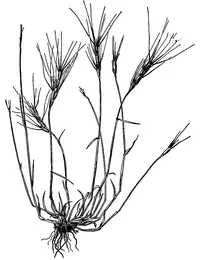
fringed amaranth Care (Amaranthus fimbriatus)

fringed amaranth

About fringed amaranth

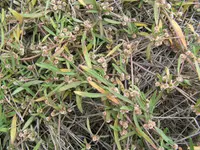
Fringed amaranth (Amaranthus fimbriatus) is an annual flowering plant in the amaranth family, known for its slender stems and finely fringed flower spikes. It often appears as a summer annual weed but can also be grown as a low-maintenance ornamental in informal gardens or naturalized areas.

This species is native to arid and semi-arid regions of the southwestern United States and northern Mexico, where it thrives in disturbed, dry soils and full sun. It grows quickly, self-seeds readily, and tolerates heat and drought, which generally makes it easy to establish but sometimes harder to control.

Light, well-drained soil and moderate moisture help care for fringed amaranth in garden settings, especially where summer conditions are hot and dry.

Main Plant Requirements

Care Difficulty

Easy Care

Light Preference

Full Sun

Water Requirements

Low Water

Temperature Preference

Tropical / Frost Sensitive

Hardiness Zone

8–11

Soil Texture

Sandy, Loamy, Rocky

Soil pH

Slightly acidic (6.5–7.0), Neutral (7.0)

Soil Drainage

Well-drained

Fertilization

Minimal (feed rarely)

Get Personalized Care Plan

Scan your plant to receive care tips personalized for your specific plant

Available on iOS and Android

How to Care for the fringed amaranth

This annual thrives in open, bright conditions typical of its native dry habitats.

  • Provide 6–8 hours of direct sun daily; fringed amaranth flowers and colors best in full sun exposure.
  • Tolerates light afternoon shade in very hot regions, but dense shade causes weak, leggy growth and poor blooming.
  • In late spring and early summer, gradually increase sun exposure to prevent leaf scorch, especially after transplanting or prolonged cloudy periods.

This species prefers evenly moist but never soggy soil once established in the ground.

  • Water when the top 3–5 cm of soil feels dry, applying a deep soak rather than frequent light sprinkling to encourage deeper roots.
  • Use well-drained, gritty or sandy soil; persistent puddling, sour smell, or soft, yellowing stems indicate overwatering and poor drainage.
  • In hot, dry summer spells, expect more frequent watering; dull, drooping leaves that perk up after watering signal mild underwatering in Amaranthus fimbriatus.

This warm-season annual grows best in stable, frost-free conditions.

  • Optimal growth occurs around 70–90°F (21–32°C); plants establish and branch most vigorously within this range.
  • Avoid temperatures below 50°F (10°C); light frost can kill foliage, and hard frost usually ends the life cycle of outdoor plants.
  • Tolerates dry heat up to about 100°F (38°C) if soil moisture is adequate, but prolonged heat with drought stress can stunt growth and reduce flowering.

Humidity is not a major factor for Amaranthus fimbriatus, which adapts well to typical outdoor air in dry regions.

Amaranthus fimbriatus prefers light, well-draining mineral soils that do not stay wet after rain or irrigation.

  • Use sandy or sandy-loam soil with low to moderate organic matter to reduce water-holding capacity.
  • Aim for slightly acidic to neutral pH around 6.0–7.2, avoiding strongly acidic or alkaline conditions.
  • In containers, mix equal parts coarse sand, regular potting mix, and perlite to maintain aeration and rapid drainage.
  • Avoid compacted clay, consistently wet spots, or heavy peat-based mixes that retain water and exclude air from roots.

This species can be grown in containers if the potting setup prevents prolonged root wetness.

  • Choose a wide, stable container at least 20–25 cm deep to support the fibrous root system and upright stems.
  • Select a non-glazed terracotta or other porous pot material if extra evaporation is needed in humid or rainy climates.
  • Raise the pot on feet or bricks so drainage holes stay clear and runoff leaves the container area quickly, preventing soggy conditions.

This annual wildflower grows acceptably in poor soil but benefits from light feeding when grown as an ornamental fringed amaranth.

  • Use a balanced liquid fertilizer (for example 10-10-10) at 1/4–1/2 strength on well-watered plants.
  • Feed every 3–4 weeks during the warm growing season if soil is sandy or low in organic matter.
  • Skip synthetic feeding in rich ground and instead mix in a thin layer of compost around plants.
  • Stop fertilizing in late summer to early fall so growth can slow before cool weather.

Pruning Amaranthus fimbriatus is mainly used to tidy plants and manage size in garden settings.

  • Pinch soft shoot tips in early growth to encourage bushier plants and more flowering stems.
  • Remove dead, broken, or pest-damaged stems as soon as noticed using clean, sharp scissors or hand pruners.
  • Thin crowded stems to improve airflow and reduce fungal problems, leaving the strongest shoots.
  • Cut back spent flower spikes if reseeding is not desired or to maintain a neater outline.

This annual is usually direct-sown outdoors, but small transplants can be shifted carefully when needed.

  • Transplant seedlings in spring after frost when they have 2–3 true leaves and before roots coil around the cell or pot.
  • Move plants only once, as older transplants react poorly to disturbance and often stall in growth.
  • Water the old container thoroughly, slide the root ball out with minimal handling, and replant at the same depth.
  • Firm soil gently, water to settle roots, and shade for 1–2 days to reduce transplant stress.

Amaranthus fimbriatus is most commonly propagated from seed rather than vegetative methods.

  • Sow seeds in late spring once frost risk has passed and soil is warm, ideally 68–75°F.
  • Press tiny seeds onto the soil surface or cover very lightly; they need some light to germinate.
  • Keep the seed bed evenly moist but not waterlogged until seedlings establish.
  • Maintain bright light and good airflow to prevent damping-off, a fungal disease that kills young seedlings.

This warm-season annual does not overwinter outdoors and needs minimal winter care in most gardens.

  • Expect plants to die back completely after hard frost; no resprouting occurs from roots.
  • Allow some seed heads to remain if self-sown seedlings are desired the following spring.
  • Container-grown plants can be discarded after frost and soil or compost reused after screening for weed seeds.

Care Tips

Succession Sowing

Sow small batches every 2–3 weeks during warm weather so flowering spikes and foliage stay fresh and ornamental over a longer season.

Targeted Pinching

Pinch the soft tips of young plants once they reach 10–15 cm to encourage branching and more flower clusters, but stop pinching once main stems start to thicken so plants still gain height.

Wind-Resilient Staking

In windy sites, place low, discreet stakes and loosely tie main stems with soft ties before they reach 30 cm tall so the support is in place before heavy flower clusters develop.

Proactive Pest Scouting

Inspect the undersides of leaves weekly for aphids and flea beetle damage, using a hand lens if available, and treat early with a strong water spray or approved insecticidal soap before infestations spread along the stems.

Self-Seeding Management

If self-sowing is not desired, remove or cut back flower spikes as they fade, collecting them into a bucket instead of dropping them on the soil so seed does not disperse where you do not plan on growing fringed amaranth.

Common Pests and Diseases

Pigweed beetles

These insects chew irregular holes in leaves and can skeletonize young foliage and inflorescences, especially on plants growing in dry, open sites.

Solution

Hand-pick adults and larvae into soapy water where practical, reduce nearby weedy Amaranthus species that harbor populations, and use floating row covers over young plants if grown ornamentally; in severe outdoor cases, a targeted pyrethrin or spinosad spray can be applied in the late afternoon, directed only to affected foliage.

Leafminers

This pest produces pale, winding tunnels inside leaves, leading to discolored blotches and reduced photosynthesis on stressed plants.

Solution

Remove and dispose of mined leaves before larvae complete development, avoid excessive nitrogen that encourages tender growth, and use yellow sticky cards to monitor adult activity; in recurring cases, apply a horticultural oil or spinosad to leaf undersides when new mines first appear, focusing on younger foliage.

Fusarium wilt

This disease causes one-sided wilting, yellowing, and eventual collapse of stems, often starting on older leaves and progressing upward in hot, dry conditions with intermittent irrigation.

Solution

Promptly remove and dispose of affected plants, avoid replanting Amaranthus in the same spot for several years, and improve drainage and airflow; use only clean seed, sanitize tools, and maintain moderate, even soil moisture to reduce stress that favors infection, following region-specific Amaranthus fimbriatus care instructions for site selection.

Alternaria leaf spot

This disease leads to small brown lesions that expand into circular spots with darker borders, sometimes coalescing and causing premature leaf drop in dense stands.

Solution

Remove heavily spotted leaves, avoid overhead watering, and thin crowded plants to increase airflow; rotate plantings away from previous pigweed or other Amaranthus, keep surrounding weeds down, and, where necessary for seed or ornamental production, use a labeled copper-based fungicide at the first sign of spotting.

Interesting Facts

Late-summer desert bloomer

This annual often flowers in late summer and early fall in arid regions, taking advantage of brief monsoon moisture pulses in the American Southwest and northern Mexico.

Sand-loving habitat specialist

In the wild it is strongly associated with sandy or gravelly soils, especially disturbed washes, roadsides, and desert grasslands, where its deep taproot helps it access limited water.

Distinctive fringed inflorescences

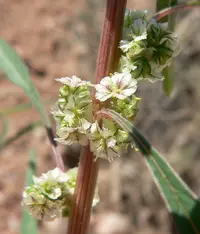
The plant has narrow spikes of tiny flowers whose bracts and tepals are noticeably fringed or toothed, a key diagnostic feature used by botanists to distinguish it from other similar amaranths.

FAQs about fringed amaranth

This species grows quickly once temperatures warm, often reaching near full size within a few months. Growth rate depends on light, soil fertility, and moisture, and it tends to slow in cooler or very dry conditions.

Grow Healthy Plants with Botan Care

Keep your plants happy and healthy with plant identification, disease detection, and easy care guidance.

Botan plant care app — identify plants on mobile

Explore More Plants