giant goldenrod Care (Solidago gigantea)

Also known as: tall goldenrod, smooth goldenrod, Early goldenrod, Turtle Mountain goldenrod
giant goldenrod

About giant goldenrod

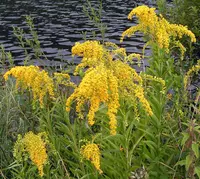
Giant goldenrod, Solidago gigantea, is a tall, clump-forming perennial often found in meadows, roadsides, and moist open habitats. It is native to much of North America.

The plant produces upright stems with narrow leaves and showy sprays of small yellow flower clusters in late summer to early fall. It spreads by rhizomes, so it can form dense patches over time.

This species is generally robust and adaptable, tolerating a range of soils as long as drainage is reasonable. Full sun and moderate moisture support the best flowering and make it easier to care for giant goldenrod.

Main Plant Requirements

Care Difficulty

Easy Care

Light Preference

Full Sun

Water Requirements

Moderate Water

Temperature Preference

Cold Hardy

Hardiness Zone

3–8

Soil Texture

Sandy, Loamy, Clay

Soil pH

Acidic (5.5–6.5), Slightly acidic (6.5–7.0)

Soil Drainage

Moist but well-drained

Fertilization

Minimal (feed rarely)

Get Personalized Care Plan

Scan your plant to receive care tips personalized for your specific plant

Available on iOS and Android

How to Care for the giant goldenrod

This perennial thrives in open, bright conditions that mimic sunny meadows and roadsides.

  • Provide 6–8 hours of direct sun daily; morning to early afternoon sun promotes dense growth and heavy flowering for giant goldenrod.
  • Tolerates light partial shade (3–4 hours sun), but stems may elongate and flowering can decrease as shade increases.
  • In very hot regions, some light afternoon shade reduces leaf scorch and wilting, especially during dry late-summer periods.

This species prefers evenly moist, well-drained soil but adapts to moderate drought once established.

  • Allow the top 3–5 cm of soil to dry between waterings; in the ground, water deeply when foliage begins to flag or curl slightly.
  • Increase watering during the first growing season and in prolonged drought, especially on sandy or fast-draining soils supporting Solidago gigantea.
  • Reduce supplemental watering in cool, rainy periods; persistent soggy soil, yellowing lower leaves, and weak stems indicate overwatering or poor drainage.

This hardy perennial is adapted to temperate climates with cold winters and warm summers.

  • Optimal active growth occurs around 65–80°F (18–27°C), supporting strong stems and abundant flower production in late summer to fall.
  • Tolerates heat up to about 90°F (32°C) if soil moisture is adequate; mulch can help keep roots cooler during hot spells.
  • Survives winter dormancy down to about -20°F (-29°C) in the ground; hard frosts kill top growth but crowns and roots typically resprout in spring.

This species tolerates a wide humidity range and rarely needs special humidity management outdoors.

This species prefers moderately moist, well-draining mineral soils and adapts to many garden conditions.

  • Use loamy or sandy loam soil with some organic matter to support strong rhizome and root growth.
  • Ensure drainage is free-flowing; avoid sites that stay waterlogged or compacted after rain.
  • Aim for slightly acidic to neutral pH around 6.0–7.0, which maximizes nutrient availability for Solidago gigantea.
  • Improve aeration and drainage by mixing in compost plus coarse sand or fine gravel in heavier soils.

This species can be grown in containers, but the pot must support tall, spreading top growth.

  • Choose a deep, heavy container that resists tipping when stems reach full height and catch wind.
  • Select a pot volume large enough to confine but not crush the spreading rhizomes, helping limit invasive spread.
  • Use a stable, coarse-textured mix that drains quickly yet holds some moisture, since containers dry faster than garden soil.

This native perennial needs modest feeding, mainly to support strong flowering in lean soils.

  • Apply a light layer of compost or well-rotted manure around clumps in early spring for slow nutrient release.
  • Use a balanced, slow-release fertilizer (around 10-10-10 NPK) once in spring if soil is poor, following label rates.
  • If using liquid feed, apply at half strength every 4–6 weeks during active growth only.
  • Stop all feeding of giant goldenrod in late summer to allow stems to harden before winter dormancy.

Thoughtful pruning helps maintain shape, vigor, and reliable blooms in Solidago gigantea stands.

  • Cut back spent flower stems in late fall or very early spring to tidy the plant and reduce self-seeding.
  • Remove dead, damaged, or diseased stems at the base whenever noticed to improve air circulation and plant health.
  • Thin overcrowded shoots in spring with clean, sharp pruners to keep clumps upright and reduce flopping.
  • Shear taller stems by 1/3 in late spring to encourage bushier growth and slightly later, denser flowering.

This species is usually grown in the ground, so focus on dividing and transplanting mature clumps rather than frequent repotting.

  • Look for dense, woody centers, reduced flowering, or slow growth as signs that clumps need lifting and division.
  • Transplant or divide in early spring or early fall, when temperatures are mild and soil moisture is steady.
  • Plan on lifting and dividing every 3–5 years to maintain vigor and manage spread in the garden.
  • Dig wide to preserve roots, replant divisions promptly at the same depth, and water deeply to reduce transplant shock.

Solidago gigantea is most often propagated by division, but seed and stem cuttings are also options.

  • Divide established clumps in early spring or early fall, ensuring each section has several shoots and healthy roots.
  • Sow ripe seeds outdoors in fall or in pots kept cool; light exposure and consistent moisture support germination.
  • Take softwood or semi-ripe stem cuttings in late spring–summer and root in a free-draining, moist medium.
  • Label new plantings clearly and space them well to prevent overcrowding as plants mature.

This hardy perennial usually needs minimal winter care in most temperate climates.

  • Plants tolerate typical frost and freezing once fully established in the landscape.
  • Leave dead stems standing over winter for wildlife habitat, then cut back to the base in late winter.
  • Apply a 5–7 cm mulch layer around the root zone in colder regions, keeping material away from the crowns.
  • Move container-grown plants to a sheltered, unheated area where roots stay cold but not waterlogged.

Care Tips

Rhizome containment

Install a root barrier 20–30 cm deep around beds or use large, bottomless containers sunk into the soil to keep spreading rhizomes from invading nearby plantings while still allowing strong growth.

Targeted clump renewal

Every 3–4 years, lift and divide overcrowded clumps in early spring, replanting only the most vigorous outer sections to maintain tall, sturdy stems and reliable flowering.

Staggered stem thinning

In late spring, remove 20–30% of the weakest shoots, spacing remaining stems 10–15 cm apart to improve air movement and reduce mildew and rust pressure without sacrificing bloom quantity.

Discreet support system

For tall plantings in windy sites, place low, circular plant supports or a simple grid of twine between short stakes early in the season so stems grow through and remain upright without visible tying later.

Seed spread control

If caring for giant goldenrod near natural areas, cut back and remove spent flower heads before seeds disperse to limit self-seeding and prevent unwanted spread into surrounding habitats.

Common Pests and Diseases

Rust

This disease causes yellow to orange powdery pustules on the undersides of leaves, often leading to premature leaf drop in dense stands.

Solution

Remove and destroy heavily infected leaves or whole stems to reduce spore load, thin crowded clumps to improve air movement, and avoid overhead watering; in severe, recurring cases, apply a labeled copper or sulfur-based fungicide early in the season according to Solidago gigantea care instructions.

Powdery mildew

This disease appears as a white to gray, powdery film on leaves and stems, which can cause leaf distortion and reduced vigor during humid late-summer weather.

Solution

Increase spacing and airflow around plants, water at the base in the morning so foliage dries quickly, remove the most affected leaves, and use a horticultural oil or potassium bicarbonate spray labeled for ornamentals at the first sign of symptoms.

Leaf spot

Symptoms include small brown to purplish spots on leaves that may merge into larger blotches, causing foliage to yellow and die back from the bottom up in wet seasons.

Solution

Collect and dispose of fallen, spotted leaves to limit fungal spread, avoid wetting foliage, and if the problem repeats annually, use a preventive fungicide spray in early summer on emerging foliage following label directions.

Goldenrod gall fly

This pest causes round or oval swellings on stems where larvae feed inside the plant tissue, which can stunt individual stems but rarely kills established clumps.

Solution

Prune out and discard galled stems in late fall or winter before adults emerge, focusing on the most distorted stalks, and maintain strong plant vigor through full sun and appropriate soil fertility so the stand tolerates minor damage.

Aphids

These insects cluster on tender stems and flower stalks, sucking sap and producing sticky honeydew that can attract sooty mold on leaves and stems.

Solution

Spray colonies off with a strong stream of water, encourage natural predators such as lady beetles, and when infestations are heavy, treat new growth with insecticidal soap or a light horticultural oil, ensuring thorough coverage of stems and leaf undersides.

Interesting Facts

Clonal riverbank colonies

This species often spreads along rivers and ditches via creeping underground rhizomes, forming dense, genetically related colonies that can stabilize moist, disturbed banks.

Distinct glaucous stems

Mature plants typically have smooth, often hairless stems coated with a bluish, waxy bloom (glaucous surface), which helps distinguish it from many other goldenrod species with hairy or green stems.

Late-season pollinator magnet

It flowers late in summer into fall with many small yellow heads, providing an important nectar and pollen source for native bees, hoverflies, and wasps when few other wildflowers are still blooming.

Botan icon

Did you know?

In parts of Europe and Asia, where it has been introduced and naturalized outside its native North American range, this species can behave as an invasive riverbank plant, outcompeting local flora and altering riparian plant communities.

FAQs about giant goldenrod

Lack of flowering usually comes from too much shade, nutrient‑rich soil with high nitrogen, or overcrowding. Divide clumps every few years, avoid heavy fertilizing, and ensure plants receive enough direct light for bud formation.

Grow Healthy Plants with Botan Care

Keep your plants happy and healthy with plant identification, disease detection, and easy care guidance.

Botan plant care app — identify plants on mobile

Explore More Plants