Staking Tall Stems
Install sturdy stakes or a low wire grid early in the season, then loosely tie stems with soft ties before flower heads become heavy to prevent lodging in wind or rain.

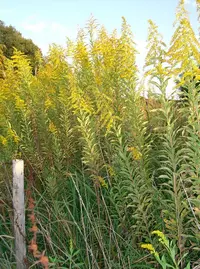
Late goldenrod (Solidago altissima) is a tall, herbaceous perennial native to much of North America. It often forms dense colonies in meadows, roadsides, and open wood edges.
Plants produce upright stems with narrow green leaves and large, branching clusters of small yellow flowers in late summer to fall. The showy blooms support many pollinators, including bees and butterflies.
This species adapts to a wide range of soils and is generally undemanding once established, which makes it easy to naturalize. It prefers full sun and moderately moist, well-drained soil, and understanding how to care for late goldenrod mainly involves giving it enough light and space to spread.

Care Difficulty
Easy Care

Light Preference
Full Sun

Water Requirements
Moderate Water

Temperature Preference
Cold Hardy

Hardiness Zone
3–9

Soil Texture
Sandy, Loamy, Clay

Soil pH
Acidic (5.5–6.5), Slightly acidic (6.5–7.0)

Soil Drainage
Moist but well-drained

Fertilization
Minimal (feed rarely)
Scan your plant to receive care tips personalized for your specific plant
Available on iOS and Android
This sun-loving perennial thrives in open sites with strong light exposure.
This species prefers consistent but not excessive soil moisture once established.
This hardy perennial tolerates a wide temperature range typical of temperate climates.
Humidity is not a critical factor for Solidago altissima, which thrives in typical outdoor air conditions.
This species prefers moderately fertile, well-drained soil but adapts to a range of textures if drainage is maintained.
This tall species can be grown in containers if the pot is large and stable enough to support its upright growth.
This North American native generally thrives in average soil, so fertilizing Solidago altissima should be light and targeted.
Pruning Solidago altissima helps manage height, maintain clump shape, and sustain flowering performance.
This tall goldenrod is usually grown in the ground, so focus on dividing and transplanting crowded clumps rather than frequent repotting.
Solidago altissima is commonly propagated by division, basal cuttings, or seed to expand colonies or share plants.
This species is cold hardy across most temperate climates and usually needs minimal winter care.

Plant Health Check
Not sure what's wrong with your plant? Check your plant's health inside the app.
Late goldenrod hosts numerous specialist herbivores, including goldenrod gall fly larvae that form distinctive spherical galls in its stems, making it a small hotspot for insect biodiversity in fall meadows.
This species flowers very late in the season and produces abundant insect-pollinated blooms, providing one of the last major pollen and nectar resources for bees, wasps, butterflies, and hoverflies before winter in many North American regions.
Late goldenrod spreads through both wind-dispersed seeds and creeping rhizomes, allowing it to form dense clonal stands that can dominate disturbed or abandoned fields over time.

Genetic and ecological studies have shown that late goldenrod was one of the first North American goldenrods to become widespread and invasive in parts of Europe and Asia, where it alters local plant communities and is closely monitored as a neophyte species.
This species spreads by both seed and rhizomes, so it can form large colonies over time. In gardens, control spread by deadheading before seeds form and by dividing clumps or installing root barriers where space is limited.
Keep your plants happy and healthy with plant identification, disease detection, and easy care guidance.