Clavulinopsis corallinorosacea Care

Clavulinopsis corallinorosacea

About Clavulinopsis corallinorosacea

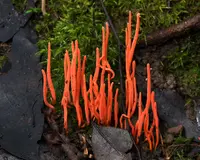
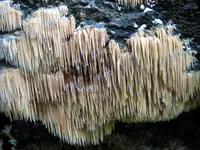
Clavulinopsis corallinorosacea is a small coral fungus, not a leafy plant, recognized by its pink to reddish, branching, coral-like fruiting bodies. It usually grows in groups, forming low, tufted clusters on soil or moss.

This species occurs mainly in woodland and grassland habitats, often in temperate regions, where it fruits in moist, undisturbed ground. It is more a subject for fungi enthusiasts than a practical garden species.

Because it is a mycorrhizal or soil-associated fungus, it is difficult to cultivate deliberately, and attempts to care for Clavulinopsis corallinorosacea at home rarely succeed. It generally appears only where soil conditions, organic matter, and moisture naturally suit its needs.


Main Plant Requirements

Care Difficulty

Hard Care

Light Preference

Partial Shade

Water Requirements

Keep Soil Moist

Temperature Preference

Cool Climate

Hardiness Zone

Unknown

Soil Texture

Loamy, Peaty, Organic-rich

Soil pH

Strongly acidic (4.5–5.5), Acidic (5.5–6.5)

Soil Drainage

Moist but well-drained

Fertilization

Minimal (feed rarely)

Get Personalized Care Plan

Scan your plant to receive care tips personalized for your specific plant

Available on iOS and Android

How to Care for the Clavulinopsis corallinorosacea

This woodland fungus prefers soft, indirect light rather than direct, open sun exposure.

  • Provide dappled or filtered light under trees or shrubs, with no more than 1–2 hours of gentle morning sun and no harsh afternoon sun.
  • Allow partial shade to deep shade; consistent low light mimics the forest floor where Clavulinopsis corallinorosacea typically fruits.
  • In summer, shield from direct sun to prevent drying of the leaf litter, and in winter accept naturally lower light as long as the substrate stays moist.

Moist, not saturated, leaf litter or soil is essential for reliable fruiting of this fungus.

  • Aim for consistently damp substrate; the upper 1–2 cm should feel slightly moist but never waterlogged or dusty dry.
  • Increase watering frequency during warm, dry periods, using gentle soaking that drains freely through the litter or soil to avoid standing water around fungal tissue.
  • Reduce added water in cool, wet seasons, and watch for signs of overwatering such as foul odor or slimy decay versus underwatering indicated by brittle, shriveling fruiting bodies.

This species thrives in cool to mild conditions typical of shaded woodland environments.

  • Target an active growth range around 50–68°F (10–20°C), with the most reliable fruiting usually occurring in the cooler part of this band.
  • Protect from hard frost; brief dips to about 32°F (0°C) may be tolerated in the substrate, but repeated freezing can damage developing fruiting bodies.
  • Avoid prolonged heat above 77–82°F (25–28°C), as high temperatures combined with dry air quickly desiccate the substrate and shorten fruiting duration.

This fungus prefers consistently moist air but relies more on substrate moisture than ambient humidity.

  • Aim for 60–80% humidity in damp, sheltered outdoor spots or very humid terraria if attempting Clavulinopsis corallinorosacea care.
  • Dry, windy air that rapidly desiccates leaf litter or moss indicates humidity is too low for stable fruiting.
  • Increase local humidity by maintaining a constantly moist, spongy substrate and adding surrounding moss rather than misting fruiting bodies directly.

This species fruits from very moist, organic-rich ground rather than conventional potting soil.

  • Use a loose, humus-rich mix mimicking woodland turf: sieved leaf litter, fine compost, and a small amount of washed sand for structure.
  • Ensure the substrate drains slowly but does not become waterlogged, allowing excess water to seep away while staying evenly damp.
  • Aim for slightly acidic to neutral conditions, roughly pH 5.5–7, which matches typical grassland or woodland-edge soils where this fungus appears.
  • Avoid compacted, heavy clay, peat-free mixes that dry into hard blocks, or sterile mineral substrates with little organic matter, as these limit fungal colonization.

This species is poorly suited to container cultivation, as it depends on complex soil ecosystems and mycelial networks that are difficult to reproduce in pots.

This woodland fungus relies mainly on natural soil nutrients and usually does not benefit from additional fertilization in gardens or containers.

This small coral fungus does not require structured pruning, only minimal hygiene handling of fruiting bodies.

  • Remove only clearly decayed, insect‑infested, or moldy fruiting clusters to reduce disease spread in the patch.
  • Use clean gloves or a disinfected knife to lift affected tissue, disturbing the surrounding soil and mycelium as little as possible.
  • Avoid cutting healthy fruiting bodies, since they do not respond with improved growth or productivity like vascular plants.

Transplanting is rarely successful because this fungus depends on a stable soil ecosystem and fine mycelial networks.

  • Avoid lifting clumps from the wild; the mycelium is easily damaged and may not re‑establish.
  • If attempting cultivation, move a generous block of original soil in late summer to a similar shaded, moist, low‑nutrient site.
  • Keep the soil block intact, handle gently, and maintain consistent moisture to limit mycelium stress.
  • Accept that even careful transplanting may fail, so focus on conserving existing habitats of Clavulinopsis corallinorosacea.

Deliberate propagation of this coral fungus is difficult and rarely practiced outside specialized mycology projects.

In natural settings this species is cold hardy, with the hidden mycelium overwintering in soil without special care.

  • Allow fallen leaves to remain as a light mulch, which stabilizes soil temperature and moisture around the mycelium.
  • Avoid deep digging or soil disturbance in winter, since this can damage overwintering fungal threads.
  • Container experiments should stay in a cold, sheltered outdoor spot so natural chilling patterns are maintained.

Care Tips

Leaf-litter management

Keep a thin, continuous layer of undecayed leaf litter over the fruiting area to mimic its natural woodland habitat, but remove thick, matted, or moldy layers that block air movement or trap excess moisture around the fungal mycelium.

Gentle site marking

Discreetly mark productive fruiting spots with low stakes or stones so you can avoid compacting the soil there, allowing the subterranean mycelium network to remain undisturbed year after year.

Soil compaction control

Limit foot traffic, heavy pots, or equipment on the fruiting bed and nearby paths, because firm, uncompressed but aerated soil improves oxygen availability for the mycelium and supports more reliable fruiting.

Targeted moisture shielding

In periods of extended rain, use a raised, ventilated cover such as a mesh tunnel or slatted cold frame to prevent prolonged surface saturation while still allowing diffuse light and airflow to reach the fruiting zone.

Seasonal observation log

Keep simple notes or photos of where and when fruiting occurs each year when growing Clavulinopsis corallinorosacea, then adjust your mulching, disturbance, and irrigation timing to match the patterns that consistently produce the strongest clusters.

Common Pests and Diseases

Mycophagous springtails

These insects feed on fungal tissue and can graze on tender fruiting bodies, especially in very wet, organic-rich substrates. This pest typically causes pitting, ragged edges, or collapse of small coral-like clubs.

Solution

Reduce surface moisture by improving drainage and ventilation of the fruiting area, then gently remove heavily grazed or collapsing clusters. If needed, use sticky traps near the fruiting zone and avoid overwatering or constant surface saturation while still maintaining the cool, moist conditions required for Clavulinopsis corallinorosacea care instructions.

Fungus gnat larvae

This pest thrives in consistently damp, organic substrates and the larvae may feed on developing mycelium or the base of fruiting bodies. Symptoms include poor emergence of fruiting clusters and soft, discolored bases.

Solution

Allow the substrate surface to become slightly less saturated between mistings, use fine-mesh covers over air inlets or trays, and place yellow sticky traps to reduce adult populations. For persistent problems, apply a biological control such as Bacillus thuringiensis israelensis (BTi) to the substrate according to label directions to target larvae without harming the fungus.

Competitive mold contamination

This disease involves fast-growing molds that colonize the same substrate, often appearing as green, blue, or gray patches that overrun the slower coral fungus mycelium. Symptoms include stunted or aborted fruiting bodies and visible discolored patches on the substrate surface.

Solution

Promptly remove and discard heavily contaminated substrate sections, taking care not to spread spores, and increase fresh air exchange to reduce stagnant, humid pockets. In cultivation, start with properly pasteurized or sterilized substrate, avoid overhandling, and separate contaminated containers from healthy ones to limit cross-contamination.

Bacterial soft rot

This disease develops in overly saturated, poorly ventilated conditions and causes fruiting bodies to become slimy, translucent, and foul-smelling. Symptoms include rapid collapse of coral branches and wet, mushy tissue at the base.

Solution

Discard affected fruiting bodies and reduce free water on surfaces by improving drainage and airflow while keeping humidity moderately high rather than dripping wet. Clean tools and containers with a mild disinfectant, and avoid direct water spray on fruiting clusters to limit tissue damage that favors bacterial entry.

Interesting Facts

Distinct coral-like form

This species forms dense, branched, coral-shaped fruiting bodies with flattened, forked tips, which helps distinguish it from many other club and coral fungi in the field.

Preference for mossy soils

It is most often recorded on damp, moss-covered soil in grasslands and heathlands, indicating a close association with stable, undisturbed ground vegetation.

European grassland indicator

In parts of Europe, its presence is used as an indicator of relatively unimproved, semi-natural grasslands that have avoided intensive fertilization and disturbance.

FAQs about Clavulinopsis corallinorosacea

This coral fungus is generally regarded as inedible. It is small, fragile, and offers no culinary value. Identification errors with similar coral fungi can be risky, so it is safer not to collect it for food.

Grow Healthy Plants with Botan Care

Keep your plants happy and healthy with plant identification, disease detection, and easy care guidance.

Botan plant care app — identify plants on mobile

Explore More Plants