Sterile Substrate Prep
Pasteurize or sterilize your straw, compost, or other substrate before use to reduce competing fungi and bacteria that can quickly overwhelm Agrocybe pediades mycelium.

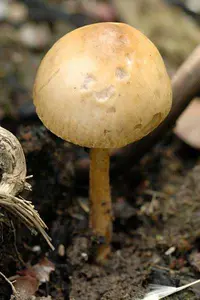
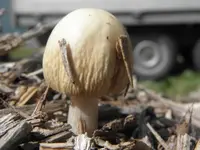
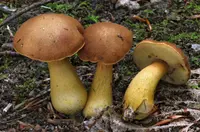
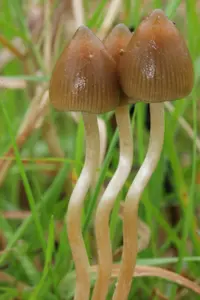
Common fieldcap, Agrocybe pediades, is a small saprotrophic mushroom that grows on nutrient-rich soils, lawns, pastures, and disturbed ground. It often appears in scattered groups or loose clusters. Caps are usually pale yellow-brown to tan, with slender, fragile stems, giving a delicate overall look. It fruits mainly in mild, moist weather and can appear repeatedly where soil stays enriched with organic matter. This species is not cultivated as an ornamental or edible mushroom and is considered challenging to manage intentionally. For anyone wanting to learn how to care for Common Fieldcap, the main focus is usually on lawn and soil conditions rather than deliberate mushroom culture.

Care Difficulty
Moderate Care

Light Preference
Partial Sun

Water Requirements
Keep Soil Moist

Temperature Preference
Cool Climate

Hardiness Zone
Unknown

Soil Texture
Loamy, Silty, Organic-rich

Soil pH
Slightly acidic (6.5–7.0), Neutral (7.0)

Soil Drainage
Moist but well-drained

Fertilization
Minimal (feed rarely)
Scan your plant to receive care tips personalized for your specific plant
Available on iOS and Android
This small grassland mushroom prefers gentle, indirect light rather than harsh sun.
Moist, not waterlogged, soil is essential for reliable fruiting of this species.
This species is adapted to mild, temperate conditions and fruits best in cool to warm weather.
Humidity level is not a major factor for Common Fieldcap, which is typically a short-lived outdoor fungus.
This fungus develops best in loose, organic-rich ground that stays evenly moist but not waterlogged.
This species is not well suited to container growing, as it naturally colonizes open soil, lawns, and mulched ground.
Agrocybe pediades is a small saprophytic fungus that usually obtains enough nutrients from its substrate and does not require routine fertilization in gardens or lawns.
Agrocybe pediades does not need structured pruning because the mushroom fruiting bodies are short-lived and naturally decompose.
This fungus is rarely grown in containers, so care focuses on where and how it appears rather than classic repotting.
Propagation of Agrocybe pediades in home settings is uncommon and better suited to experienced mushroom growers than casual gardeners.
This widespread lawn fungus is naturally cold hardy and usually needs no special winter care in temperate climates.

Plant Health Check
Not sure what's wrong with your plant? Check your plant's health inside the app.
This species occurs worldwide in temperate regions and is especially frequent in nutrient-rich lawns, pastures, and grassy park areas, often appearing after rain from late spring through autumn.
Agrocybe pediades specializes in breaking down nitrogen-rich organic matter such as dung, compost, and heavily fertilized turf, helping recycle nutrients back into the soil food web.
The small tan caps, pale gills that darken with brown spores, and fragile stems closely resemble several other lawn mushrooms, so reliable identification typically requires close examination of spore color, gill attachment, and sometimes microscopic features.
This small mushroom is considered inedible or at best of very poor culinary value. It is easily confused with toxic brownish grassland species. For safety, it is best treated as not for consumption by humans or animals.
Keep your plants happy and healthy with plant identification, disease detection, and easy care guidance.