wrinkled fieldcap Care (Agrocybe rivulosa)

wrinkled fieldcap

About wrinkled fieldcap

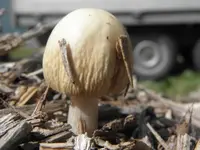
Wrinkled fieldcap (Agrocybe rivulosa) is a saprophytic mushroom that lives on dead organic matter rather than forming a typical leafy plant. It usually appears in dense clusters with pale to tan caps that wrinkle and crack as they mature. Caps are supported by slender stems emerging from wood chips, compost, or rich garden soils. This species has spread from Europe into urban and suburban landscapes, especially where wood-based mulches are used. It colonizes quickly and can appear suddenly after warm, wet periods, which makes it relatively easy to establish where suitable substrate is available. Gardeners who want to learn how to care for wrinkled fieldcap mainly need to focus on providing consistent moisture and plenty of woody organic material.

Main Plant Requirements

Care Difficulty

Moderate Care

Light Preference

Partial Shade

Water Requirements

Keep Soil Moist

Temperature Preference

Cool Climate

Hardiness Zone

Unknown

Soil Texture

Loamy, Organic-rich

Soil pH

Slightly acidic (6.5–7.0)

Soil Drainage

Moist but well-drained

Fertilization

Minimal (feed rarely)

Get Personalized Care Plan

Scan your plant to receive care tips personalized for your specific plant

Available on iOS and Android

How to Care for the wrinkled fieldcap

This saprotrophic mushroom prefers cool, bright conditions with protection from strong direct sun.

  • Provide 3–5 hours of gentle morning sun or bright dappled light; avoid harsh afternoon sun that can dry the substrate and scorch developing caps of wrinkled fieldcap.
  • Allow partial shade for the rest of the day; under dense tree canopies, ensure at least bright open shade rather than deep gloom.
  • In summer, use filtered or broken light to reduce substrate overheating, while in autumn slightly more open exposure helps maintain 4–6 hours of usable light.

This species needs consistently moist, not waterlogged, substrate to fruit reliably.

  • Maintain evenly moist woodchip or composted substrate, allowing only the top 1–2 cm to start drying before re-wetting thoroughly.
  • Increase watering during warm, windy periods when surface layers dry within hours; reduce slightly in cool, damp weather to prevent sour, anaerobic conditions for Agrocybe rivulosa.
  • Watch for signs: drooping, brittle caps and cracked surface indicate underwatering, while sour smell, standing water, or slimy mycelium patches suggest overwatering and poor drainage.

This mushroom fruits best in mild, cool-temperate conditions with moderate temperature swings.

  • Aim for 55–70°F (13–21°C) during active growth and fruiting; short peaks up to 75°F (24°C) are usually tolerated if moisture is stable.
  • Below about 40°F (4°C) growth slows sharply; light frosts can damage fruiting bodies, though buried mycelium often survives and resumes when temperatures rise.
  • Sustained heat above 80°F (27°C) with dry air can halt fruiting and stress the mycelium, so in hot summers use shading and extra moisture to buffer soil temperature.

This mushroom tolerates a wide humidity range but fruits best in moderate, stable conditions.

  • Aim for 60–80% humidity around developing caps to maintain firm, evenly expanded fruiting bodies.
  • Dry air causes caps to crack deeply and margins to dry, typical signs of humidity stress in wrinkled fieldcap.
  • Increase humidity by lightly misting the substrate surface and placing trays over damp perlite or moist gravel.

This species fruits best in consistently moist, organic-rich substrate rather than true mineral soil.

  • Use a loose, woody, organic mix such as well-rotted woodchips blended with leaf litter or composted bark.
  • Ensure free drainage so the substrate stays moist but never waterlogged, which encourages competing molds and bacterial rot.
  • A slightly acidic to neutral pH around 6.0–7.0 suits Agrocybe rivulosa on most wood-based outdoor beds.
  • Improve aeration by mixing in coarse chips instead of fine sawdust, creating air gaps the mycelium can easily colonize.

This species can be grown in outdoor containers if substrate depth and moisture are carefully managed.

  • Choose a wide, deep tub or box that holds a 15–20 cm layer of woodchip substrate to maintain stable moisture and temperature.
  • Drill many side and bottom holes so excess water drains rapidly while still allowing fresh air exchange through the substrate mass.
  • Use a rigid, opaque container to limit light and heat on the substrate walls, which reduces edge drying and encourages even colonization.

Agrocybe rivulosa usually fruits well in nutrient-rich substrates and only needs modest, targeted feeding.

  • Use a balanced NPK granular or liquid fertilizer at 1⁄4–1⁄2 strength if the substrate is low in organic matter.
  • Apply light feeding every 4–6 weeks during the main growing and fruiting season only.
  • Rely primarily on well-rotted compost or manure mixed into straw or wood-based substrates.
  • Stop fertilizing in late fall and winter, as the wrinkled fieldcap substrate should rest between flushes.

Pruning is rarely required for Agrocybe rivulosa, as the fungus completes its life cycle naturally without structural shaping.

This fungus is usually managed by renewing or moving its substrate rather than traditional plant repotting.

  • Transplant or refresh outdoor beds when fruiting declines, growth becomes patchy, or substrate is heavily decomposed.
  • Best timing is early to mid spring, so mycelium can re-establish before peak fruiting weather.
  • Lift colonized substrate gently and move it with minimal disturbance into fresh, moist organic material.
  • Keep the new site evenly moist and shaded for several weeks to reduce mycelium stress and drying.

Agrocybe rivulosa is typically propagated by spreading colonized substrate rather than by seed-like structures.

  • Use spawn or colonized straw, woodchips, or compost as the primary propagation material.
  • Start new beds in spring or early fall when temperatures are mild and moisture is reliable.
  • Place colonized material in close contact with fresh, pasteurized or clean organic substrate.
  • Maintain high, even moisture and good air exchange to support mycelium spread and consistent fruiting.

Outdoor Agrocybe rivulosa beds in temperate climates usually tolerate normal winter conditions with minimal intervention.

  • In colder regions, apply a 5–8 cm layer of loose mulch over the substrate to moderate freeze–thaw cycles.
  • Use breathable materials like straw or leaves that insulate but still allow gas exchange.
  • Container-based substrates in very cold areas can be moved to an unheated but frost-free shed or garage.

Care Tips

Substrate sterilization

Before inoculation, pressure-sterilize or thoroughly pasteurize straw or wood-based substrate to reduce competing fungi and bacteria that can quickly overrun this fast-fruiting species.

Controlled fresh air

Provide brief, regular fresh-air exchange in the fruiting area (for example opening vents or using a small fan on a timer) to lower CO2 levels and encourage thicker stems and better cap formation without drying the blocks.

Targeted misting routine

Mist the air and walls around the fruiting blocks rather than spraying directly on developing caps to maintain a humid microclimate while reducing the risk of bacterial blotch or waterlogged mushrooms.

Cluster harvesting technique

Harvest clusters by gently twisting and lifting the entire group at once when caps have flattened but before heavy spore drop, then trim off substrate at the base to minimize contamination on subsequent flushes.

Careful spent-block disposal

After production declines, bury or compost spent substrate carefully away from formal beds or lawns to limit unwanted volunteer flushes while taking advantage of remaining organic matter when growing wrinkled fieldcap outdoors.

Common Pests and Diseases

Green mold

This disease appears as fast-spreading green patches that overgrow the mushroom mycelium and developing fruiting bodies on the substrate surface. Symptoms include reduced mushroom yield and areas of dense, dusty green spores.

Solution

Remove and discard heavily contaminated substrate or blocks, clean the growing area thoroughly, and increase fresh air exchange to reduce humidity spikes. Use only pasteurized or properly sterilized substrate, avoid introducing unfiltered outdoor air directly onto the culture, and separate new cultures from older ones to limit Trichoderma spread while following good Agrocybe rivulosa care instructions.

Cobweb mold

This disease develops as a thin, grey to whitish, spiderweb-like growth that quickly covers casing soil or substrate and can engulf young mushrooms. Symptoms include soft, collapsing caps and rapid spread in areas with still, humid air.

Solution

Lightly mist affected areas with a 3–5% hydrogen peroxide solution to collapse the cobweb growth, then increase air movement and slightly lower humidity to discourage reinfection. Remove heavily affected substrate and disinfect tools and surfaces to prevent spores from spreading to new batches.

Fungus gnats

These insects are small, dark flies whose larvae feed in the substrate and on mycelium, leading to reduced pinning and distorted or aborted mushrooms. Symptoms include adult gnats flying near trays and tiny larvae visible in moist growing media.

Solution

Use yellow sticky traps to capture adults, improve drainage and avoid overwatering of the substrate surface, and seal or screen vents to limit entry. For persistent problems, apply a biological control such as Bacillus thuringiensis israelensis (BTI) or beneficial nematodes to the substrate, following label directions for edible mushrooms.

Sciarid flies

These insects are dark, slender flies whose larvae tunnel into mushroom stems and caps, leaving brownish channels and making mushrooms unmarketable. Symptoms include soft, damaged stems and visible larvae inside harvested fruiting bodies.

Solution

Install fine mesh screens on openings, use sticky traps to monitor and reduce adult populations, and promptly remove spent or heavily infested blocks from the grow room. Maintain strict hygiene, clean up spilled substrate, and rotate production areas to break the life cycle of the flies.

Bacterial blotch

This disease causes yellow to brown, greasy or water-soaked spots on caps, often starting where water droplets remain on the mushroom surface. Symptoms include sticky or slimy lesions and reduced shelf life of harvested mushrooms.

Solution

Avoid overhead misting directly on caps and instead maintain humidity with indirect moisture and good air circulation. Remove and discard affected mushrooms, reduce condensation by balancing temperature and humidity, and disinfect surfaces, tools, and containers between flushes to lower bacterial pressure.

Interesting Facts

Recently described species

This species was described to science only in 2003 from the Netherlands, making it a relatively new addition to European mushroom floras despite now being locally common.

Woodchip habitat specialist

It shows a strong preference for nutrient-rich woodchip mulches and composted woody debris in urban and suburban plantings, which explains its rapid spread along roadsides, parks, and landscaped beds.

Potential confusion with edibles

It can resemble some common edible cultivated mushrooms, including certain Agrocybe and Stropharia species, which has raised concern among mycologists about misidentification by inexperienced foragers.

Botan icon

Did you know?

The spread of this species across parts of Europe appears closely linked to modern landscaping practices, with its range expanding as woodchip mulch and similar substrates are transported and used in ornamental plantings.

FAQs about wrinkled fieldcap

This species is generally regarded as an edible mushroom but is not widely recommended for beginners. Identification errors with similar brown mushrooms can be dangerous, so local expert confirmation and reputable field guides are essential before any consumption.

Grow Healthy Plants with Botan Care

Keep your plants happy and healthy with plant identification, disease detection, and easy care guidance.


Botan plant care app — identify plants on mobile

Explore More Plants