Scaly Rustgill Care (Gymnopilus sapineus)

Scaly Rustgill

About Scaly Rustgill

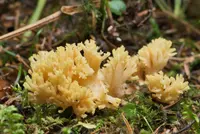
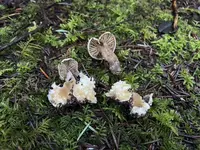
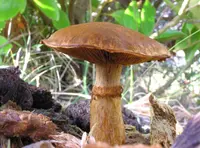
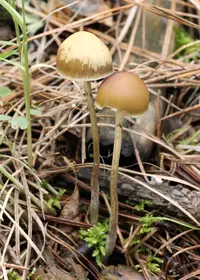
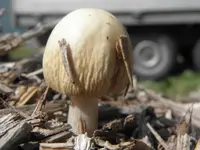
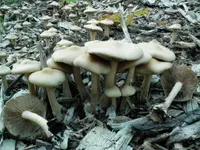
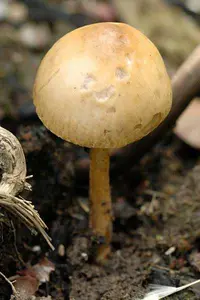
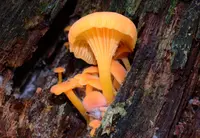
Scaly rustgill, Gymnopilus sapineus, is a saprobic mushroom that grows on dead conifer wood, breaking down tough plant material in forest ecosystems. It typically forms dense clusters of medium-sized, rusty-brown caps with fine scales and yellowish to orange gills. In nature it is most often found in temperate coniferous forests across North America and Europe, appearing mainly in the cooler, wetter seasons. This species is not considered a beginner-friendly cultivation subject, as it has specific wood-based substrate needs and prefers stable, moist, shaded conditions. Anyone wanting to learn how to care for Scaly Rustgill should understand that it is a specialized fungus rather than a typical houseplant.

Main Plant Requirements

Care Difficulty

Hard Care

Light Preference

Partial Shade

Water Requirements

Keep Soil Moist

Temperature Preference

Cool Climate

Hardiness Zone

Unknown

Soil Texture

Organic-rich, Loamy

Soil pH

Acidic (5.5–6.5)

Soil Drainage

Moist but well-drained

Fertilization

Minimal (feed rarely)

Get Personalized Care Plan

Scan your plant to receive care tips personalized for your specific plant

Available on iOS and Android

How to Care for the Scaly Rustgill

Gymnopilus sapineus prefers stable forest light that mimics dappled woodland conditions.

  • Provide bright, indirect light or light shade, such as under shrubs or trees, with only brief direct sun (1–2 hours of weak morning sun).
  • Avoid strong midday and afternoon sun, which can dry out substrate and reduce fruiting; use leaf litter or vegetation for natural filtering.
  • In summer, choose north or east-facing forest edges or clearings; in cooler seasons, slightly more open light still filtered through branches works best.

Watering for Gymnopilus sapineus focuses on maintaining evenly moist, not waterlogged, woody or soil substrates.

  • Keep the substrate consistently damp like a wrung-out sponge; the top 1–2 cm should feel moist but not muddy when pressed between fingers.
  • Increase moisture in warm, dry spells by misting or gentle watering, allowing excess to drain away so pooled water does not sit more than a few hours.
  • Reduce watering frequency in cool or wet seasons; signs of excess water include sour odor and slimy patches, while pale, shriveling caps suggest drying.

This species thrives in cool to mild conditions typical of temperate forests.

  • Optimal growth occurs around 55–68°F (13–20°C), conditions often found in shaded woodland during spring and fall.
  • It tolerates down to about 40°F (4°C) for short periods but fruiting slows markedly; repeated light frosts can damage developing mushrooms.
  • Sustained heat above 77–82°F (25–28°C) dries substrates and can halt fruiting, so deeper shade and thicker mulch help buffer summer temperature swings.

Humidity is not a controlling factor for Gymnopilus sapineus, which fruits outdoors in variable conditions.

This fungus grows on decaying conifer wood rather than true soil, so preparation focuses on the woody substrate.

  • Use firmly packed, well-decayed conifer wood chips or logs with a loose, fibrous structure that holds moisture but still drains.
  • Aim for slightly acidic conditions around pH 5.0–6.5, typical of softwood forest litter and conifer bark.
  • Blend soaked hardwood sawdust with conifer chips to improve aeration while maintaining enough organic matter for sustained nutrition.
  • Avoid compacted garden soil, heavy clay, or highly fertilized mixes, which restrict air spaces and favor competing fungi over Gymnopilus sapineus.

This species is not well suited to conventional container growing, as it naturally colonizes outdoor wood in place.

This wood-decaying fungus is adapted to low-nutrient forest substrates and does not benefit from added fertilizer when fruiting naturally.

Gymnopilus sapineus is not a garden ornamental and does not require pruning in the usual horticultural sense.

In cultivation, this fungus is managed by renewing its substrate rather than traditional repotting or transplanting.

  • Monitor blocks or logs for spent substrate indicated by declining flush size and sparse pin formation.
  • Plan to replace or re-inoculate substrate every 1–2 years, ideally in mild spring or fall conditions.
  • When moving colonized substrate, keep it intact, shaded, and evenly moist to reduce mycelium stress.
  • Avoid breaking apart dense white mycelial mats; handle gently and minimize exposure to direct sun and wind.

Propagation of this species is specialized and generally left to trained mycologists, not typical home growers.

In natural settings, this fungus tolerates normal outdoor winter conditions in its range and needs no targeted winter care.

Care Tips

Sterilize Substrate

Pressure-sterilize hardwood sawdust or straw at 121°C for 60–90 minutes before inoculation to greatly reduce contamination from competing fungi and bacteria when growing Scaly Rustgill.

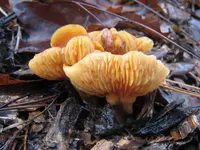
Controlled Inoculation

Cool sterilized substrate fully to room temperature, then mix in grain spawn thoroughly in a clean area, focusing extra spawn along container edges where pins tend to form first.

Dial-In Fresh Air

During fruiting, provide frequent but gentle fresh-air exchange by slightly cracking lids or using filtered vents so caps develop fully without drying out or forming long, thin stems.

Targeted Mist Technique

Mist the walls and inside surfaces of the fruiting chamber instead of spraying directly on developing mushrooms to maintain high humidity while avoiding waterlogged caps and stems.

Timed Harvest Window

Harvest clusters when caps have expanded but before they fully flatten and edges upturn, cutting at the base with a clean knife to reduce substrate damage and encourage subsequent flushes.

Common Pests and Diseases

Fungus gnat larvae

This pest commonly exploits the moist, organic substrates used for cultivating Gymnopilus sapineus and can damage developing mycelium and pins. Symptoms include slow colonization, surface tunneling, and small black adult gnats flying around the grow area.

Solution

Reduce surface moisture, allow the top layer of substrate or casing to dry slightly between misting, and remove heavily infested sections if feasible. Use fine insect screens, yellow sticky traps for adults, and a biological control such as Bacillus thuringiensis israelensis (Bti) in the watering routine, following label directions for mushroom-production settings.

Green Trichoderma mold

This disease is a leading contaminant in wood-based or sawdust substrates, quickly overrunning Gymnopilus sapineus mycelium with dense white growth that turns green as spores form. Symptoms include a sharp line between healthy and contaminated areas and dusty green patches on the surface.

Solution

Immediately isolate or discard contaminated blocks or trays, including any adjacent material that shows early white overgrowth. Clean the grow space with a 1:10 bleach solution, improve substrate sterilization or pasteurization, and strengthen fresh air exchange to reduce stagnant, humid microclimates that favor Trichoderma, following good Gymnopilus sapineus care instructions for hygiene and air flow.

Bacterial blotch

This disease occurs under cool, saturated conditions with poor air movement, leading to greasy, discolored spots on caps and sometimes a slightly sour odor. Symptoms include yellow to dark brown lesions that can merge, making fruiting bodies unattractive or unmarketable.

Solution

Increase fresh air exchange, reduce direct misting onto caps, and keep relative humidity high but not condensing on surfaces. Remove and discard affected mushrooms, then sanitize tools and nearby surfaces with a food-safe disinfectant to limit bacterial spread in subsequent flushes.

Mite infestation

These insects are attracted to rich organic substrates, compost, and decaying fungi, where they graze on mycelium and developing fruiting bodies. Symptoms include patchy mycelial thinning, fine speckling movement on the substrate surface, and deformed or stunted mushrooms.

Solution

Discard severely infested blocks or isolate them far from clean cultures, then deep-clean the grow area and surrounding shelves. Use physical barriers, meticulous hygiene, and, if needed, a compatible predatory mite species introduced according to label instructions, avoiding broad-spectrum chemicals that can harm the fungus.

Black pin mold

This disease appears as small black pinpoints or tufts on the casing or substrate, especially in humid, poorly ventilated setups, and can compete with the fungus for space and nutrients. Symptoms include scattered black dots that may expand into fuzzy colonies and can reduce yield if not controlled early.

Solution

Improve air circulation and slightly reduce humidity to avoid persistent condensation on surfaces, then remove the top contaminated layer with a clean tool and discard it in a sealed bag. Afterward, sanitize nearby surfaces and adjust watering so the substrate stays moist but the surface is not constantly wet.

Interesting Facts

Strong resinous odor

The fruiting bodies of this species often have a noticeably resinous or turpentine-like smell, which helps distinguish it from other small orange-brown mushrooms on conifer wood.

Conifer wood specialist

This fungus is saprotrophic, meaning it feeds on dead organic matter, and it shows a strong preference for decaying conifer wood such as pine stumps, logs, and buried roots in forested habitats.

Variable cap scaling

The cap surface typically shows small, appressed scales that can be dense in young specimens but become more scattered or even almost smooth as the mushroom ages, which contributes to its sometimes confusing identification.

FAQs about Scaly Rustgill

This species is considered inedible and is often listed as potentially toxic. It contains bitter compounds and may cause gastrointestinal upset if eaten. It should not be collected for food or consumed under any circumstances.

Grow Healthy Plants with Botan Care

Keep your plants happy and healthy with plant identification, disease detection, and easy care guidance.

Botan plant care app — identify plants on mobile

Explore More Plants