Use breathable containers
Choose shallow, rigid plastic or polypropylene containers with small side holes to improve gas exchange while keeping humidity stable, which reduces bacterial problems in dense clusters when growing Flammulina elastica.

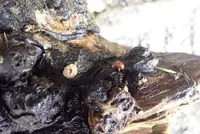
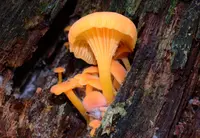
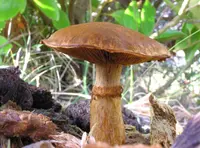
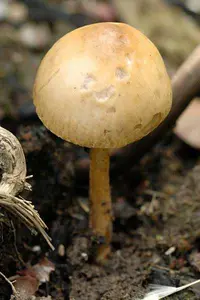
Flammulina elastica is a small, saprophytic fungus that grows on decaying wood, typically in cool, temperate forests. It forms elastic, often clustered fruiting bodies with smooth caps and slender stems.
In nature it usually appears on fallen branches or rotting stumps, helping decompose dead wood and recycle nutrients. Its growth habit is seasonal and closely linked to moisture and temperature.
This species prefers consistently moist conditions, shaded locations, and richly decayed organic matter rather than garden soil. For anyone interested in how to care for Flammulina elastica, stable humidity and cool, fresh air are the most important environmental factors.
Because it is not a common ornamental species, cultivation is more specialized and usually suited to growers with some experience handling wood-loving fungi.

Care Difficulty
Moderate Care

Light Preference
Partial Shade

Water Requirements
Moderate Water

Temperature Preference
Warm Climate

Hardiness Zone
Unknown

Soil Texture
Loamy

Soil pH
Slightly acidic (6.5–7.0)

Soil Drainage
Well-drained

Fertilization
Minimal (feed rarely)
Scan your plant to receive care tips personalized for your specific plant
Available on iOS and Android
This fungus performs best with bright, indirect light mimicking its natural forest-edge habitat.
Stable, lightly moist conditions support consistent development of fruiting bodies and mycelium.
Consistent cool to mild temperatures support reliable growth and fruiting.
This species benefits from moderately humid air and reacts quickly to extremes.
Substrate for this fungus must be airy, evenly moist, and rich in decomposing organic matter.
This species can be grown in containers when moisture, airflow, and stability are controlled carefully.
This species is usually self-sufficient in natural or nutrient-rich soil, so extra feeding is minimal for Flammulina elastica.
Pruning needs are light and mainly hygienic for Flammulina elastica.
This fungus is more often managed in beds or substrates than as a traditional container plant, so transplanting is the main concern for Flammulina elastica.
Propagation is typically done through mycelial division or spore-based culture for Flammulina elastica.
This species is naturally cold tolerant and often fruits in cool conditions, so winter care needs are modest for Flammulina elastica.

Plant Health Check
Not sure what's wrong with your plant? Check your plant's health inside the app.
This species fruits during cold weather, often appearing on wood when temperatures hover near freezing, which is unusual among many agaric fungi that prefer warmer conditions.
The stipe (stem) of this mushroom is notably tough and flexible compared with many brittle woodland fungi, an adaptation that helps it resist mechanical damage from frost and wind.
It functions as a saprotroph, meaning it decomposes dead wood and plant litter, playing a role in nutrient cycling and the breakdown of lignin and cellulose in forest ecosystems.
Growth is generally slow to moderate. Expect only modest size increases each season, especially indoors. Light levels, temperature stability, and nutrient availability strongly affect growth rate, so consistent conditions are more important than trying to push rapid development.
Keep your plants happy and healthy with plant identification, disease detection, and easy care guidance.