Indian paint fungus Care (Echinodontium tinctorium)

Indian paint fungus

About Indian paint fungus

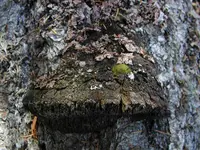
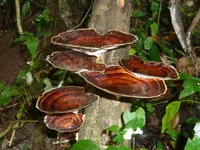
Indian paint fungus, Echinodontium tinctorium, is a perennial wood-decay fungus rather than a leafy plant. It forms hard, hoof-shaped conks with rough, gray to dark brown surfaces and orange to rust-red inner tissue once cut or broken.

This fungus grows mainly on conifers, especially firs, in montane and subalpine forests of western North America. It is slow-growing and tightly tied to its tree hosts, which makes it difficult to cultivate intentionally.

Because it depends on mature living trees and specific forest conditions, most people observe it in nature rather than attempting to care for Indian paint fungus at home.

Main Plant Requirements

Care Difficulty

Hard Care

Light Preference

Shade

Water Requirements

Regular Water

Temperature Preference

Cool Climate

Hardiness Zone

Unknown

Soil Texture

Loamy, Silty, Organic-rich

Soil pH

Strongly acidic (4.5–5.5), Acidic (5.5–6.5)

Soil Drainage

Moist but well-drained

Fertilization

Minimal (feed rarely)

Get Personalized Care Plan

Scan your plant to receive care tips personalized for your specific plant

Available on iOS and Android

How to Care for the Indian paint fungus

This wood-decay fungus develops on live or dead conifer trunks under forest shade rather than in open sun.

  • Tolerates deep to partial shade, typically under a closed canopy where direct sun lasts 0–2 hours per day at most.
  • Prefers bright but filtered woodland light; bark exposed to strong afternoon sun can dry and crack, limiting successful colonization of Indian paint fungus.
  • In managed woodland edges, maintain some overstory cover year-round so trunks do not shift from stable shade to full sun across seasons.

Echinodontium tinctorium relies on natural moisture cycles in conifer forests rather than targeted watering.

  • Thrives where soil and trunk moisture stay moderate; avoid sites that stay waterlogged for more than 24–48 hours, which can reduce host tree vigor.
  • Select or maintain sites with well-drained, organic-rich forest soil; persistent standing water or compacted clay reduces oxygen around roots and trunk bases.
  • Watch host trees for drought stress such as needle yellowing and premature drop; extended drought lowers infection success, so favor locations with consistent rainfall or light supplemental irrigation to the stand, not the fungus directly.

This fungus is adapted to cool to mild forest climates on conifer hosts.

  • Grows best where annual temperatures often fall in the 40–70°F (4–21°C) range, with cool, moist conditions that favor slow wood decay.
  • Tolerates winter cold down to around 0°F (-18°C) when established within host wood, but long periods below this can limit distribution.
  • Handles summer warmth up to about 80–85°F (27–29°C) in shaded forest; prolonged exposure above this in hot, exposed stands can dry host bark and reduce growth.

Humidity is not a key factor for this wood-decaying fungus, which naturally develops on living conifer trunks in outdoor forest conditions.

This fungus does not grow in conventional potting soil and instead develops within the wood of living conifer hosts.

  • In nature, Echinodontium tinctorium colonizes the heartwood of mature true firs and some other conifers, not loose mineral soil.
  • The fungus exploits existing cracks and wounds in bark to enter dense, moist wood where air-filled spaces are limited but stable moisture is high.
  • Substrate is essentially intact tree wood with moderate internal moisture; standard mixes of compost, bark, or perlite cannot replicate this structure.
  • Attempts to culture it on garden or container substrates are rarely successful and usually rely on specialized lab media rather than soil-based setups.

This species is not suitable for container growing because it requires living conifer wood rather than a soil-filled pot to complete its life cycle.

Echinodontium tinctorium is a wild wood-decay fungus on conifers and usually does not need intentional fertilization in natural forest settings.

Pruning is not applicable to Echinodontium tinctorium, as it is a wood-decay fungus rather than a conventional garden plant.

Transplanting is generally not practical for this wood-inhabiting fungus, which lives inside and on mature conifer trunks rather than in soil or pots.

  • Leave naturally occurring infections undisturbed on host trees, as removal usually damages bark and underlying wood.
  • Avoid attempting to move infected wood to new locations, which may spread decay pathogens unintentionally.
  • For educational displays, use already-fallen, fully dead branches or logs rather than trying to transplant living infections.
  • If handling for study, limit cutting to small, clearly decayed sections and keep tools disinfected to avoid cross-contamination.

Echinodontium tinctorium propagation is rarely attempted outside research, since it is a specialized heart-rot fungus that requires living conifer hosts and specific wood conditions.

No special winter care is needed, as this native heart-rot fungus is highly cold tolerant on its conifer hosts.

Care Tips

Host tree selection

Select older, slow-growing conifers already declining or designated for habitat rather than timber, since this fungus is a heart-rot pathogen and should not be introduced to trees intended for structural or commercial use.

Inoculation technique

Drill small, angled holes into the sapwood of the chosen host tree and introduce clean plug spawn or colonized dowels, then seal with melted wax or tree sealer to reduce contamination and desiccation.

Moist microclimate management

Maintain a shaded, wind-sheltered planting zone with deep leaf litter or coarse woody debris around the host tree base to support high local humidity that favors fruiting body development.

Long-term monitoring

Inspect inoculated trees annually for conk formation, bark cracks, or sap flow changes, and keep records of inoculation dates and locations since Echinodontium tinctorium develops slowly over many years.

Ethical harvesting practice

When caring for Indian paint fungus for pigment or study, harvest only a portion of each conk with a clean, sharp knife and leave the attachment zone intact so the fungal colony can continue to live and reproduce.

Common Pests and Diseases

Butt rot expansion

This disease develops as the fungus slowly expands from old branch stubs or wounds into the heartwood of living conifers, eventually hollowing out the lower stem and butt. Symptoms include large perennial conks on the trunk and advanced internal decay with relatively sound outer wood.

Solution

Management focuses on host tree care and stand hygiene rather than curing existing decay. Remove and safely dispose of heavily decayed or high‑risk host trees, avoid mechanical wounding of trunks and major branches, and in managed forests favor tree species and age classes less susceptible to long‑term colonization by this fungus.

Secondary wood decay fungi

These fungi colonize already weakened or decayed wood around Indian paint fungus infections, accelerating structural breakdown of the trunk or large branches. Symptoms include brittle, punky wood, multiple types of conks, and increased limb breakage.

Solution

Inspect colonized trees regularly and remove hazardous limbs or entire trees where structural failure could cause damage. Limit additional stress by preventing soil compaction, avoiding further wounding, and maintaining a stable moisture regime around the root zone.

Bark beetle attack

These insects are more likely to infest conifers already stressed or structurally compromised by Indian paint fungus, using weakened tissue for entry and reproduction. Symptoms include fine boring dust at the base, pitch tubes, and crown thinning or yellowing over time.

Solution

Reduce risk by maintaining overall tree vigor and promptly removing or chipping severely decayed or dying trees that could serve as brood material. In forestry or high‑value sites, use proper thinning, avoid drought stress where possible, and monitor susceptible stands so heavily infested trees can be removed before beetle populations build up.

Wood‑boring insects

These insects exploit decayed or softened wood created by the fungus, tunneling through the stem and further weakening structural integrity. Symptoms include galleries under the bark, exit holes, and increased susceptibility to wind breakage.

Solution

In managed landscapes, prune or remove compromised limbs and stems before they fail, and dispose of wood off‑site to reduce habitat for borers. For forest situations, integrate monitoring of bored, decayed stems into hazard‑tree surveys and prioritize removal of trees in high‑use areas such as trails and campsites.

Interesting Facts

Native to western conifers

This fungus occurs almost exclusively on living conifer trees in western North America, especially grand fir and white fir, where it causes a distinctive heart rot in the central wood of mature trunks and large branches.

Rust-red interior flesh

Although the outer surface is gray to black and rough, the interior flesh is a striking rusty red color that was traditionally used by some Indigenous groups as a pigment for paints and dyes.

Very slow to appear

The internal decay can develop for many years before any fruiting body is visible, so by the time the perennial, hoof-shaped conk appears, the heartwood of the host tree is often extensively decomposed.

Botan icon

Did you know?

This species is one of the primary heart-rot fungi reducing structural strength in old-growth fir forests of the Pacific Northwest, playing a key role in creating hollow trunks and large decayed cavities that become critical habitat for cavity-nesting birds and other wildlife.

FAQs about Indian paint fungus

This species does not spread quickly in gardens. It is a slow-decaying wood fungus that develops over many years inside living conifers. In managed landscapes it is usually limited to infected host trees rather than spreading across beds.

Grow Healthy Plants with Botan Care

Keep your plants happy and healthy with plant identification, disease detection, and easy care guidance.

Botan plant care app — identify plants on mobile

Explore More Plants