scarlet splash Care (Cytidia salicina)

scarlet splash

About scarlet splash

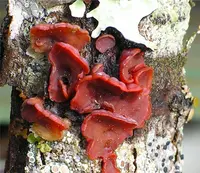
Cytidia salicina, often called scarlet splash, is a small, jelly-like fungus that grows on dead or dying willow and other hardwood branches. It forms bright red, irregular patches that sit flat or slightly raised on the bark, creating a vivid splash of color in cool, damp seasons.

This species is saprophytic, meaning it feeds on dead wood and helps break down organic matter. It is most often found in temperate regions of Europe and North America, especially in moist woodland or riverside habitats.

Many growers treat it as a curiosity on outdoor wood rather than a traditional houseplant, so information on how to care for scarlet splash in containers is limited and experimental.

Main Plant Requirements

Care Difficulty

Moderate Care

Light Preference

Partial Shade

Water Requirements

Regular Water

Temperature Preference

Cool Climate

Hardiness Zone

Unknown

Soil Texture

Loamy, Silty, Organic-rich

Soil pH

Acidic (5.5–6.5)

Soil Drainage

Moist but well-drained

Fertilization

Minimal (feed rarely)

Get Personalized Care Plan

Scan your plant to receive care tips personalized for your specific plant

Available on iOS and Android

How to Care for the scarlet splash

This wood-inhabiting fungus prefers cool, lightly shaded conditions rather than strong, direct sun.

  • Provide dappled or filtered light under shrubs or trees, with 2–4 hours of gentle morning sun and shade the rest of the day for scarlet splash.
  • Avoid harsh midday and afternoon sun, which can dry host wood rapidly and shorten fruiting duration on exposed logs or branches.
  • In summer, choose north- or east-facing sites; in winter, slightly more open light is acceptable as the sun is weaker and air is cooler.

Cytidia salicina develops on naturally moist, decaying willow and similar wood, so moisture in the substrate is more critical than direct watering.

  • Maintain host wood in evenly moist conditions, allowing the surface to dry slightly but not crack; avoid waterlogged, foul-smelling sites that indicate stagnation.
  • Use well-drained but moisture-retentive soil around the host, with leaf litter or mulch to keep the wood damp while still allowing excess water to drain away.
  • Watch for shriveling, pale fruiting bodies as a sign of drying, and dark, collapsing patches as a sign of prolonged saturation or poor air movement.

This species fruits best in cool to mild conditions and tolerates moderate cold on its woody host.

  • Aim for active growth and fruiting in the 40–65°F (4–18°C) range, which typically occurs from late fall to early spring in many temperate regions.
  • Tolerates short drops to around 25°F (-4°C) when established on wood, but repeated hard freezes below this can damage fruiting bodies.
  • Sustained heat above 75°F (24°C), especially when combined with drying winds, often halts fruiting and speeds desiccation of exposed substrates.

This fungus grows well in cool, moist air but does not require tightly controlled humidity.

  • Aim for ambient outdoor humidity around 50–80% where the wood host naturally stays damp.
  • Tolerates short drier spells but prolonged dry, windy conditions cause fruiting bodies to shrivel and stop expanding.
  • Increase local humidity by leaving host wood in shaded, wind-sheltered spots rather than exposed, sun-baked areas for scarlet splash development.

Cytidia salicina develops on dead or dying willow and similar wood rather than in soil, but soil conditions influence host-site moisture.

  • Favor sites with moist, loamy or silty soil that holds some water yet still drains, helping the host wood stay evenly damp.
  • Slightly acidic to neutral soil, around pH 5.5–7.0, supports typical willow growth and creates suitable conditions once branches die back.
  • Improve drainage on heavy clay by mixing in coarse sand or fine gravel near planting sites so water does not stagnate around the wood base.
  • Avoid very dry, sandy ground or sharply raised beds where fallen branches dry out quickly, which limits fruiting of the fungus.

This species is not well suited to container growing, since it relies on naturally weathered woody hosts rather than potting conditions.

Cytidia salicina typically grows on living or dead willow wood and needs no intentional fertilization in natural or landscape settings.

Pruning for Cytidia salicina focuses on maintaining the health and structure of the host willow rather than the fungus itself.

  • Carry out light structural pruning of the host tree in late winter or very early spring, before sap flow is strong.
  • Remove dead, split, or rubbing branches with clean, sharp bypass pruners or a pruning saw.
  • Thin congested interior branches slightly to improve air movement and light, which supports overall tree vigor.
  • Disinfect tools between cuts on suspect tissue to limit spread of other pathogens in the host.

Transplanting relates to the host willow rather than the Cytidia salicina fruiting bodies that appear on its bark.

  • Look for signs a container-grown host willow needs transplanting, such as roots circling the pot, poor drainage, or slowed growth.
  • Plan major transplanting for late winter or early spring while the host tree is still dormant to minimize stress.
  • Shift into a container 1–2 sizes larger or into open ground with well-drained, consistently moist soil.
  • Water thoroughly after transplanting, then keep the root zone evenly moist and shaded from intense sun for 1–2 weeks.

Propagation of Cytidia salicina is not typically managed in home or garden settings, as it is a wood-inhabiting fungus on willow.

Cytidia salicina is naturally cold hardy on its willow hosts and does not require targeted winter care in typical outdoor conditions.

Care Tips

Inspect host wood

Regularly inspect willow or other host branches for cracks and dead patches, since this fungus establishes more reliably on already weakened wood rather than on freshly cut, healthy stems.

Use aged branches

If trying to grow Cytidia salicina on logs or branches, select pieces that have been dead or declining for 1–2 years, as partially decomposed wood provides a more suitable substrate than fresh cuts.

Stabilize display pieces

When displaying infected branches for observation, secure them horizontally on a mesh tray or in a shallow crate so air can circulate on all sides and the fruiting bodies are less likely to be damaged.

Rotate observation sites

When monitoring natural populations, rotate collection or sampling sites each season to avoid overharvesting from a single willow stand and to reduce disturbance of the local habitat.

Document seasonal changes

Keep simple notes or photos of where and when fruiting bodies appear on specific branches, which helps refine timing for future field visits and supports more consistent success in growing scarlet splash on display wood.

Common Pests and Diseases

Willow canker fungi

This disease develops on weakened willow hosts and can limit the formation and spread of C. salicina fruiting bodies on the bark surface. Symptoms include sunken, cracked, or dead patches of bark where the fungus normally appears.

Solution

Prune out and remove cankered twigs and small branches back to healthy wood, disinfecting tools between cuts, and avoid stressing host willows by preventing drought and severe mechanical damage. Improving site drainage and air movement around stems reduces humidity on bark, which limits canker expansion and supports stable Cytidia salicina plant care in managed plantings.

Bark-boring beetles

This pest tunnels into living or recently dead willow bark and wood, disrupting the moist surface layer where C. salicina typically develops. Symptoms include small round exit holes, frass (fine sawdust), and dieback of affected twigs.

Solution

Cut out and destroy heavily infested branches and keep host willows healthy through proper watering and avoidance of trunk wounds, since stressed trees attract borers. In orchard or landscape settings, remove and dispose of heavily infested or recently dead willow material promptly to break the beetle life cycle and maintain suitable bark conditions for the fungus.

Bark-feeding weevils

These insects chew on young, thin willow bark, removing tissue that supports the growth of the fungus and sometimes girdling small stems. Symptoms include irregular patches of missing bark, shallow grooves, and drying of fine twigs.

Solution

Inspect bark at dusk or night when weevils are active, hand-pick and destroy visible adults, and prune out severely damaged young shoots. Reduce hiding places such as heavy weed growth at the base of host shrubs or trees, and dispose of pruned material to limit local weevil populations.

Interesting Facts

Specialist on willow bark

This fungus occurs almost exclusively on dead or dying twigs and branches of willows (Salix species), making it a host specialist rather than a broad generalist decomposer.

Winter-active fruiting

It often produces its small, bright reddish to orange cushion-like fruiting bodies in the colder months, sometimes visible on bare willow twigs when many other fungi are not actively fruiting.

Important wood decomposer

As a saprobe, it breaks down dead woody tissues of willow, helping recycle carbon and nutrients back into riparian ecosystems along streams, rivers, and wetlands.

FAQs about scarlet splash

This species is best treated as an outdoor wood-inhabiting fungus, developing on dead willow and similar hosts in cool, moist conditions. It does not adapt well to typical home interiors, so scarlet splash indoor care is not recommended.

Grow Healthy Plants with Botan Care

Keep your plants happy and healthy with plant identification, disease detection, and easy care guidance.

Botan plant care app — identify plants on mobile

Explore More Plants