Freckled Dapperling Care (Echinoderma asperum)

Freckled Dapperling

About Freckled Dapperling

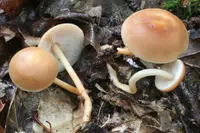
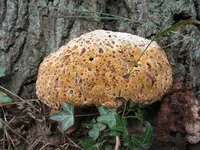
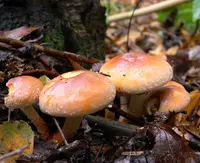
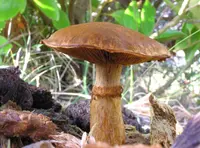
Freckled dapperling, Echinoderma asperum, is a saprophytic mushroom that feeds on decaying wood and organic debris. It is not a houseplant or garden ornamental, but a wild fungus. The cap is usually brownish with dense, darker scales, giving a rough, freckled look, while the stem is often pale with a ring zone. It appears in woodland, parkland, and garden edges across parts of Europe and North America, usually in late summer to autumn. Identification is difficult because it resembles several other scaly mushrooms, which adds risk for foragers. Anyone wanting to care for Freckled Dapperling in cultivation should first understand that this species is primarily of interest for observation, not for culinary or decorative use.

Main Plant Requirements

Care Difficulty

Moderate Care

Light Preference

Partial Shade

Water Requirements

Moderate Water

Temperature Preference

Warm Climate

Hardiness Zone

Unknown

Soil Texture

Loamy, Organic-rich

Soil pH

Slightly acidic (6.5–7.0)

Soil Drainage

Moist but well-drained

Fertilization

Minimal (feed rarely)

Get Personalized Care Plan

Scan your plant to receive care tips personalized for your specific plant

Available on iOS and Android

How to Care for the Freckled Dapperling

This woodland mushroom thrives in soft, filtered light rather than direct, intense sun.

  • Site Echinoderma asperum in dappled shade or light filtered through trees, receiving roughly 1–3 hours of weak morning sun and bright shade the rest of the day.
  • Avoid strong midday and afternoon sun; prolonged exposure can dry out the substrate, overheat the mycelium, and sharply reduce fruiting.
  • In summer, shift toward deeper shade, while in spring and fall slightly brighter, open shade is acceptable as long as the ground surface does not bake or crack.

This fungus depends on evenly moist, well‑drained organic soil rather than frequent surface soaking.

  • Allow the top 2–3 cm of leaf litter or soil to feel just barely dry before watering or irrigating nearby plants, then moisten the area slowly so water penetrates 8–10 cm deep.
  • Use rich, well‑drained, humus‑rich ground; standing water or sour, swampy smells indicate overwatering and can cause mycelium decline and reduced fruiting.
  • In hot, dry periods, check moisture every 1–2 days for shrinking caps or brittle litter, while in cool, wet seasons reduce supplemental water to avoid waterlogging.

This species prefers mild conditions and reacts poorly to hard frost or extreme heat.

  • Optimal fruiting occurs around 55–70°F (13–21°C), with steady soil moisture; sustained temperatures far above or below this window reduce mushroom size and frequency.
  • The mycelium in soil may tolerate short dips to about 32°F (0°C), but repeated freezing and thawing of saturated ground can damage it.
  • In hot spells above 80°F (27°C), provide deeper shade and stronger organic mulch to buffer soil temperature and conserve moisture, limiting stress on the colony.

This species does not rely on elevated humidity and tolerates typical outdoor humidity ranges.

This fungus establishes best in loose, organic-rich forest-type soil with reliable drainage.

  • Aim for a crumbly, humus-rich loam that mimics leaf-litter over mineral soil, allowing the mycelium to spread through fine pores.
  • Ensure free-draining conditions; avoid compacted or waterlogged sites, which reduce oxygen and promote competing anaerobic microbes.
  • A slightly acidic to neutral pH around 5.5–7.0 supports balanced nutrient availability and typical woodland microbial communities.
  • In garden settings, mix well-rotted leaf mold or compost into the top layer and lighten dense soil with bark fines or coarse sand to improve aeration.

Echinoderma asperum is not suitable for container growing because it depends on complex soil and wood interactions that containers rarely provide.

This woodland fungus does not require routine fertilization, as it obtains nutrients from decaying organic matter.

Pruning is not applicable to Echinoderma asperum because it is a wild mushroom, not a woody or leafy plant.

This species is not suited to normal repotting or transplanting because it lives in soil and leaf litter rather than containers.

  • Treat any cultivation attempts as experimental mushroom culture rather than standard pot culture.
  • If moved, transfer a block of original substrate intact, disturbing the mycelium as little as possible.
  • Time any relocation for cool, moist periods to reduce drying of the mycelial network.
  • Avoid frequent disturbance; this organism establishes best when its substrate remains stable.

Reproducing this freckled dapperling is a specialized mycology task rather than typical home plant propagation.

No specific winter care is required outdoors, as the fungus persists mainly as underground mycelium.

  • Fruiting bodies naturally disappear with frost and do not need intervention.
  • Avoid deep soil disturbance in winter so the mycelium remains insulated in the leaf litter and upper soil.
  • Container experiments should stay in a cool, evenly moist, frost-free place to prevent the substrate from freezing solid.

Care Tips

Site hygiene

Remove spent mushrooms promptly and dispose of them in sealed bags to reduce spore buildup and limit transfer of this poisonous species to areas used by children or pets.

Targeted substrate inoculation

Introduce spawn only into clearly defined wood chip or mulch beds bordered by stones or edging, so the colony remains contained and easier to monitor over several seasons when growing Freckled Dapperling.

Moisture buffering

Cover inoculated beds with a 2–3 cm layer of coarse mulch to buffer short dry spells and protect the developing mycelium from surface temperature swings.

Spore control

If fruiting is abundant near paths or play areas, harvest caps before they fully flatten to limit spore spread and gradually shift the colony away from high-traffic zones.

Protective signage

In gardens where this species recurs, place small, clear markers indicating toxic mushrooms so visitors, children, and less experienced gardeners do not disturb or consume them.

Common Pests and Diseases

Maggot infestation

This pest targets the developing mushroom tissue, with larvae tunneling through caps and stems and leaving brownish, water-soaked areas. Symptoms include small entry holes, soft spots, and accelerated decay of the fruiting bodies.

Solution

Remove and discard heavily infested mushrooms to reduce breeding sites, and harvest specimens promptly once mature. In outdoor or woodland settings, maintain good sanitation around fruiting areas and avoid leaving old or damaged mushrooms on the ground, which helps limit fly populations around Echinoderma asperum.

Slug and snail damage

These pests feed on young or tender mushroom caps, leaving irregular holes, rasped surfaces, or missing sections along the margin. Symptoms include slime trails on or near fruiting bodies and rapid cosmetic damage, especially in damp, shaded areas.

Solution

Hand-pick slugs and snails around the fruiting site at dusk or after rain, and remove dense ground cover that offers hiding places. Physical barriers such as copper tape around small cultivation beds or coarse grit around clusters can reduce direct contact and feeding on the mushrooms.

Bacterial blotch

This disease causes localized yellow to brown, greasy or slimy spots on mushroom caps that may coalesce into larger discolored patches. Symptoms include a wet, sometimes slightly sunken appearance and rapid deterioration of affected tissue under prolonged moisture.

Solution

Improve air movement and avoid direct overhead wetting of the caps to keep surfaces as dry as possible. Remove and discard any blotched mushrooms, reduce crowding of fruiting bodies, and irrigate the substrate rather than the caps to limit the spread of bacteria while growing Freckled Dapperling.

Interesting Facts

Distinct freckled cap

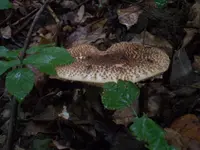
The cap surface is densely covered with stiff, dark brown scales on a paler background, creating the “freckled” appearance that inspired its common name, freckled dapperling.

Strong phenolic odor

Mature fruiting bodies often emit a sharp, somewhat unpleasant smell described as phenolic or inky, which helps field mycologists distinguish it from similar-looking Lepiota species.

Woodland edge specialist

This mushroom commonly fruits in nutrient-rich soils of mixed and coniferous woodlands, often near paths, clearings, and edges where litter and disturbance increase organic matter decomposition.

Botan icon

Did you know?

Molecular studies have shown that this species, long placed in the genus Lepiota, is distinct enough in its microscopic features and DNA sequences to be classified in the separate genus Echinoderma, highlighting how modern genetics reshapes mushroom taxonomy.

FAQs about Freckled Dapperling

This species is considered poisonous and should never be eaten. Ingestion can cause serious gastrointestinal and neurological symptoms in humans and pets. Avoid handling damaged fruiting bodies, and keep children and animals from touching or consuming it.

Grow Healthy Plants with Botan Care

Keep your plants happy and healthy with plant identification, disease detection, and easy care guidance.

Botan plant care app — identify plants on mobile

Explore More Plants