Psilocybe angulospora Care

Psilocybe angulospora

About Psilocybe angulospora

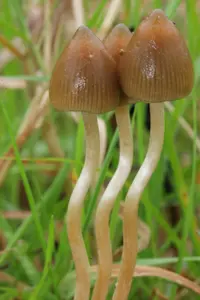
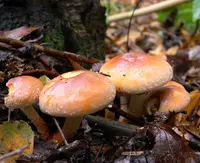
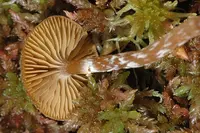
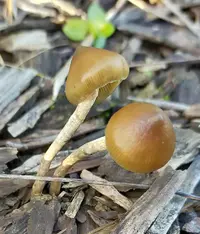
Psilocybe angulospora is a small saprophytic mushroom that decomposes organic matter rather than behaving like a typical leafy houseplant. It usually forms slender stems with modest caps, often in clusters on decaying wood or rich forest debris. The fruiting bodies are short-lived and strongly linked to specific moisture and temperature conditions. This species is naturally found in limited regions and is not widely documented in cultivation, so reliable guidance on how to care for Psilocybe angulospora is scarce. It generally favors consistently damp, shaded habitats with nutrient-rich, well-aerated substrates, making it more suitable for experienced fungal growers than casual plant owners.

Main Plant Requirements

Care Difficulty

Hard Care

Light Preference

Partial Shade

Water Requirements

Keep Soil Moist

Temperature Preference

Warm Climate

Hardiness Zone

Unknown

Soil Texture

Loamy, Peaty, Organic-rich

Soil pH

Acidic (5.5–6.5)

Soil Drainage

Moist but well-drained

Fertilization

Minimal (feed rarely)

Get Personalized Care Plan

Scan your plant to receive care tips personalized for your specific plant

Available on iOS and Android

How to Care for the Psilocybe angulospora

This wood-inhabiting fungus prefers low to moderate light that mimics a shaded forest floor.

  • Provide bright shade or dappled light, avoiding direct midday sun; brief early-morning or late-afternoon sun is acceptable for 1–2 hours if humidity stays high.
  • Maintain indirect light equivalent to a bright north- or east-facing exposure; heavy, continuous shade slows Psilocybe angulospora development and can reduce fruiting.
  • In summer, shield from strong sun that can dry the substrate surface; in cooler seasons, ensure 8–10 hours of soft, indirect light to support steady growth.

Moisture management focuses on keeping the substrate evenly damp without becoming waterlogged.

  • Use a loose, well-draining wood-based substrate; water or mist only enough to keep it consistently moist, not soggy or dripping.
  • Before rewetting, allow the top 0.5–1 cm of substrate to lose surface gloss but not crack or pull from the sides, a visual cue that moisture is declining.
  • In warm, dry conditions, light misting 1–2 times daily can prevent drying; overwatering shows as sour odor or slimy patches, while underwatering causes shrinking, pale pins.

This species prefers cool to mild conditions similar to a shaded woodland environment.

  • Aim for an optimal fruiting range around 55–65°F (13–18°C), with colonization often tolerating up to about 70°F (21°C) if humidity remains stable.
  • Avoid temperatures below 40°F (4°C), which slow growth sharply; prolonged freezing can damage mycelium and reduce later performance.
  • Limit heat exposure above 75°F (24°C), since warm, stagnant conditions raise contamination risk; during hot seasons, choose the coolest shaded outdoor or sheltered spot available.

This fungus requires high humidity to fruit reliably in cultivation.

  • Maintain 85–95% relative humidity during active growth and fruiting using a tent, greenhouse, or sealed monotub system.
  • Watch for shriveling, cracked caps, and stalled pin formation as signs of humidity dropping too low or fluctuating sharply.
  • Increase humidity with frequent fine misting of walls or substrate surface, use of damp perlite trays, and minimal fanning that avoids direct airflow on Psilocybe angulospora.

For reliable culture, treat the substrate for Psilocybe angulospora as a structured, aerated, moist but not waterlogged medium rather than conventional soil.

  • Use a bulk substrate of hydrated, pasteurized coconut coir with 10–20% vermiculite for water retention and structure, avoiding dense garden soil.
  • Ensure the mix is airy and springy so mycelium can colonize rapidly; clumping or compacted texture limits oxygen and encourages anaerobic bacteria.
  • Aim for a slightly acidic to neutral pH around 6.0–7.0 by starting with buffered coir or adding a small amount of gypsum, which also improves texture and calcium supply.
  • Avoid heavy clay, poorly drained compost, or unprocessed manure, as these hold excess water, increase contamination risk, and slow mycelial spread.

This species can be grown in containers when they provide stable moisture, air exchange, and substrate depth.

  • Choose a container with broad surface area relative to depth so fruiting bodies have room to emerge across the substrate, not just at edges.
  • Use rigid plastic tubs or trays that do not flex when lifted, preventing microcracks that disturb the colonized substrate block.
  • Drill or use built-in side vents placed above substrate level to balance gas exchange with moisture retention, rather than relying only on a loose lid.

This fungus grows on nutrient-rich organic matter and typically does not need supplemental fertilizer in cultivation.

Pruning is not relevant for Psilocybe angulospora because it is a mushroom-forming fungus, not a leafy plant.

Cultivation focuses on renewing substrate rather than traditional repotting or transplanting.

  • Prepare fresh, sterile substrate when containers or trays are fully colonized or yields decline noticeably.
  • Work during the active growing cycle, then allow the mycelium time to recolonize before expecting new mushrooms.
  • Handle colonized blocks gently to avoid breaking up mycelium more than necessary.
  • Maintain stable moisture and temperature after transfer to limit stress and contamination risk.

Reproduction relies on spores and mycelium, so standard houseplant propagation methods do not apply to this species.

Outdoor cultivation is uncommon; in controlled indoor setups, conditions stay stable so specific winter care is minimal.

  • Maintain the usual temperature and humidity range without large seasonal swings.
  • Avoid placing growing containers near cold windows, drafts, or unheated spaces.
  • Keep substrate just moist, not waterlogged, since cool, saturated conditions increase contamination risk.

Care Tips

Substrate depth control

Maintain a relatively shallow, even substrate layer of 3–5 cm to promote uniform colonization and more consistent pin formation across the entire surface.

Targeted surface misting

Use a fine-mist sprayer to lightly moisten only the substrate surface and side walls of the container, avoiding visible water pooling that can encourage bacterial blotch and malformed fruiting bodies.

Precision fresh air exchange

Provide short, regular fresh air exchanges by briefly opening the fruiting chamber or using filtered vents, which helps remove CO₂ pockets near the substrate without excessively dropping humidity.

Contamination zoning

Isolate any discolored, slimy, or strongly off‑odor areas of substrate by cutting them out with a sterile tool and discarding them, then slightly increasing air movement to lower the risk of further contamination spread while caring for Psilocybe angulospora.

Harvest timing technique

Harvest clusters individually as soon as caps begin to flatten by gently twisting at the base rather than pulling, which reduces substrate disturbance and promotes cleaner subsequent flushes.

Common Pests and Diseases

Green mold (Trichoderma)

This disease shows as fast‑spreading, dense green patches on the casing or substrate that quickly overgrow mycelium and pins.

Solution

Remove and discard heavily contaminated trays or blocks, clean the growing area with a disinfectant, improve hygiene, and reduce excess moisture and heat; in very early stages, carefully scrape off contaminated casing, spot-treat the area with 3% hydrogen peroxide, and increase fresh air exchange to favor mushroom mycelium over Trichoderma.

Cobweb mold

This disease appears as very fine, grey to whitish, spiderweb-like growth spreading rapidly over the casing and young mushrooms, often turning darker as spores form.

Solution

Immediately increase fresh air exchange, lightly mist affected areas with 3% hydrogen peroxide solution, remove badly affected mushrooms and casing, and sanitize the grow space to prevent recurrence; maintaining slightly lower humidity and good air movement helps suppress cobweb mold in future cycles when growing Psilocybe angulospora.

Sciarid fungus gnats

These insects are small dark flies whose larvae feed in the substrate, damaging mycelium and introducing pathogens, often visible as tiny flying adults around trays.

Solution

Use yellow sticky traps to capture adults, cover or tape gaps in containers, allow the top layer to dry slightly between misting, and improve cleanliness; in persistent infestations, introduce biological controls such as Bacillus thuringiensis israelensis (BTI) products in the moist substrate to reduce larvae without harming the mushrooms.

Mite infestations

These pests are tiny, often pale or translucent arthropods that move across the substrate and fruiting bodies, leading to deformed or stunted mushrooms and reduced yields.

Solution

Discard heavily infested substrates, thoroughly clean and dry the fruiting area between cycles, and avoid bringing in contaminated straw, soil, or compost; for mild cases, isolate trays, increase air movement, and use fine mesh screening and clean tools to prevent new mites from entering the grow space.

Bacterial blotch

This disease causes slimy, water-soaked, yellow to brown spots on caps and stems, often associated with overly wet surfaces and poor airflow.

Solution

Remove and discard affected mushrooms, reduce direct misting on caps, improve air exchange and avoid condensation on surfaces, then sanitize tools and growing containers; keeping humidity in the appropriate range and ensuring quick drying of surfaces after misting greatly reduces bacterial blotch incidence in Psilocybe angulospora care instructions.

Interesting Facts

Type from New Zealand

This species was first described from material collected in New Zealand, where it is associated with grassy, often human-influenced habitats such as lawns and pastures.

Distinctive angular spores

It is named for its angular, irregularly shaped spores, a microscopic feature that helps mycologists separate it from closely related Psilocybe species.

Section Semilanceatae member

The species belongs to Psilocybe section Semilanceatae, a group characterized by small, often grassland-dwelling mushrooms with hygrophanous caps that change color as they dry.

FAQs about Psilocybe angulospora

This species is a psychoactive mushroom containing psilocybin, which affects the central nervous system. Ingesting it can cause severe disorientation, anxiety, and physical distress. It is unsafe for children, pets, and untrained users and should be kept inaccessible.

Grow Healthy Plants with Botan Care

Keep your plants happy and healthy with plant identification, disease detection, and easy care guidance.

Botan plant care app — identify plants on mobile

Explore More Plants