Use Decaying Hardwood
Establish the fungus on well-rotted hardwood chips or logs from broadleaf trees such as oak or beech, since this species specializes in breaking down lignin-rich wood rather than fresh sawdust or softwood bark.

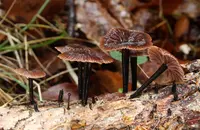
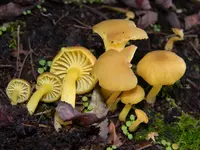
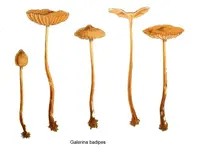
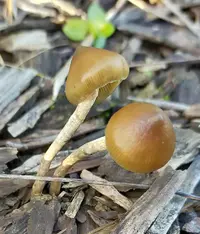
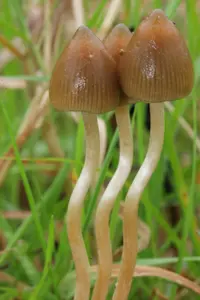
Foetid parachute, Gymnopus foetidus, is a small saprotrophic fungus that feeds on decaying organic matter rather than living as a traditional green plant. It produces thin, tawny to brown caps on slender stems, usually clustered on damp leaf litter or woody debris in forests.
This mushroom occurs mainly in temperate woodlands of North America and Europe, where it helps break down dead leaves and enrich the soil. Its strong, unpleasant odor and preference for consistently moist, shaded habitats influence how to care for Foetid Parachute in cultivation or display, as it thrives only in cool, humid, well-ventilated conditions with abundant organic material.

Care Difficulty
Moderate Care

Light Preference
Shade

Water Requirements
Keep Soil Moist

Temperature Preference
Cool Climate

Hardiness Zone
Unknown

Soil Texture
Loamy, Silty, Organic-rich

Soil pH
Acidic (5.5–6.5), Slightly acidic (6.5–7.0)

Soil Drainage
Moist but well-drained

Fertilization
Minimal (feed rarely)
Scan your plant to receive care tips personalized for your specific plant
Available on iOS and Android
This woodland fungus favors low, filtered light similar to a shaded forest floor.
This species relies on consistently moist, not waterlogged, organic material rather than direct watering of the fruiting bodies.
This saprophytic fungus thrives in cool to mild conditions typical of shaded woodland environments.
This fungus prefers consistently moist, high-humidity conditions to fruit well.
This species fruits best in loose, organic-rich, consistently damp substrate rather than typical garden soil.
This fungus can be grown in containers if the substrate remains cool, moist, and well-aerated.
This woodland saprobic fungus gains nutrients from decaying organic matter and usually needs no added fertilizer in garden or forest settings.
Pruning is generally not applicable to Gymnopus foetidus, since it is a short-lived mushroom fruiting from decaying wood or leaf litter rather than a woody or leafy plant.
Transplanting this wild, wood-decaying fungus is unreliable and not recommended for routine culture.
Propagation of Gymnopus foetidus by home growers is uncommon and technically challenging, as it depends on establishing mycelium in suitable woody or leafy debris.
Outdoor populations of the wild Foetid Parachute generally require no deliberate winter care in temperate climates, as the mycelium persists naturally in decaying organic material.

Plant Health Check
Not sure what's wrong with your plant? Check your plant's health inside the app.
Fresh fruiting bodies release a strong, often unpleasant smell that many people compare to garlic, onions, or rancid food, which helps distinguish it from similar brown woodland mushrooms.
The small, thin caps often resemble little parachutes and typically appear in dense, tufted clusters on very decayed hardwood, especially on old sticks, bark, and woody debris on the forest floor.
This species is a saprotrophic fungus, meaning it feeds on dead organic matter and plays a role in breaking down hardwood and recycling nutrients in temperate forests of Europe and North America.
This small woodland mushroom is not recommended for consumption. It has an unpleasant odor, is considered inedible, and may cause gastrointestinal discomfort. Foraging beginners should avoid it and focus only on confidently identified, well-documented edible species.
Keep your plants happy and healthy with plant identification, disease detection, and easy care guidance.