Galerina badipes Care

Galerina badipes

About Galerina badipes

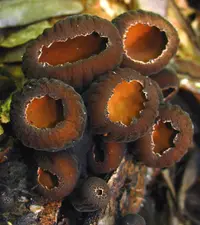
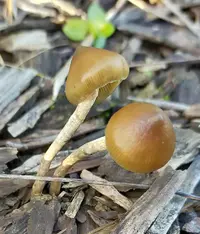
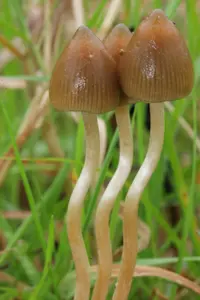
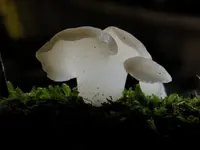
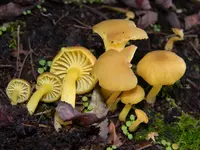
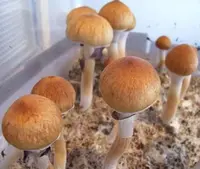
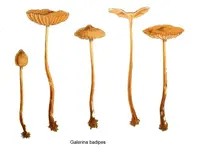
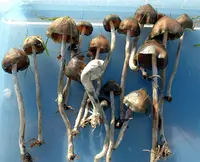
Galerina badipes is a small, brownish saprotrophic mushroom, not a typical houseplant. It grows on decaying wood and plant debris, helping break down organic matter in forests. Caps are usually smooth and dull brown, with slender stems and gills underneath that release spores. It often appears in clusters on rotting logs or buried wood. This species is not suited to casual cultivation, as it has specific substrate and environmental needs that are difficult to reproduce reliably at home. Any attempt to care for Galerina badipes should be approached with caution due to identification and safety concerns.

Main Plant Requirements

Care Difficulty

Hard Care

Light Preference

Partial Shade

Water Requirements

Keep Soil Moist

Temperature Preference

Cool Climate

Hardiness Zone

Unknown

Soil Texture

Loamy, Organic-rich, Peaty

Soil pH

Acidic (5.5–6.5)

Soil Drainage

Moist but well-drained

Fertilization

Minimal (feed rarely)

Get Personalized Care Plan

Scan your plant to receive care tips personalized for your specific plant

Available on iOS and Android

How to Care for the Galerina badipes

This saprophytic woodland fungus prefers cool, shaded forest light rather than direct sun exposure.

  • Provide constant shade or very dappled light under trees, logs, or dense understory; avoid direct midday and afternoon sun, which can dry substrates rapidly and inhibit fruiting.
  • Aim for bright shade with only brief, low-angle morning sun if any; 0–2 hours of weak direct light per day is usually the upper limit.
  • In summer, shield sites from intense light and drying winds; in winter or cloudy seasons, slightly more open but still shaded positions help maintain stable moisture and light for Galerina badipes.

This fungus depends on consistently moist, not waterlogged, organic substrates such as decaying wood or rich leaf litter.

  • Maintain the substrate evenly damp, allowing only the upper 1–2 cm of leaf litter or wood surface to start drying before re-moistening with gentle, fine spray.
  • Ensure excellent drainage around rotting wood or litter; prolonged standing water or saturated soil promotes anaerobic conditions, mold competition, and decay of the mycelium rather than healthy fruiting.
  • In warmer, windy weather, expect to mist or irrigate the substrate more often, watching for brittle, shriveling caps as a sign of dryness and slimy, collapsing caps as a sign of excess moisture affecting Galerina badipes.

This woodland fungus favors cool to mild conditions and is sensitive to both hard frost and intense heat.

  • Optimal fruiting usually occurs around 50–65°F (10–18°C), with slow but possible growth up to about 70°F (21°C) if moisture and shade remain stable.
  • Short exposure down to about 32°F (0°C) may be tolerated, but repeated hard freezes below this often damage fruiting bodies, so sheltered, insulated substrates are helpful in cold spells.
  • Sustained heat above 75–80°F (24–27°C) with low humidity dries substrates quickly; in warmer seasons, deeper shade and thicker leaf litter or wood cover help buffer temperature swings.

This species is not cultivated as a houseplant, and humidity management is generally unnecessary in typical outdoor conditions.

This toxic, saprotrophic mushroom is not suitable for deliberate cultivation, so soil preparation is usually unnecessary in home or garden settings.

  • In nature it appears on very decayed conifer wood, forest litter, or heavily decomposed organic substrates rather than structured mineral soil.
  • The substrate is typically moist, rich in decomposed plant material, and well aerated, similar to rotted wood mixed with forest humus.
  • For mycological study only, researchers mimic this by using sterilized sawdust or woody debris with controlled moisture, never standard potting mixes.
  • Avoid attempting to encourage fruiting in garden beds, lawns, or edible beds due to the high poisoning risk associated with Galerina badipes.

This species is not appropriate for ornamental or household container growing due to its high toxicity and specialist fungal habitat requirements.

This fungus is not maintained like a garden plant, and Galerina badipes should not be fertilized or encouraged in cultivated settings.

Pruning is not applicable for Galerina badipes, a small wild mushroom that should be left undisturbed in its natural habitat.

Repotting or transplanting is not relevant, as this species is a wild saprophytic mushroom dependent on specific decaying wood substrates.

  • Avoid attempting to lift or relocate fruiting bodies, since they are only the visible part of a larger, delicate mycelial network.
  • Transplanting typically fails because the mycelium relies on stable moisture, temperature, and wood-decay conditions that are hard to reproduce.
  • If removal is necessary in a managed area, physically discard the substrate rather than trying to move the organism elsewhere.

Intentional propagation of Galerina badipes is not recommended due to toxicity concerns and its specialized ecological niche on decaying wood.

No winter care is recommended for this wild mushroom, which should not be cultivated or managed as a garden or indoor species.

Care Tips

Secure culture lids

When working with this species in culture, always use parafilm or breathable tape to seal Petri dishes or culture jars so gas can exchange but spores and contaminants stay contained.

Use dedicated tools

Keep separate scalpels, tweezers, and brushes for this species and flame-sterilize or pressure-sterilize them between sessions to avoid cross-contamination with other fungi or plants.

Label toxicity clearly

Mark all containers, trays, and culture vessels with clear toxicity warnings and species name so no one mistakes it for an edible or medicinal mushroom.

Control spore release

Remove or autoclave mature fruiting bodies before heavy spore drop, and work over lined trays so you can bag and dispose of spent material safely in household trash according to local regulations.

Manage growing location

Keep cultures and fruiting setups in a dedicated, low-traffic area away from food preparation, pets, and children; caring for Galerina badipes must always prioritize preventing accidental contact or ingestion.

Common Pests and Diseases

Mucor mold

This disease often colonizes very moist, nutrient-rich mushroom cultures and can quickly overgrow young fruiting bodies. Symptoms include cottony white to gray patches that spread over caps, stems, or substrate.

Solution

Remove and discard heavily contaminated cultures or trays, reduce moisture on the surface, and increase fresh air exchange to keep the substrate just moist, not wet. Sterilize or thoroughly disinfect tools and containers, and start with clean, pasteurized substrate to prevent recurrence when growing Galerina badipes.

Trichoderma green mold

This disease appears as dense white mycelium that turns bright to dark green as spores form, often starting in injured or overwatered substrate. Symptoms include stunted or deformed fruiting bodies and patches of green powdery growth.

Solution

Physically remove and discard contaminated substrate and fruiting bodies as soon as green patches appear, then lower humidity slightly and improve air circulation to reduce condensation. Disinfect the growing area and avoid reusing contaminated substrate or containers to limit spore carryover in future Galerina badipes cultures.

Sciarid fungus gnats

These insects lay eggs in damp substrate, and the larvae feed on fungal mycelium and young fruiting bodies. Symptoms include slow or uneven growth and visible small black flies hovering around trays or containers.

Solution

Use fine mesh screens and sticky traps to reduce adult numbers, and allow the top layer of substrate to dry slightly between mistings while still maintaining overall humidity. If needed, apply a biological larvicide containing Bacillus thuringiensis israelensis (Bti) to the substrate, following label directions, to target larvae feeding on Galerina badipes mycelium.

Mite infestations

These pests can arrive on unsterilized substrate or contaminated cultures and feed on spores, mycelium, and young fruiting bodies. Symptoms include tiny moving specks on the substrate surface and poor or patchy mushroom formation.

Solution

Discard heavily infested cultures, then clean and disinfect shelves, tools, and containers to remove remaining mites and eggs. Start new Galerina badipes cultures only from clean, inspected material and, where possible, heat-treat or pressure-sterilize substrate before use to prevent reintroduction.

Interesting Facts

Wood-decaying specialist

This species grows on decaying conifer and hardwood debris, where it helps break down lignin and cellulose, contributing to nutrient recycling in forest floor ecosystems.

Microscopic identification features

Its identification relies heavily on microscopy, as it has smooth, ellipsoid spores with a distinct germ pore and characteristic cheilocystidia (specialized edge cells on the gill), which separate it from similar small brown mushrooms.

Documented toxicity concerns

Although not as notorious as some other Galerina species, it is treated as potentially poisonous in the literature because of the high toxicity found in close relatives, so mycologists strongly advise against consuming any Galerina species.

FAQs about Galerina badipes

This species is not considered edible and should be treated as potentially poisonous. Identification of small brown mushrooms is difficult, and confusion with deadly species is common. Avoid tasting, handling with damaged skin, or using it as food.

Grow Healthy Plants with Botan Care

Keep your plants happy and healthy with plant identification, disease detection, and easy care guidance.

Botan plant care app — identify plants on mobile

Explore More Plants