Substrate anchoring
Press small clumps of the fungus gently but firmly into living moss cushions or damp, decaying wood so the mycelium can quickly connect to a stable, moisture-retentive substrate.

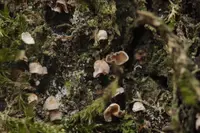
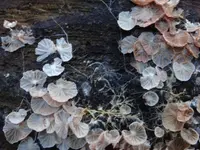
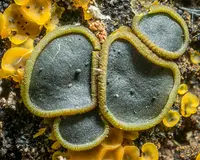
Moss ear, Chromocyphella muscicola, is a small, cup-shaped fungus that often appears among mosses on decaying wood or damp forest substrates. It is not a leafy plant but a tiny saprophytic organism that feeds on dead organic matter.
The fruiting bodies are usually clustered, pale to light brown, and partially hidden in moss cushions, which makes them easy to overlook. It is naturally found in cool, moist forests of Europe and other temperate regions.
Moss ear is not commonly cultivated, and consistent results are difficult without controlled humidity, stable moisture, and suitable woody debris. For hobbyists who want to care for moss ear, it is usually grown as part of a moss terrarium or specialized fungal setup.

Care Difficulty
Moderate Care

Light Preference
Partial Shade

Water Requirements
Keep Soil Moist

Temperature Preference
Cool Climate

Hardiness Zone
Unknown

Soil Texture
Loamy, Peaty, Organic-rich

Soil pH
Acidic (5.5–6.5)

Soil Drainage
Moist but well-drained

Fertilization
Minimal (feed rarely)
Scan your plant to receive care tips personalized for your specific plant
Available on iOS and Android
This small fungus prefers low, cool forest light similar to the conditions on shaded mossy bark.
Chromocyphella muscicola develops best on consistently moist, but not waterlogged, moss or decaying bark.
This species favors cool, stable woodland temperatures with limited extremes.
This fungus prefers consistently moist, humid conditions similar to those around living moss.
This species grows on mossy substrates rather than conventional potting soil, so the focus is on structure and moisture retention.
This species can be maintained in small containers or terrariums when given stable moisture and airflow.
Chromocyphella muscicola is a small saprophytic fungus that usually grows on nutrient-rich moss and woody debris and normally needs no supplemental feeding.
Chromocyphella muscicola does not require pruning because each fruiting body is short-lived and the mycelium remains hidden in the substrate.
In cultivation, this moss ear fungus is best managed by adjusting its substrate rather than traditional repotting.
Propagation of Chromocyphella muscicola is specialized and usually left to experienced growers or researchers.
In outdoor settings this fungus is generally cold hardy and needs no dedicated winter care.

Plant Health Check
Not sure what's wrong with your plant? Check your plant's health inside the app.
This fungus forms very small, cup-like fruiting bodies that grow directly on living or dead moss cushions, rather than on wood or soil like many other mushrooms.
It belongs to a group of fungi called cyphelloid fungi, which have reduced, cup- or tube-shaped fruiting bodies instead of the typical cap-and-stem mushroom structure.
Although reported from multiple temperate regions, it is rarely recorded because of its minute size and preference for moss, so it is often missed during routine fungal surveys.
This fungus develops slowly, often taking several weeks to establish visible fruiting bodies on suitable mossy substrates. Growth depends strongly on constant moisture, cool to mild temperatures, and the presence of living or decaying moss it can colonize.
Keep your plants happy and healthy with plant identification, disease detection, and easy care guidance.