Daldinia childiae Care

Daldinia childiae

About Daldinia childiae

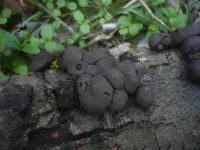
Daldinia childiae is a wood-inhabiting fungus rather than a traditional leafy plant. It forms hard, rounded, charcoal-colored cushions on dead or decaying wood, often on hardwood logs and branches. The surface is usually dark and slightly textured, with internal zoned layers visible when cut.

This species naturally occurs in temperate forests, where it plays a role in breaking down dead wood. It is not commonly cultivated, but understanding how to care for Daldinia childiae starts with providing cool, shaded, consistently moist conditions and access to well-decayed woody material.

Its growth depends heavily on the right substrate and stable humidity, which makes home culture more challenging than typical ornamental plants. It is mainly of interest to mycology enthusiasts and ecological studies rather than general houseplant use.

Main Plant Requirements

Care Difficulty

Moderate Care

Light Preference

Partial Shade

Water Requirements

Regular Water

Temperature Preference

Warm Climate

Hardiness Zone

Unknown

Soil Texture

Loamy, Organic-rich

Soil pH

Slightly acidic (6.5–7.0)

Soil Drainage

Moist but well-drained

Fertilization

Minimal (feed rarely)

Get Personalized Care Plan

Scan your plant to receive care tips personalized for your specific plant

Available on iOS and Android

How to Care for the Daldinia childiae

This fungus grows on dead wood in shaded to semi-shaded forest conditions with limited direct sun.

  • Provide dappled or filtered light, such as under a tree canopy, with indirect daylight for 4–6 hours; avoid open, exposed sites.
  • Tolerates deep shade but may fruit less where light is extremely limited, such as in dense evergreen stands or under thick undergrowth.
  • Protect from strong midday and afternoon sun, which can over-dry host wood; light morning sun in cool, moist climates is usually acceptable.

Moisture management focuses on keeping the host wood and surrounding habitat consistently damp but not saturated.

  • Ensure the log or dead branch hosting Daldinia childiae sits in soil that drains freely yet stays evenly moist after rain, without standing water.
  • Allow the upper 2–5 cm of surrounding soil or leaf litter to dry slightly between soakings if supplemental watering is needed in unusually dry periods.
  • Watch for signs of overwatering such as sour smell, slimy wood, and persistent puddles, or underwatering such as cracked, very light, and brittle wood.

This species prefers cool to mild conditions typical of temperate woodlands.

  • Best development generally occurs around 50–68°F (10–20°C), with fruiting often aligning with cool, moist seasons such as spring and fall.
  • Tolerates brief drops near 23–28°F (-5 to -2°C) once established, but repeated hard frost without insulating leaf litter can damage young colonization.
  • Handles moderate summer warmth up to about 77–82°F (25–28°C) if humidity and wood moisture remain high; prolonged heat and drought reduce activity.

This wood-inhabiting fungus does not need managed air humidity in typical outdoor conditions.

This fungus develops on dead or decaying wood rather than in conventional garden soil.

  • Avoid planting in potting mixes or garden beds, as the organism is adapted to lignin-rich woody substrates, not mineral soil.
  • If attempting culture, use well-decayed hardwood logs or dense wood chips that remain moist but not waterlogged.
  • Keep the woody substrate evenly damp by periodic watering or misting, allowing the surface to dry slightly between soakings.
  • Do not add lime or fertilizers, since nutrient and pH balance are naturally provided by gradual wood decomposition.

This species is not suitable for conventional container growing as it relies on colonizing dead wood rather than rooting in potting media.

This wood-inhabiting fungus is not grown like a typical garden plant and usually does not need added fertilizer.

Pruning is not a standard practice for this wood-decaying fungus and is generally unnecessary.

This species is usually left on its natural woody substrate, so transplanting is rarely attempted outside research or specialty culture.

  • If grown experimentally on logs or sterilized wood blocks, replace the substrate only when it is heavily decomposed or contaminated.
  • Time any move or renewal for mild weather in spring or early fall to reduce stress on the developing mycelium.
  • Shift mycelium-colonized material gently onto fresh, similar wood, keeping it at the same moisture level.
  • Handle pieces with minimal disturbance and maintain stable humidity to support recovery and continued colonization.

Propagation of Daldinia childiae is mainly of research interest and relies on controlled fungal techniques rather than home methods.

This wood-inhabiting fungus is naturally cold tolerant in its native range and needs no special winter care in outdoor settings.

Care Tips

Select suitable substrate

For cultivation or observation, place colonized wood on well-seasoned hardwood logs or blocks rather than fresh-cut timber, as partially decomposed wood better matches this species’ natural habitat and supports more stable fruiting.

Control air movement

Maintain gentle but consistent air exchange around the wood to limit mold overgrowth; a small fan set on low and not aimed directly at the cultures is usually enough to prevent stagnant, overly humid pockets.

Manage surface competitors

If fast-growing molds or other fungi appear on the wood surface, carefully scrape or brush off only the superficial growth and briefly expose the area to open air to reduce humidity spikes that favor competitors.

Record moisture cycles

Keep a simple log of soaking or misting dates, visible changes in stromata, and any contamination, which helps refine a repeatable routine for growing Daldinia childiae in a specific space.

Monitor wood integrity

Periodically check that the wood remains firm and not overly punky or crumbling; replace or supplement with a new seasoned log once advanced decay reduces structural stability and visible fruiting.

Common Pests and Diseases

Wood-boring beetles

This pest targets dead or decaying wood and may colonize Daldinia childiae substrates in culture or outdoor log setups. These insects tunnel through the wood, drying it out and competing with the fungus for space and resources.

Solution

Remove and discard heavily bored logs or blocks, and shift the culture to fresh, sound hardwood. Store colonized wood off the ground on racks, use fine-mesh screening where feasible, and keep outdoor setups away from stacked infested firewood to reduce beetle access.

Fungivorous mites

This pest feeds on fungal mycelium and developing stromata, reducing vigor and causing patchy or stalled growth on cultivated Daldinia cultures. Symptoms include fine speckling on the colony surface and poor or uneven development of fruiting bodies.

Solution

Physically isolate infested cultures, discard heavily affected plates or blocks, and restart from clean, refrigerated cultures if available. Improve hygiene by reducing dust, sealing culture containers properly, and using sticky traps around the grow area to limit mite movement when trying to grow Daldinia childiae.

Green mold (Trichoderma)

This disease appears as fast-spreading, bright to dark green patches that overgrow Daldinia mycelium on wood or agar. Symptoms include rapid loss of the dark, zoned Daldinia colony and a strong earthy odor from the contaminant mold.

Solution

Immediately remove and discard contaminated substrates or plates, as Trichoderma usually outcompetes the host fungus. Sanitize work surfaces, tools, and containers, improve air filtration and inoculate only thoroughly pasteurized or sterilized hardwood to reduce new infections.

Blue stain fungi

This disease affects the wood substrate rather than the Daldinia tissue directly, causing blue to gray discoloration and altering moisture and nutrient availability. Symptoms include streaks or patches of blue-black staining that coincide with weaker or uneven Daldinia colonization.

Solution

Use freshly cut, sound hardwood and store it in dry, well-ventilated conditions before inoculation to limit blue stain colonization. Discard severely stained logs, shorten incubation time between cutting and inoculation, and avoid stacking wood tightly in damp, shaded areas.

Interesting Facts

Carbonized stromata structure

This species forms hard, carbonized fruiting bodies called stromata that are usually hemispherical or cushion-shaped with a distinctly zoned interior visible in section, a feature used to separate it from closely related Daldinia species.

Association with burned wood

Daldinia childiae is frequently recorded on dead or decaying wood that has been exposed to fire or strong heating, reflecting its ecological preference for substrates altered by burning.

Recent taxonomic recognition

The species was formally described only in the early 21st century based on detailed microscopic and chemical analyses, highlighting how modern taxonomic tools continue to reveal hidden diversity within wood-inhabiting ascomycetes.

FAQs about Daldinia childiae

This fungus can be cultured in containers using sterilized woody substrates, but it is specialized and not practical as a decorative container specimen. Laboratory or controlled mushroom-culture techniques are usually required for reliable establishment and sustained growth.

Grow Healthy Plants with Botan Care

Keep your plants happy and healthy with plant identification, disease detection, and easy care guidance.

Botan plant care app — identify plants on mobile

Explore More Plants