Tiny Earthstar Care (Geastrum minimum)

Tiny Earthstar

About Tiny Earthstar

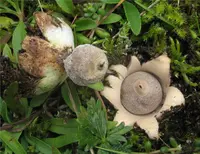
Tiny earthstar, Geastrum minimum, is a small, star-shaped fungus rather than a leafy houseplant. It belongs to the group of earthstar fungi, known for their distinctive, opening outer layer that forms a star around a central spore sac.

This species typically appears on sandy or calcareous soils, often in dry grasslands or open woodland in parts of Europe and occasionally North America. It is not a beginner-friendly species to cultivate, as it has specific soil fungi relationships that are difficult to reproduce indoors. Those wanting to care for Tiny Earthstar usually focus on protecting its natural habitat rather than growing it in pots.

Main Plant Requirements

Care Difficulty

Hard Care

Light Preference

Partial Shade

Water Requirements

Low Water

Temperature Preference

Cool Climate

Hardiness Zone

Unknown

Soil Texture

Sandy, Rocky, Loamy

Soil pH

Slightly acidic (6.5–7.0)

Soil Drainage

Well-drained

Fertilization

Minimal (feed rarely)

Get Personalized Care Plan

Scan your plant to receive care tips personalized for your specific plant

Available on iOS and Android

How to Care for the Tiny Earthstar

This small earthstar prefers bright but gentle light that mimics open woodland or scrub habitats.

  • Provide 3–5 hours of soft morning sun with light shade or dappled light for the rest of the day to prevent drying of the surrounding substrate.
  • Allow partial shade, especially in hot regions, as strong afternoon sun can overheat and desiccate the thin fruiting bodies of Tiny Earthstar.
  • In summer, protect from reflected heat near rocks or walls; in cooler months, slightly more direct sun helps dry excess surface moisture without scorching.

Geastrum minimum grows on naturally drying soils and is highly sensitive to prolonged wetness.

  • Let the top 2–5 cm of soil or substrate dry fully before the next thorough wetting, then allow all excess water to drain away quickly.
  • Use sharply draining, sandy or gritty soil so moisture moves through within minutes; standing water or compacted soil encourages decay of the underground structures.
  • Reduce watering in cool seasons when evaporation slows, watching for soft, collapsing fruiting bodies as a sign of overwatering and shriveling or brittleness as a sign of extended drought.

This species is adapted to temperate climates with cool to mild conditions and distinct seasons.

  • Aim for active growth and fruiting in a range of 50–70°F (10–21°C), which suits its natural, seasonally cool habitats.
  • Tolerate brief drops near 32°F (0°C), but repeated hard frosts below 25°F (−4°C) can damage developing structures, especially in exposed sites.
  • In hot spells above 80–85°F (27–29°C), provide shade and maintain slightly cooler soil, as sustained heat combined with drought can halt development or cause desiccation.

Humidity is not a major factor for Geastrum minimum, which tolerates typical outdoor ranges.

Geastrum minimum prefers dry, loose mineral soil with very sharp drainage.

  • Use a sandy or gritty mix with low organic matter, such as 60–70% coarse sand or grit and 30–40% low-nutrient loam.
  • Ensure water runs through rapidly; soil should not stay wet for more than a few hours after rainfall or watering.
  • Keep pH slightly acidic to neutral, around 6.0–7.0, avoiding strongly acidic or alkaline conditions.
  • Avoid compacted, clay-heavy, or consistently moist substrates, which can cause the tiny fruiting bodies to rot before they develop.

This species is generally unsuitable for container growing, as it relies on complex soil and fungal interactions that are hard to maintain in pots.

This fungus is adapted to nutrient-poor soils and usually needs no fertilization when grown in a naturalistic substrate.

Geastrum minimum does not require conventional pruning, as the fruiting bodies are short-lived and naturally decompose.

Transplanting is rarely necessary because this earthstar is best maintained in a stable, undisturbed substrate.

  • Only consider moving clumps if growth declines or the substrate breaks down and compacts heavily.
  • Carry out transplanting in cool, mild weather in spring or early fall to limit stress.
  • Lift the entire soil plug gently, keeping the mycelium and surrounding soil as intact as possible.
  • Replant into similar, sharply drained, low-nutrient soil, then water lightly once to settle without waterlogging.

Propagation of Geastrum minimum is specialized and usually left to natural spore dispersal rather than home methods.

This small earthstar is naturally cold hardy and generally needs no special winter care in the ground or outdoor troughs.

Care Tips

Substrate depth control

Maintain a very shallow, well-drained mineral layer (1–2 cm) over the mycelium so the fruiting bodies can push through without deforming while still being protected from full exposure and desiccation.

Seasonal moisture cueing

Mimic autumn conditions by slightly increasing moisture and dropping temperature for a few weeks at the end of summer to encourage more reliable fruiting cycles in cultivated trays or pans.

Gentle display handling

If displaying in a terrarium or dish garden, move the substrate rather than the fruiting bodies themselves, since the rays are brittle and easily snap when lifted or pinched.

Fruiting body preservation

Allow the star-shaped structures to dry naturally in place after they finish releasing spores, then transfer them carefully to a dry, ventilated container with silica gel or dry sand to preserve form for educational or decorative use.

Companion planting restraint

When creating miniature landscapes around the fungus, use only very small, slow-growing mosses or groundcovers and keep their roots away from the inoculated zone to avoid competition that can suppress growing Tiny Earthstar in shallow containers.

Common Pests and Diseases

Saprophagous beetle larvae

This pest feeds on decaying organic matter around the fruiting body and may tunnel through the outer layers, causing deformities and faster collapse. Symptoms include small bore holes, frass, and rapid breakdown of the star-shaped rays.

Solution

Remove heavily damaged fruiting bodies and surrounding debris, then reduce thick mulch or leaf litter directly around display specimens to make the site less attractive. For valuable collections under controlled conditions, use fine mesh covers over the substrate to exclude adult beetles while still allowing air movement when growing Tiny Earthstar for observation or study.

Fungivorous fly larvae

This pest targets developing fruiting bodies by laying eggs nearby; the hatching larvae tunnel into the tissue and hollow it out. Symptoms include soft, waterlogged structures that collapse prematurely, often with tiny maggots present in cavities.

Solution

Collect and discard infested fruiting bodies before larvae mature, and promptly remove overly wet, decaying organic material that attracts adult flies. In small indoor or terrarium displays, improve ventilation, avoid overwatering the substrate, and use fine mesh or physical barriers to keep flies from accessing emerging fruiting bodies.

Mite colonization

These insects are microscopic arthropods that graze on fungal tissue and spores, sometimes leaving pitted surfaces and a dusty appearance. Symptoms include roughened outer surfaces, patchy loss of spore mass, and slow deterioration of the fruiting body in enclosed displays.

Solution

For terrarium or culture setups, lower excessive humidity slightly, increase airflow, and remove heavily colonized specimens. If needed, replace the top layer of substrate and avoid introducing unsterilized leaf litter or soil that can carry mites into controlled Geastrum minimum plant care environments.

Secondary mold overgrowth

This disease occurs when opportunistic molds colonize aging or damaged fruiting bodies under stagnant, very humid conditions. Symptoms include fuzzy white, gray, or green growth covering the spore sac and rays, often followed by rapid collapse and discoloration.

Solution

Remove and discard affected fruiting bodies and any visibly moldy substrate. Improve air exchange, avoid constant surface wetness, and thin dense organic layers so the surface dries slightly between waterings, especially in terrariums or covered display containers.

Interesting Facts

Opens like a star

The fruiting body begins as a small, buried sphere, then the outer layer splits into several pointed rays that arch back and lift the spore sac above the ground, creating the characteristic tiny earthstar shape.

Life in chalk grassland

This species is strongly associated with short, grazed calcareous grasslands on thin, lime-rich soils, and is often recorded in old, undisturbed pasture systems with a long continuity of low-intensity land use.

Rare and conservation‑noted

Geastrum minimum is considered rare across much of its European range, with several countries listing it on regional Red Data or conservation priority lists due to habitat loss and decline of species‑rich chalk grasslands.

Botan icon

Did you know?

Geastrum minimum is one of the smallest earthstar fungi known, with mature fruiting bodies often only a few millimeters across, making it easy to overlook even in apparently suitable habitat.

FAQs about Tiny Earthstar

This fungus performs best outdoors in shallow, gritty soil where seasonal temperature changes trigger fruiting. Indoors it rarely completes its life cycle, so Tiny Earthstar indoor care is mostly limited to short‑term display of collected specimens.

Grow Healthy Plants with Botan Care

Keep your plants happy and healthy with plant identification, disease detection, and easy care guidance.

Botan plant care app — identify plants on mobile

Explore More Plants