rounded earthstar Care (Geastrum saccatum)

Also known as: bowl earthstar, Sessile Earthstar
rounded earthstar

About rounded earthstar

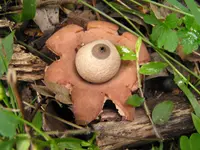
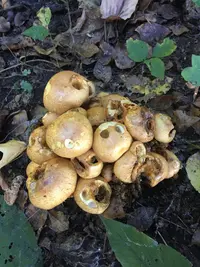
Rounded earthstar (Geastrum saccatum) is a small, saprophytic fungus that lives on decaying organic matter rather than acting as a typical green plant. It forms a round, central spore sac sitting on star-like rays that open from a brown outer layer, giving it a distinct earthstar shape.

This species is usually found on forest floors, often in leaf litter in subtropical and tropical regions of the Americas and other warmer areas. It does not grow well as a conventional houseplant, and attempts to care for rounded earthstar indoors are usually challenging because it depends on complex soil fungi and natural decomposition processes.

In nature, it prefers undisturbed, humus-rich woodland soils with consistent moisture and shade, where it plays a role in breaking down organic material.

Main Plant Requirements

Care Difficulty

Moderate Care

Light Preference

Partial Shade

Water Requirements

Moderate Water

Temperature Preference

Warm Climate

Hardiness Zone

Unknown

Soil Texture

Loamy, Sandy, Organic-rich

Soil pH

Acidic (5.5–6.5), Slightly acidic (6.5–7.0)

Soil Drainage

Well-drained

Fertilization

Minimal (feed rarely)

Get Personalized Care Plan

Scan your plant to receive care tips personalized for your specific plant

Available on iOS and Android

How to Care for the rounded earthstar

This earthstar fungus prefers low, woodland-style light rather than strong direct sun.

  • Provide dappled or filtered light under shrubs or trees, mimicking a forest floor, with only brief direct sun, ideally early morning for 1–2 hours.
  • Tolerates deep to partial shade, but fruiting tends to be better with bright shade or very soft indirect light rather than full, open exposure.
  • Protect rounded earthstar from intense midday or afternoon sun, which can dry the substrate quickly and bleach or crack the star-like tissue in dry periods.

This saprobic fungus relies on evenly moist, not saturated, organic soil to develop and fruit well.

  • Aim for consistently moist leaf litter or humus-rich soil; if the top 2–3 cm are dusty-dry and crumbly, rainfall or irrigation is likely needed.
  • Ensure excellent drainage with loose, organic material so that Geastrum saccatum does not sit in standing water, which favors rot and bacterial growth.
  • In hot, dry spells, watch for shrinking, brittle fruiting bodies as a sign of low moisture, while soft, collapsing tissue and foul smell often indicate excess water.

This species favors mild, temperate conditions typical of shaded woodland floors.

  • Optimal development usually occurs around 60–77°F (16–25°C), when soil stays evenly moist and not waterlogged for long periods.
  • Fruiting bodies and mycelium tolerate short drops near 32°F (0°C), but repeated hard frost below 28°F (-2°C) can damage tissue and reduce future fruiting.
  • In hot weather above 86°F (30°C), protect from direct sun and drying winds, as rapid substrate drying can halt growth and cause premature collapse.

Humidity is a minor factor for this fungus when grown in typical outdoor conditions.

This species develops best in loose, humus-rich, free-draining ground that mimics decomposing leaf litter.

  • Aim for a crumbly mix based on leaf mold or fine compost blended with sandy or loamy mineral soil for structure.
  • Ensure very rapid drainage; excess water should disappear within seconds, not pool on the surface or around the base.
  • Keep pH roughly neutral to slightly acidic (pH 6.0–7.0), avoiding limed or strongly alkaline ground that restricts fungal activity.
  • Avoid dense, compacted, or waterlogged sites, which limit oxygen and can prevent Geastrum saccatum from forming fruiting bodies.

This earthstar is generally unsuitable for container growing because it relies on complex soil and fungal relationships in the ground.

Geastrum saccatum is a saprophytic fungus that normally requires no fertilization when grown in natural or semi-natural substrates.

Pruning is not a meaningful care practice for Geastrum saccatum, as the fruiting bodies are short-lived fungal structures rather than persistent stems or foliage.

Cultivated rounded earthstar is best left undisturbed, since the main organism lives as hidden mycelium in the substrate.

  • Transplant only if the substrate is collapsing, contaminated, or the container is degrading, rather than on a schedule.
  • Plan any move for cool, moist weather to reduce desiccation of the mycelium and associated organic matter.
  • Lift and move the substrate mass intact, disturbing it as little as possible instead of shaking or teasing apart roots.
  • Re-establish in a similar, well-drained, humus-rich mix and keep evenly moist afterward to limit stress.

Propagation of Geastrum saccatum is specialized and usually left to natural spore dispersal rather than home methods.

This earthstar is generally cold hardy in temperate climates and typically needs no special winter care.

Care Tips

Substrate depth control

Keep the organic debris layer thin (about 2–3 cm) over the mineral soil so the fungus can fruit at the surface instead of being buried under heavy mulch.

Spore dispersal assistance

After the rays open, lightly tap mature spore sacs to release spores over the same bed and nearby shaded spots to gradually thicken the colony over several seasons.

Moisture buffering layer

Use a top layer of well-rotted leaf litter rather than fresh leaves, as this decomposed material holds even moisture while still draining well enough to limit rot around the developing fruiting bodies.

Minimal disturbance zone

Mark the fruiting area and avoid raking, digging, or frequent foot traffic there, since disturbance of the mycelium network in the top 5–10 cm of soil can sharply reduce future fruiting.

Seasonal habitat refresh

Once fruiting finishes, add a light top-up of shredded hardwood leaves or fine wood chips so the fungus has a steady supply of fresh organic matter, which supports long-term success when growing rounded earthstar.

Common Pests and Diseases

Mite grazing

This pest causes tiny pale pits or roughened areas on the outer surface of the rays and spore sac, usually where the fungus contacts soil and leaf litter. Symptoms include slow deformation or collapse of the rays as tissue is repeatedly grazed.

Solution

Gently lift and inspect the fruiting bodies and surrounding litter; if mites are visible, move the fungus together with its substrate to a slightly drier, well‑ventilated spot and remove heavily infested debris. For display specimens kept indoors, lightly brush off the surface and surrounding organic matter, then reduce excess moisture and avoid placing the fungus directly beside stored grains or houseplants that may harbor mites.

Springtail feeding

These insects feed on moist fungal tissue and spores, leading to pitted, shredded, or collapsed rays, especially in very damp terrarium or greenhouse conditions. Symptoms include sudden deterioration of otherwise fresh fruiting bodies and visible tiny white or gray jumping insects in the substrate.

Solution

Lower substrate moisture by improving drainage and ventilation, and allow the surface to dry slightly between misting. Remove heavily damaged fruit bodies and leaf litter, and if springtails are abundant in closed displays, temporarily open the container for better air exchange and introduce fresh, less decomposed substrate to reduce their food source.

Slugs and snails

These pests chew soft fungal tissue at night, leaving irregular holes, slime trails, and partially eaten rays. Symptoms include missing pieces of the spore sac and collapsed or distorted stars after humid nights or heavy rain.

Solution

Hand‑remove slugs and snails during evening or early morning and reduce nearby hiding places such as boards, dense mulch, and pots in direct contact with soil. In garden or outdoor culture, use simple barriers like copper tape around display beds or rough gravel rings, and avoid overwatering or dense, wet mulch that attracts these grazers.

Bacterial soft rot

This disease causes wet, mushy, and foul‑smelling decay of the rays and spore sac, typically under persistently saturated, warm conditions. Symptoms include collapse of the entire fruiting body and a slimy, discolored surface that quickly disintegrates.

Solution

Discard affected fruiting bodies and any obviously decomposing surrounding substrate, then improve drainage and air movement in the growing area. Avoid overhead watering and constant saturation; use only light misting for display and ensure the fungus sits on free‑draining, well‑aerated organic material to support more stable Geastrum saccatum care.

Interesting Facts

Collar-like spore ring

This species forms a distinctive raised ring, or pseudoparenchymatous collar, around the spore sac opening, which helps distinguish it from many other earthstar fungi in the field.

Spore dispersal by raindrops

Mature fruiting bodies release spores when raindrops strike the spore sac, forcing puffs of spores out through the central pore into the surrounding air.

Early-stage stem mimicry

In young specimens, the short stalk that supports the spore sac can be hidden by surrounding tissue, so the fruiting body often appears nearly stemless until it expands and the stalk becomes more obvious.

Botan icon

Did you know?

Geastrum saccatum commonly develops fruiting bodies in large, scattered groups on nutrient-rich, decaying leaf litter, where its star-shaped rays help lift the central spore sac above the substrate surface and improve air exposure for spore release.

FAQs about rounded earthstar

Growth is slow. From spore to recognizable star shape often takes many months, and full development of the fruiting body may take 1–2 years, depending on moisture, temperature, and nutrient availability in the substrate.

Grow Healthy Plants with Botan Care

Keep your plants happy and healthy with plant identification, disease detection, and easy care guidance.

Botan plant care app — identify plants on mobile

Explore More Plants