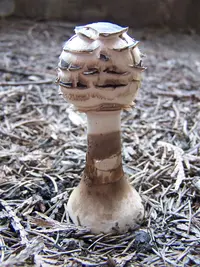
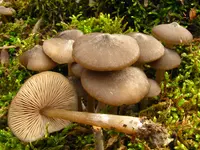
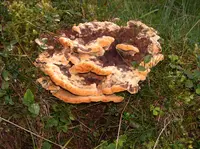
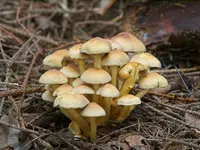
stalked lattice stinkhorn Care (Lysurus periphragmoides)

Also known as: chambered stinkhorn
stalked lattice stinkhorn

About stalked lattice stinkhorn

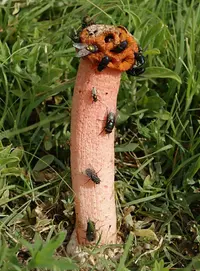
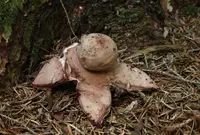
Lysurus periphragmoides, commonly called the stalked lattice stinkhorn, is a saprophytic fungus that breaks down decaying organic matter in soil and mulch. It appears as a small, egg-like structure that opens into a red to orange, lattice-like head held on a short stalk. This fungus is most often found in warm, humid regions, especially in gardens, lawns, and landscaped beds rich in wood chips or compost. It has a strong odor that attracts flies, which help spread its spores. Because it relies on organic debris and moisture, it is not a typical houseplant, and attempts to care for stalked lattice stinkhorn focus on recreating rich, damp, well-drained substrates outdoors.

Main Plant Requirements

Care Difficulty

Moderate Care

Light Preference

Partial Shade

Water Requirements

Keep Soil Moist

Temperature Preference

Warm Climate

Hardiness Zone

Unknown

Soil Texture

Loamy, Silty, Organic-rich

Soil pH

Acidic (5.5–6.5), Slightly acidic (6.5–7.0)

Soil Drainage

Moist but well-drained

Fertilization

Minimal (feed rarely)

Get Personalized Care Plan

Scan your plant to receive care tips personalized for your specific plant

Available on iOS and Android

How to Care for the stalked lattice stinkhorn

This saprobic fungus prefers bright, indirect light similar to dappled woodland conditions for reliable fruiting.

  • Provide 2–4 hours of gentle morning sun with bright, filtered light for the rest of the day; avoid harsh midday and late-afternoon sun that can dry the substrate too fast.
  • Tolerates partial shade, but deep shade reduces fruiting of stalked lattice stinkhorn, so ensure some indirect daylight reaches the site, even under trees or shrubs.
  • In summer, shield the area from intense, reflected heat; in cooler seasons, a slightly more open spot helps maintain enough light and warmth for mycelium activity.

This fungus relies on consistently moist, not waterlogged, organic soil to support its hidden mycelium network.

  • Aim for evenly moist substrate; the top 2–3 cm should feel damp but not soggy, and surface cracking or pale, dry mulch indicates the need for thorough watering.
  • Use rich, well-drained soil or decomposing mulch so excess water runs off; standing water or a foul anaerobic smell suggests harmful overwatering conditions.
  • During hot, dry periods, increase watering frequency, while in cool or rainy seasons, reduce added water and simply ensure Lysurus periphragmoides grows in moisture-retentive organic matter.

This species fruits best in warm, mild conditions and becomes inactive in cold or extreme heat.

  • Optimal temperatures for growth and fruiting are around 68–82°F (20–28°C), typical of warm, humid periods in late spring through early autumn.
  • It tolerates short drops to about 41°F (5°C) in the soil, but hard frost or prolonged freezing greatly reduces future fruiting and can damage underlying mycelium.
  • During heat waves above 90°F (32°C), shade and higher moisture help buffer soil temperatures; mulch layers moderate both summer heat and cooler shoulder-season nights.

Humidity plays a minor role, as this fungus focuses more on moisture in the substrate than air humidity.

This saprophytic fungus prefers consistently moist, loose, organic-rich ground rather than compact mineral soil.

  • Use a mix of leaf litter, well-rotted wood chips, and compost to mimic its natural decomposing habitat.
  • Ensure the substrate drains freely but never dries completely, similar to a damp forest floor, not a soggy bog.
  • Aim for slightly acidic to neutral conditions, roughly pH 6.0–7.0, which suits most decomposer fungi including Lysurus periphragmoides.
  • Avoid dense clay, peat-only mixes, or sterile potting mediums that lack coarse structure and decaying organic material.

This species can be grown in containers mainly for observation and spore production, not as a conventional ornamental.

  • Use a deep, heavy container that anchors the moist, organic substrate and resists tipping when fruiting bodies emerge.
  • Drill extra side holes in plastic pots to improve oxygen access to the decomposing substrate without letting it dry too quickly.
  • Place the container where rain or controlled watering can keep the substrate evenly damp, while allowing brief surface drying to prevent anaerobic conditions.

This saprophytic fungus relies mainly on decomposing organic matter and usually needs no targeted fertilizer.

Pruning is not relevant for Lysurus periphragmoides, as its fruiting bodies are short-lived fungal structures rather than persistent stems or branches.

Transplanting focuses on moving colonized substrate rather than individual fruiting bodies of this stinkhorn fungus.

  • Transplant only when the bed is disturbed or you want to introduce it to a new wood chip or compost area.
  • Shift clumps of colonized mulch or soil in late summer to early fall when conditions stay warm and moist.
  • Minimize disturbance to the mycelium network; move chunks of substrate intact instead of shaking roots free.
  • Water the new site thoroughly after transplanting and keep consistently moist to reduce stress on the fungal colony.

Propagation of this saprophytic fungus relies on spores and movement of colonized organic material rather than standard plant methods.

In mild to moderate climates, this soil-dwelling fungus overwinters in the substrate and needs no special winter care.

Care Tips

Use wood-based mulch

In outdoor beds, lightly top-dress the area with a 2–3 cm layer of fine wood chip or shredded bark mulch to maintain the decaying woody substrate this fungus prefers without smothering existing mycelium.

Encourage fungal spread

When stinkhorn fruiting bodies collapse, gently break and scatter the spore-covered remains across nearby moist mulch or composted wood to increase the chance of colonizing new pockets of organic matter.

Avoid fungicide exposure

Do not apply fungicides, sulfur dusts, or copper products where the fungus is established, since these treatments can damage or kill the underlying mycelium and stop future fruiting.

Control moisture gradients

Create slightly moister zones by hand-watering only parts of the mulch bed so the mycelium can occupy both damp and slightly drier pockets, which often results in more frequent and staggered fruiting events.

Minimize soil disturbance

Avoid frequent tilling, raking, or digging in areas where you are growing stalked lattice stinkhorn, since mechanical disturbance can break up the established mycelial network and reduce future fruiting.

Common Pests and Diseases

Fungus gnat larvae

This pest lives in and feeds on the organic substrate surrounding the fruiting bodies, sometimes tunneling through young developing structures. Symptoms include soft, deformed, or partially collapsed emerging stinkhorns in very wet culture conditions.

Solution

Reduce constant saturation of the substrate, allow the surface to dry slightly between waterings, and use fine mesh or covers over trays to limit egg-laying by adult gnats. For persistent issues, apply a biological control containing Bacillus thuringiensis israelensis (BTi) as a soil drench according to label directions to target the larvae without harming the fungus significantly.

Mite grazing

These insects are tiny arthropods that can colonize the gelatinous egg stage and early fruiting stages, scraping tissues for food. Symptoms include pitted, roughened surfaces, incomplete cap or arm development, and premature collapse of young structures.

Solution

Keep culture areas clean, remove heavily damaged or infested egg masses, and avoid storing decaying organic matter directly beside the cultivation container. For repeated problems, use sticky traps around the growing area to monitor mite activity and consider introducing predatory mites that target pest mites but tolerate the humid conditions needed for Lysurus periphragmoides care.

Bacterial soft rot

This disease develops rapidly in very wet, warm conditions, causing the fruiting body to become watery, foul-smelling, and collapse into a slimy mass sooner than normal maturation. Symptoms include discoloration, unusually rapid liquefaction, and a sour or putrid smell distinct from the normal spore odor.

Solution

Remove and discard affected fruiting bodies promptly and reduce waterlogging by improving drainage and lowering irrigation frequency. Increase air movement around the substrate, avoid overhead misting directly onto developing structures, and use clean tools and containers to reduce bacterial contamination between batches when attempting to grow Lysurus periphragmoides.

Competitive saprophytic molds

This disease problem arises when fast-growing molds colonize the same wood chips or mulch, forming dense white, green, or black mycelial mats that outcompete the stinkhorn mycelium. Symptoms include failure of stinkhorn eggs to form, patchy colonization, or visible mold overgrowth on the substrate surface.

Solution

Remove heavily molded substrate sections and replace them with fresh, well-aged but not decomposed organic material. Maintain moderate, not excessive, moisture, increase airflow, and avoid adding kitchen scraps or highly nutrient-rich waste that strongly favors opportunistic molds over stinkhorn development.

Interesting Facts

Lattice egg development

This fungus begins as a partially buried, whitish to pinkish oval egg that encloses the entire immature fruiting body, which later splits to expose the stalks and inner lattice structure.

Fly-attracting gleba odor

The olive-brown spore mass (gleba) is restricted to the inner faces of the lattice arms and produces a strong carrion-like odor that specifically attracts flies, which then disperse the spores on their bodies.

Tropical and subtropical range

It is native to warm, often humid regions and is recorded from parts of Asia, Africa, Australia, and the Americas, typically fruiting on nutrient-rich, disturbed ground such as gardens, mulch, and lawns.

Botan icon

Did you know?

Molecular and morphological studies place this species among the more distinctive stalked lattice stinkhorns because its arms are joined by a delicate, partially enclosing mesh rather than forming a complete cage, which makes it a useful reference taxon for understanding structural evolution within the Phallaceae.

FAQs about stalked lattice stinkhorn

Growth is rapid once conditions are right. The fungus stays hidden as mycelium in soil or mulch, then the fruiting body can emerge and reach full size within hours, often after warm rain and high humidity.

Grow Healthy Plants with Botan Care

Keep your plants happy and healthy with plant identification, disease detection, and easy care guidance.

Botan plant care app — identify plants on mobile

Explore More Plants