

Use shallow trays
Cultivate the fungus in wide, shallow trays or boxes rather than deep pots, so the mycelium can spread laterally in a thin organic layer that better mimics its natural forest-floor habitat.

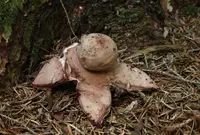
Rosy earthstar, Geastrum rufescens, is a small earthstar fungus, not a leafy houseplant. It forms a rounded inner spore sac sitting above star-like outer rays that open from a ball-shaped fruiting body. The tones range from pale pinkish to rosy brown, giving it its common name.
This species occurs mainly on forest floors in temperate regions of Europe and North America, usually on decaying organic matter in leaf litter. It is more of a curiosity for fungi enthusiasts than a typical ornamental, since it does not adapt well to indoor culture and has specific habitat needs. For those who try to care for Rosy Earthstar, stable moisture, cool conditions, and humus-rich substrates are essential but difficult to maintain over time.

Care Difficulty
Hard Care

Light Preference
Partial Shade

Water Requirements
Moderate Water

Temperature Preference
Cool Climate

Hardiness Zone
Unknown

Soil Texture
Loamy, Sandy, Organic-rich

Soil pH
Acidic (5.5–6.5), Slightly acidic (6.5–7.0)

Soil Drainage
Well-drained

Fertilization
Minimal (feed rarely)
Scan your plant to receive care tips personalized for your specific plant
Available on iOS and Android
This forest fungus prefers soft, woodland-style light rather than open sun exposure.
This species thrives in consistently moist but not waterlogged woodland soil.
This woodland fungus prefers cool to mild conditions typical of temperate forests.
This fungus tolerates a fairly wide humidity range but forms more stable fruiting bodies in moderately moist air.
Geastrum rufescens naturally develops on well-aerated, organic debris rather than dense mineral soil.
This species can be grown in containers mainly for observation, but it is somewhat specialized and short-lived above ground.
This fungus is adapted to low-nutrient woodland soils, so Rosy Earthstar needs little to no fertilization in cultivation.
Geastrum rufescens does not require true pruning, only occasional sanitation.
Geastrum rufescens is usually left undisturbed, but container-grown or introduced colonies may need careful transplant-style handling.
Propagation of Geastrum rufescens is specialized and usually left to natural spore dispersal rather than active home methods.
This species is naturally cold hardy in temperate climates and generally needs no special winter care.

Plant Health Check
Not sure what's wrong with your plant? Check your plant's health inside the app.
The fruiting body starts as a small, round puffball-like structure that splits into several pointed rays, lifting the central spore sac above the ground as the rays reflex, which aids in spore dispersal by air currents and raindrops.
Unlike many earthstars that stay beige or brown, this species often develops distinct rosy to reddish hues on the rays or spore sac, especially when fresh, which is why it is commonly called the rosy earthstar.
This species is frequently reported from calcareous or base-rich forest soils, especially in temperate Europe, where it fruits on leaf litter overlying chalk or limestone substrates.

Rosy earthstar is considered uncommon to locally rare across much of its range and is listed as threatened or of conservation concern in several European countries due to habitat loss and changes in woodland management.
This fungus is best kept outdoors, in a shaded, humus-rich, well-drained spot that mimics woodland leaf litter. It does not adapt well to typical household conditions, so Rosy Earthstar indoor care is rarely successful long term.
Keep your plants happy and healthy with plant identification, disease detection, and easy care guidance.

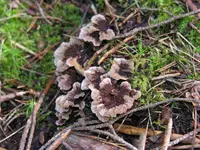
Common Fiber Vase
Thelephora terrestris
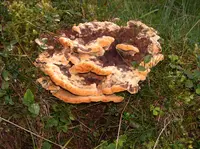
Dyer's Polypore
Phaeolus schweinitzii
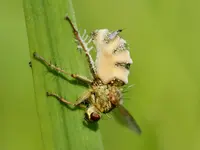
Fly Death Fungi
Entomophthora muscae
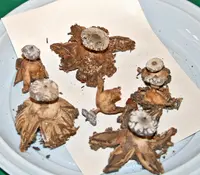
Striated Earthstar
Geastrum striatum
Entoloma vernum
Entoloma vernum
Coker's Lavender Staining Amanita
Amanita lavendula
winter stalkball
Tulostoma brumale
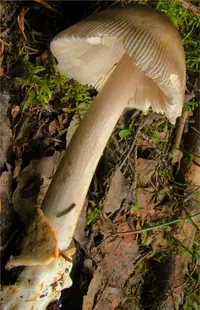
Gray-Zoned Ringless Amanita
Amanita battarrae