Use clean substrate
Prepare a sterile or pasteurized sandy substrate and only introduce Geastrum striatum to areas where chemical fungicides and heavy fertilizers have not been used recently, since residues can inhibit fruiting body formation.

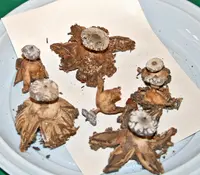
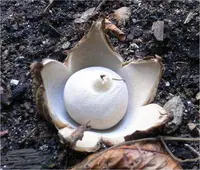
Striated earthstar, Geastrum striatum, is a small, star-shaped fungus rather than a leafy houseplant. It appears as a round spore sac sitting on pointed, striped rays that open from a brown outer layer.
This species grows on soil rich in decaying wood, often in mixed or coniferous forests across temperate regions. It is mainly appreciated for its unusual form and is usually observed rather than cultivated.
Because it relies on complex relationships with soil organisms and specific decomposition conditions, it is difficult to grow indoors or in pots. Most people simply care for Striated Earthstar by protecting its natural habitat instead of attempting active cultivation.

Care Difficulty
Moderate Care

Light Preference
Partial Shade

Water Requirements
Moderate Water

Temperature Preference
Warm Climate

Hardiness Zone
Unknown

Soil Texture
Loamy, Sandy, Organic-rich

Soil pH
Acidic (5.5–6.5), Slightly acidic (6.5–7.0)

Soil Drainage
Well-drained

Fertilization
Minimal (feed rarely)
Scan your plant to receive care tips personalized for your specific plant
Available on iOS and Android
This fungus prefers dappled woodland light similar to its natural forest-floor habitat.
This earthstar develops on naturally moist but not waterlogged soil rich in organic matter.
This species prefers mild, temperate conditions similar to shaded woodland climates.
Humidity is not a critical factor for Geastrum striatum, which tolerates a broad range of ambient conditions outdoors.
Geastrum striatum develops best in loose, free-draining, organic-rich substrates that mimic forest floor litter.
This species is not well suited to long-term container growing, as it naturally develops in decomposing leaf litter and soil in situ.
This fungus is adapted to low-nutrient woodland litter and generally does not benefit from additional fertilization in cultivation.
Geastrum striatum does not require structured pruning, as its fruiting bodies are short-lived and naturally break down in the litter layer.
Transplanting is rarely necessary, since this earthstar is best left undisturbed in the soil or woodland substrate where it establishes.
Propagation of Geastrum striatum is specialized and usually left to natural spore dispersal or expert mycological work rather than routine home culture.
This woodland fungus is cold hardy and typically requires no special winter care in temperate climates.

Plant Health Check
Not sure what's wrong with your plant? Check your plant's health inside the app.
The outer layer of this fungus splits and bends back into a star shape when it dries, a movement driven by hygroscopic tissues that react to changes in moisture. This reversible opening helps lift and expose the spore sac above the ground surface.
The rays of this earthstar show clear longitudinal stripes or grooves, a key feature that helps distinguish it from similar Geastrum species. These grooves are most visible after the fruiting body has fully expanded and dried.
Although often listed in plant and mushroom guides, this species is not a plant but a saprotrophic fungus that feeds on dead organic matter. It plays a quiet role in woodland nutrient cycling by helping break down leaf litter and other debris.

This species is considered uncommon to locally rare in many parts of its range, and its small, cryptic fruiting bodies can be so well camouflaged among leaf litter that populations are often overlooked in fungal surveys.
This fungus is not considered edible. It is tough, fibrous, and lacks culinary value. Some related earthstars are reported as inedible or of unknown safety, so it is best treated as ornamental and not consumed.
Keep your plants happy and healthy with plant identification, disease detection, and easy care guidance.