Marasmius capillaris Care

Marasmius capillaris

About Marasmius capillaris

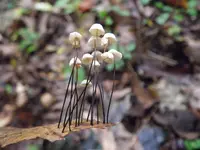
Marasmius capillaris is a small saprotrophic fungus rather than a typical leafy houseplant. It produces very thin, threadlike stems with tiny, delicate caps that appear on decaying leaf litter or woody debris. The mushrooms are usually scattered or in loose groups, giving a fine, hairlike look on the forest floor.

This species is recorded from temperate to subtropical forests, often in moist, shaded woodland habitats. It depends on consistently damp, organic-rich substrates and stable humidity, which makes it challenging to replicate indoors and explains why detailed guides on how to care for Marasmius capillaris are uncommon.

In nature it helps break down dead plant material, contributing to nutrient cycling in the soil. It is mainly of interest to mycologists and advanced hobbyists rather than general home growers.

Main Plant Requirements

Care Difficulty

Moderate Care

Light Preference

Partial Shade

Water Requirements

Regular Water

Temperature Preference

Warm Climate

Hardiness Zone

Unknown

Soil Texture

Loamy, Organic-rich

Soil pH

Acidic (5.5–6.5), Slightly acidic (6.5–7.0)

Soil Drainage

Moist but well-drained

Fertilization

Minimal (feed rarely)

Get Personalized Care Plan

Scan your plant to receive care tips personalized for your specific plant

Available on iOS and Android

How to Care for the Marasmius capillaris

This woodland fungus prefers soft, filtered light rather than direct, intense sun.

  • Aim for dappled shade with brief morning sun, roughly 1–3 hours of low-angle light per day under trees or shrubs.
  • Avoid direct midday or afternoon sun, which can dry the substrate and cause Marasmius capillaris caps to shrivel and bleach.
  • In summer, increase shade cover or leaf litter if the site becomes brighter; in winter, reduced canopy is acceptable as long as the substrate stays moist.

Moist, but not waterlogged, conditions are essential for sustained fruiting.

  • Maintain evenly moist leaf litter or wood-rich substrate, allowing only the top 1–2 cm to start drying between natural rains or supplemental watering.
  • Use gentle, low-pressure watering to avoid disturbing the fine mycelium, and ensure excess water can drain away without pooling for more than a few hours.
  • Reduce supplemental watering in cool, wet seasons, and increase it during hot, windy periods when caps appear dry, shriveled, or stop emerging.

This species prefers mild, consistently cool to warm conditions typical of shaded forest floors.

  • Optimal fruiting occurs around 60–75°F (16–24°C), with steady moisture and shade supporting more frequent flushes.
  • Growth usually slows below about 50°F (10°C) and may stop near 40°F (4°C), though the underlying mycelium can persist in the substrate.
  • Avoid prolonged exposure above 82–86°F (28–30°C) and protect from hard frost; extreme heat or freeze-thaw cycles can damage delicate fruiting bodies.

This fungus prefers consistently moist, humid air to fruit well.

  • Aim for 60–80% humidity, as dry indoor air often prevents reliable fruiting.
  • Watch for caps drying, shrinking, or failing to open fully as signs of low humidity stress.
  • Increase humidity by using a clear humidity tent, misting the air around the substrate, or placing trays of water nearby.

Marasmius capillaris develops best on loose, organic-rich, consistently moist substrates rather than typical garden soil.

  • Use a fine, well-aerated mix based on decomposed leaf litter, compost, and shredded hardwood, mimicking forest-floor duff.
  • Ensure rapid drainage so water moves through quickly but the substrate remains evenly damp, not waterlogged or compacted.
  • Keep pH slightly acidic to neutral, around 5.5–7.0, avoiding strongly alkaline materials such as heavy lime additions.
  • Improve aeration and fungal growth by mixing in coarse particles like shredded bark or wood chips rather than dense clay or silt.

This species can be grown in containers when the substrate and humidity are tightly controlled.

  • Select a wide, shallow tub that gives generous surface area for the colonized substrate rather than deep root space.
  • Use an opaque or dark-sided container to limit light on the substrate and reduce surface drying.
  • Cover the container loosely with a clear lid or plastic film that allows some air exchange while retaining surface moisture for fruiting.

This delicate woodland fungus is usually self-sufficient on decaying organic matter and needs no direct fertilization in gardens or culture.

Marasmius capillaris does not benefit from conventional pruning, but light hygiene work helps keep the growing area tidy and disease-free.

  • Remove spent fruiting bodies with clean fingers or fine scissors once caps collapse, to reduce mold and encourage fresh flushes.
  • Clear away heavily decomposed or foul-smelling substrate, replacing it with fresh leaf litter or hardwood-based material as needed.
  • Avoid disturbing mycelium mats; only trim obviously contaminated or slimy sections to limit pathogen spread.

This small litter-decomposing mushroom is seldom grown in pots, so management focuses on renewing or shifting its substrate rather than classic repotting.

  • Consider transplanting when fruiting declines, growth is patchy, or substrate is compacted and no longer breaks apart easily.
  • Time moves best to mild, moist conditions in spring or early autumn to reduce stress on the mycelium network.
  • Lift substrate blocks gently, keeping mycelium intact, and move them onto fresh, similar organic material such as leaf litter or fine wood chips.
  • Keep the new site evenly moist and shaded for 1–2 weeks so the colony can reestablish before strong sun or drying winds.

Cultivation of Marasmius capillaris is specialized, and propagation is usually done by expanding existing mycelium rather than from spores in home settings.

  • Use clean pieces of colonized substrate to start new patches on fresh, moist leaf litter or fine wood-based material.
  • Carry out transfers in cool, shaded conditions in spring or early autumn to limit drying and heat stress.
  • Maintain gentle, consistent moisture and good air movement to favor mycelium spread while discouraging competing molds.

This woodland fungus is naturally cold tolerant and typically needs no special winter care in temperate climates.

  • In very exposed sites, a light layer of leaf mulch helps stabilize moisture and temperature around the substrate.
  • For container experiments, move trays to a sheltered, unheated spot to prevent complete drying from wind.
  • Avoid waterlogging in cold weather by ensuring any container or bed drains freely after rain or snowmelt.

Care Tips

Use breathable trays

Grow cultures on shallow, wide trays or boxes with many small air holes rather than deep containers, which keeps the thin mycelial layer well aerated and reduces the risk of anaerobic pockets that can rot the substrate.

Stage small batches

Inoculate several small substrate batches a week or two apart instead of one large batch so contamination in one unit does not wipe out the whole culture and you can learn and adjust conditions over time.

Quarantine new material

Keep newly collected forest litter or wood pieces in a separate, closed box for 7–10 days and monitor for unwanted molds or insects before adding them to an established culture system.

Mimic leaf litter layering

Arrange substrate in thin, uneven layers of leaves and fine twigs rather than a uniform compact mass, which more closely matches the species’ natural habitat and encourages stable, even fruiting.

Monitor with a hand lens

Use a simple 10× hand lens to check gill color, cap texture, and mycelium density every few days, which helps detect early contamination or drying stress when caring for Marasmius capillaris before the colony collapses.

Common Pests and Diseases

Fungus gnat larvae

This pest lives in the damp substrate and feeds on fine fungal mycelium and organic matter, which can slow or distort fruiting. Symptoms include thin, weak mushrooms, reduced flushes, and visible small black gnats around the culture.

Solution

Reduce surface moisture between misting, improve air movement, and use fine mesh or insect-proof netting on vents or fruiting chamber openings. Apply a biological control containing Bacillus thuringiensis var. israelensis (BT-i) to the moist substrate according to label directions and remove any heavily infested trays.

Mite infestation

These insects, often mycophagous mites, feed on developing mycelium and fruiting bodies, leaving pitted caps, deformed stems, or tiny moving dots on the surface. This pest can spread quickly in warm, humid fruiting setups with poor hygiene.

Solution

Discard heavily infested cultures, clean and disinfect the growing area, and avoid reusing contaminated substrate or tools. For mild cases, lower humidity slightly, increase airflow, and use sticky traps to monitor movement from nearby houseplants or soil, then restart with fresh spawn and clean containers to continue growing Marasmius capillaris.

Green mold (Trichoderma)

This disease appears as fast-spreading white mycelium that soon turns bright or dull green, usually starting at contaminated substrate spots. Symptoms include stalled or patchy mushroom development and areas where the fungal mycelium is overrun and stops growing.

Solution

Immediately remove and discard contaminated blocks or trays to prevent spore spread, and do not attempt to fruit them further. Improve sterilization or pasteurization of substrate, work in a cleaner environment, and reduce excess condensation, as drier surface conditions and better airflow reduce the chance of Trichoderma gaining an advantage.

Bacterial blotch

This disease is caused by opportunistic bacteria on wet mushroom surfaces, leading to greasy yellow to brown spots or slimy patches on caps. Symptoms include discolored, water-soaked areas and premature collapse of affected mushrooms.

Solution

Reduce direct water on caps by using finer misting, shorten misting duration, and increase air exchange to dry surfaces between sprays. Remove and discard affected fruiting bodies, clean chamber surfaces with a mild disinfectant, and avoid handling mushrooms with dirty or wet hands or tools.

Cobweb disease

This disease starts as very fine, wispy gray to off-white mycelium that looks like spiderweb over the substrate or mushrooms and can engulf pins quickly. Symptoms include fast coverage of the casing or substrate and soft, rotting young mushrooms under the web-like growth.

Solution

At first signs, isolate the affected tray, increase fresh air exchange, and lower humidity slightly to slow pathogen growth. Lightly mist the infected surface with a 3% hydrogen peroxide solution, allow it to fizz and dry, and discard heavily affected cultures while tightening sanitation for future Marasmius capillaris care instructions, including cleaner tools and better-filtered air in the grow area.

Interesting Facts

Tiny hairlike stems

This fungus produces extremely slender, dark, hairlike stems that can be much longer than the cap is wide, allowing the delicate caps to sit above moss and leaf litter on the forest floor.

Moss‑associated habitat

It is most often found fruiting among or directly from mosses on decaying wood or soil in humid forests, showing a close ecological association with moss-rich microhabitats.

White spore print

The species releases a white spore print, a key diagnostic feature that helps distinguish it from similar small, brownish Marasmius species in the field.

FAQs about Marasmius capillaris

This species is considered inedible. Caps are extremely small, insubstantial, and not collected for food. As with all wild fungi, identification errors carry risk, so it is safest not to eat it at all.

Grow Healthy Plants with Botan Care

Keep your plants happy and healthy with plant identification, disease detection, and easy care guidance.

Botan plant care app — identify plants on mobile

Explore More Plants