Substrate depth control
Keep the sandy or gravelly substrate only 2–4 cm deep over the compacted base layer so the shallow mycelium does not dry out or suffocate under excessive cover material.

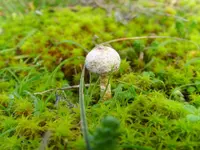
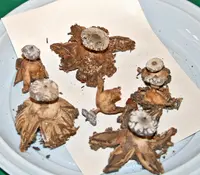
Winter stalkball (Tulostoma brumale) is a small, stalked puffball fungus rather than a leafy plant. It produces a round spore-bearing head on a thin, upright stem. The fruiting bodies are usually pale to tan and appear close to the ground, often among dry, sandy, or gravelly soils. This species is most often found in temperate regions, including parts of Europe and North America, in open, well-drained habitats. It is not commonly cultivated, and its tiny size and specific substrate needs make it more of a curiosity than a garden feature. For those interested in how to care for winter stalkball, conditions that mimic its dry, open natural sites are generally most suitable.

Care Difficulty
Moderate Care

Light Preference
Partial Sun

Water Requirements
Low Water

Temperature Preference
Cool Climate

Hardiness Zone
5–9

Soil Texture
Sandy, Rocky, Loamy

Soil pH
Slightly acidic (6.5–7.0), Neutral (7.0)

Soil Drainage
Well-drained

Fertilization
Minimal (feed rarely)
Scan your plant to receive care tips personalized for your specific plant
Available on iOS and Android
This small desert fungus prefers open, sunny sites but tolerates some seasonal shade.
This desert-adapted fungus requires very little direct watering and relies mostly on natural rainfall.
This species is adapted to cool to mild winters and can tolerate a broad temperature range in open, dry habitats.
Humidity is not a significant factor for Tulostoma brumale, which is adapted to dry, open habitats and tolerates 20–40% humidity without issue.
This fungus prefers dry, open, mineral soils with rapid drainage and low organic matter.
This species is not practically suitable for container growing, as it is a wild, soil-dwelling fungus that depends on natural site conditions rather than pot culture.
Tulostoma brumale naturally colonizes poor soils and generally does not benefit from additional fertilizer in cultivation.
Tulostoma brumale is not a plant in the usual sense and needs no pruning for health or appearance.
This soil-dwelling fungus is rarely kept in containers, so transplanting is usually limited to research or specialist collections.
Propagation of Tulostoma brumale is specialized and not typically carried out by home growers.
This species is naturally cold hardy in temperate climates and usually needs no special winter stalkball indoor care beyond normal site conditions.

Plant Health Check
Not sure what's wrong with your plant? Check your plant's health inside the app.
This species typically fruits in late autumn to winter, often appearing when many other fungi are absent, which reflects its adaptation to cold-season conditions in open, dry habitats.
It favors sandy soils and open grassland or steppe-like sites, where the loose, well-drained substrate helps preserve its stalked puffball structure above ground.
The long stalk holds the spore case above the soil surface so that wind can easily enter the pore at the top and shake out spores, a strategy that works well in exposed, sparsely vegetated habitats.

Molecular studies have shown that stalked puffballs like this species are not true puffballs in the strict sense, but belong to a lineage of gilled mushrooms that independently evolved enclosed fruitbodies, illustrating convergent evolution in fungal reproduction.
This fungus is best grown outdoors in gritty, sandy, well-drained soil that can dry between rains. Indoors, it rarely thrives because containers stay too moist and air circulation is low, which encourages rot and mold.
Keep your plants happy and healthy with plant identification, disease detection, and easy care guidance.