Common Fiber Vase Care (Thelephora terrestris)

Also known as: Earthfan
Common Fiber Vase

About Common Fiber Vase

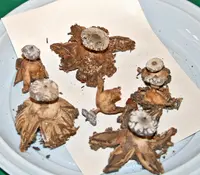
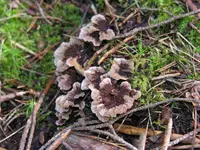
Common fiber vase is a crust-like fungus, not a leafy houseplant. It forms irregular, brown to purplish, rosette or vase-shaped clusters on the soil surface. Thelephora terrestris commonly appears in pine and other conifer forests, often in sandy or disturbed soils, and is frequently seen in nurseries and young plantations. It is a mycorrhizal species, meaning it forms a symbiotic relationship with tree roots and can help seedlings establish. This fungus is hardy and tolerant of poor, acidic soils, so it often appears without deliberate cultivation. In garden or container settings, it is usually a spontaneous guest rather than something you intentionally care for Common Fiber Vase.

Main Plant Requirements

Care Difficulty

Moderate Care

Light Preference

Partial Shade

Water Requirements

Regular Water

Temperature Preference

Cold Hardy

Hardiness Zone

3–9

Soil Texture

Sandy, Loamy, Organic-rich

Soil pH

Acidic (5.5–6.5), Slightly acidic (6.5–7.0)

Soil Drainage

Moist but well-drained

Fertilization

Minimal (feed rarely)

Get Personalized Care Plan

Scan your plant to receive care tips personalized for your specific plant

Available on iOS and Android

How to Care for the Common Fiber Vase

This mycorrhizal fungus thrives in forest settings with filtered, variable light rather than direct exposure.

  • Provide dappled or filtered light under pine or mixed woodland canopy; 2–4 hours of gentle morning sun is acceptable, while harsh afternoon sun should be avoided.
  • Common Fiber Vase tolerates partial to deep shade, but fruiting bodies are most common where some sky exposure reaches the forest floor.
  • In hot summers, protect from drying, full sun that overheats soil; in winter, natural low-angle light is sufficient as long as the host trees remain healthy.

This fungus relies on naturally moist, well-drained forest soil rather than direct watering.

  • In natural settings, allow the upper 2–5 cm of soil to dry slightly between rains; consistently soggy ground suppresses Thelephora terrestris and encourages competing fungi.
  • Aim for loose, sandy or sandy-loam soil that drains freely; avoid compacted or waterlogged spots where puddles remain longer than 24 hours.
  • During hot, dry periods, signs of stress include brittle, quickly collapsing fruiting bodies; prolonged flooding or standing water indicates harmful overwatering from irrigation.

This forest fungus is adapted to cool to moderately warm climates with distinct seasons.

  • Optimal activity occurs around 50–70°F (10–21°C), common in spring and fall when soil remains cool and evenly moist.
  • The fungus survives winter cold down to about 10–15°F (-12 to -9°C) under insulating leaf litter or snow, although visible fruiting bodies may not persist.
  • Sustained heat above 85°F (29°C) with dry soil reduces fruiting; partial shade and mulch help buffer temperature swings in exposed sites.

This ectomycorrhizal fungus tolerates a broad humidity range and usually does not need special humidity management outdoors or in culture.

  • Grows reliably in 40–80% humidity when the substrate moisture is stable, which matters more than air humidity.
  • Tolerates relatively dry air if the underlying soil or substrate does not dry out completely at the colonization zone.
  • Low humidity stress appears as stalled mycelial growth and brittle, overly dry substrate surfaces rather than clear changes in the fruiting bodies of Common Fiber Vase.
This fungus depends on suitable soil around host tree roots rather than a conventional potting mix.

  • Prefers loose, sandy to sandy-loam mineral soils with moderate organic matter, allowing fine roots and fungal mycelium to spread easily.
  • Requires free-draining conditions; persistent waterlogging or compacted clay severely limits colonization and can kill host roots.
  • Performs best in slightly acidic soils, roughly pH 4.5–6.5, similar to many pine and other coniferous forest sites.
  • For experimental culture, use a mix of 50–60% washed sand, 20–30% fine pine bark or peat, and the rest composted material to balance drainage, aeration, and nutrients for Thelephora terrestris associations.

This species is generally unsuitable for long-term container growing because it relies on extensive root associations in open soil rather than confined pots.

Thelephora terrestris is a mycorrhizal fungus that usually gains nutrients from its tree host and soil, so fertilization is rarely necessary in garden settings.

Thelephora terrestris fruiting bodies need almost no structural pruning, but light cleanup can keep the area tidy and limit unwanted spread.

  • Trim away dead, decaying, or moldy fruiting bodies at ground level using clean scissors or a small knife.
  • Carry out any cleanup in late fall after spore release, or in early spring before new growth appears.
  • Remove crowded clusters only where they interfere with plantings, paths, or aesthetics, as this has little impact on fungal health.
  • Disinfect tools with alcohol before and after use to reduce transfer of other fungi or pathogens.

This species is rarely potted; management focuses on where it appears in soil around host trees rather than on classic container repotting.

  • Transplanting is usually avoided, as the fungus forms fine root-like mycelium that is easily damaged when disturbed.
  • If removal from a small container tree is required, wait for cool, moist conditions in fall to reduce stress.
  • Gently loosen and replace only the top 2–4 cm of substrate where most visible mycelium and fruiting bodies occur.
  • Minimize root disturbance of the host tree, and water thoroughly afterward to settle soil and support recovery.

Reproducing Thelephora terrestris in a controlled way is specialized work, so home propagation is seldom attempted.

This fungus is naturally cold hardy and typically needs no special winter care in outdoor landscapes, including when associated with Common Fiber Vase host trees.

Care Tips

Host tree pairing

Introduce this fungus only into pots or beds that already contain compatible pine seedlings (for example Pinus sylvestris, P. nigra, or P. radiata), since it depends on forming ectomycorrhizae with conifer roots for long‑term survival.

Inoculum application

Use fresh, finely crumbled sporocarp fragments or a commercial mycorrhizal inoculum mixed into the top 2–3 cm of substrate around young conifer roots, then lightly water to settle particles into close contact with fine root tips.

Container hygiene

Before adding spawn or inoculated soil, disinfect reusable pots and tools with a 10% household bleach solution and rinse well, which reduces competing fungi and soil‑borne pathogens that can outcompete this species.

Low‑disturbance management

After successful colonization, avoid frequent repotting, deep cultivation, or aggressive root pruning around the host conifer, since disrupting fine roots breaks the ectomycorrhizal network that supports fruiting and overall vigor.

Moisture buffering mulch

Apply a thin layer (0.5–1 cm) of pine needle or fine bark mulch on the substrate surface to buffer moisture and temperature fluctuations while still allowing good aeration, an approach often used when growing Common Fiber Vase in nursery conifer production.

Common Pests and Diseases

Ectomycorrhizal decline

Symptoms include thinning, malformed, or poorly branched white root tips on the host tree, along with reduced vigor in nearby seedlings. This condition reflects poor formation or loss of the normal symbiotic mantle on roots.

Solution

Improve soil conditions for the host tree by avoiding compaction, limiting heavy fertilization, and maintaining moderate moisture, as T. terrestris depends on healthy roots to persist. Reduce chemical disturbance in the area and keep a stable organic mulch layer so the fungus can re-establish normal ectomycorrhizal structures.

Soil disturbance damage

This problem appears when fruiting bodies disappear or fail to form after repeated raking, digging, or heavy traffic over the colonized soil. Symptoms include broken or deformed basidiocarps and patchy distribution where the fungus previously fruited evenly.

Solution

Limit raking, tilling, and foot or vehicle traffic over colonized zones, especially in pine stands or nursery beds where the fungus supports seedlings. Keep a light, undisturbed organic layer on the surface so the mycelium and fruiting bodies can develop normally.

Chemical sensitivity

This issue occurs when fungicides, soil sterilants, or high-salt fertilizers reduce or eliminate the fungal mycelium around tree roots. Symptoms include a sharp decline in fruiting and reduced ectomycorrhizal tips on host seedlings after treatments.

Solution

Avoid broad-spectrum soil fungicides and fumigants near pine or conifer seedlings that rely on this species. Use targeted, low-impact products only when necessary and favor slow-release, low-salt fertilizers to support both host roots and the existing mycorrhizal network.

Competing ectomycorrhizal fungi

This situation arises when more aggressive ectomycorrhizal species colonize the same roots and gradually replace existing T. terrestris associations. Symptoms include reduced or absent fruiting of T. terrestris while other mycorrhizal mushrooms become dominant.

Solution

Maintain stable site conditions and avoid importing nursery soil or mulch heavily colonized by other ectomycorrhizal fungi if the goal is growing Common Fiber Vase. Preserve the original soil profile and host tree community so the existing mycorrhizal balance is not abruptly shifted.
Interesting Facts

Pioneer forest partner

This species forms ectomycorrhizal associations with young pine roots, helping seedlings establish on nutrient-poor, disturbed, or sandy soils where other fungi are less competitive.

Heavy metal tolerance

Populations have been documented on soils contaminated with heavy metals, indicating an unusual tolerance that allows it to persist where more sensitive mycorrhizal fungi decline.

Distinctive resinous odor

Mature fruiting bodies often develop a sharp resinous or tar-like smell, which helps field mycologists distinguish it from other brown, rosette-forming fungi.

Botan icon

Did you know?

Thelephora terrestris can act as a bioindicator of conifer-dominated, nutrient-poor sites, since its fruiting bodies often appear in large numbers in pine plantations and nurseries where it is one of the dominant ectomycorrhizal fungi.

FAQs about Common Fiber Vase

This fungus spreads through underground mycelium and spores, usually colonizing disturbed, sandy, or coniferous soils. It can form many fruiting bodies in suitable sites but is not typically considered aggressively damaging to nearby ornamental plants.

Grow Healthy Plants with Botan Care

Keep your plants happy and healthy with plant identification, disease detection, and easy care guidance.

Botan plant care app — identify plants on mobile

Explore More Plants